Vibes Blogs: Functional Beverage Trends and Guides

how much kava should i drink for the first time

How Much Kava Should I Drink For The First Time?

Quick Answer

There isn't a one-size-fits-all first-time Kava dose because products vary in strength and Kavalactone content. For beginners, it's generally best to choose a lower-strength product with clearly labeled Kavalactones and follow the manufacturer's instructions rather than comparing grams of powder or the number of Kava shells. Research and expert discussions often reference Kavalactone ranges around 70–250 mg, although the appropriate amount can vary depending on the product, formulation, and individual factors.

Important: This guide is intended for general educational purposes only and should not be considered medical advice.

In This “How Much Kava Should I Drink For The First Time” Guide, You'll Learn:

  • How much Kava a beginner should generally look for when choosing a product
  • Why Kavalactones matter more than grams of powder or shell counts
  • How Kava dosage, Kava strength, and Kava tolerance are connected
  • The differences between traditional Kava, instant Kava, extracts, and ready-to-drink products
  • What happens if you drink too much Kava your first time
  • Answers to common beginner questions about Kava
  • How much Kava a beginner should generally look for when choosing a product.
  • Why Kavalactones matter more than grams of powder or shell counts.
  • How Kava dosage, Kava strength, and Kava tolerance are connected.
  • The differences between traditional Kava, instant Kava, extracts, and ready-to-drink products.
  • What happens if you drink too much Kava your first time.
  • Answers to common beginner questions about Kava.

Kava Dosage For Beginners At A Glance

The table below provides a general educational overview of commonly discussed Kavalactone ranges. Since Kava products vary in strength, formulation, and preparation methods, use this only as a guide to understand Kava strength rather than a universal dosage recommendation.

Experience Level

General Kavalactone Range

What Beginners Should Know

First-time user

Lower range (around 70 mg Kavalactones)

Start with a lower-strength product that clearly lists its Kavalactone content and follow the manufacturer's instructions.

Occasional user

Moderate range (around 100–200 mg Kavalactones)

People who are already familiar with Kava products may better understand how different strengths compare.

Experienced user

Higher end of commonly discussed ranges (up to 250 mg Kavalactones)

More experienced users may be more familiar with different Kava formulations and how product strength varies.

Note: Kavalactone amounts are not a one-size-fits-all measurement. Product type, preparation method, and individual factors can influence how someone experiences Kava.

Table Of Contents:

What Is A Good First-Time Kava Dose?

When trying Kava for the first time, the most important thing to understand is that there is no safe starting dose of Kava for first timers that works with every product.

A scoop of one Kava powder may not equal the same strength as a scoop from another brand. The reason? Kava products can vary widely in their Kavalactone concentration, which is the group of compounds that determines the overall strength of the product.

Kava contains multiple Kavalactones, and the concentration of these compounds can vary depending on factors such as the plant material used, extraction method, and product formulation. This is why Kavalactone content is often used when discussing Kava strength rather than relying only on the total weight of the product.

Kavalactones vs Grams: Why The Difference Matters

Many beginners assume that more grams of Kava powder automatically means stronger Kava. However, grams only tell you the amount of plant material, not necessarily the strength.

Measurement

What It Tells You

Why It Matters

Grams of Kava powder

The total amount of Kava material

Does not show how concentrated the product is

Kavalactone content

The amount of active Kava compounds present

Gives a better idea of overall product strength

For example, two products could both contain 5 grams of Kava powder, but their Kavalactone percentages may be different. One may naturally contain more Kavalactones, while another may be more diluted.

This is why comparing products by grams alone can be misleading.

Factors That Can Affect Your Ideal Kava Dose

Even when two people choose the same Kava product, their experience may differ. Several factors can influence how someone responds to Kava, including the product format, preparation style, and individual differences.

Kava Product Type

The format of Kava can change how its strength is measured.

  • Traditional Kava powder: Usually prepared by mixing and straining the root, with strength depending on the product and preparation method.
  • Instant Kava: Often more concentrated and easier to prepare compared with traditional powders.
  • Kava extracts: Typically contain a more concentrated form of Kava compounds, so label information becomes especially important.
  • Ready-to-drink Kava beverages: Strength can vary between brands depending on the formula.

A measurement used for one type of Kava may not directly apply to another.

Kava Variety

Different Kava varieties naturally have different chemical profiles. Factors such as the Kava cultivar, growing region, and processing methods can influence the final product.

This means two Kava powders with the same weight may not necessarily have identical characteristics.

Preparation Method

How Kava is prepared can also affect the final drink.

Traditional preparation methods may involve:

  • Different soaking times
  • Different water-to-Kava ratios
  • Different straining techniques

Ready-made products and extracts may use different processing methods altogether.

Personal Factors

Individual differences can also affect how someone experiences Kava, including:

  • Previous experience with Kava
  • Personal sensitivity
  • How frequently someone uses Kava
  • Whether they are trying a new Kava product

Because of these differences, beginners often benefit from paying attention to how a specific product is labeled rather than comparing their experience directly with someone else’s.

How To Determine Your Kava Serving Size

The easiest way to understand your Kava serving size is to check the product label. Since Kava products come in different forms, there is no single serving measurement that applies to every powder, extract, or beverage.

When reviewing a Kava product, look for:

  • Serving instructions: The amount recommended by the manufacturer for one serving
  • Product type: Whether it is traditional Kava, instant Kava, extract, or a ready-to-drink beverage
  • Strength information: Details about Kavalactone content or concentration, if provided
  • Preparation instructions: Especially important for Kava powders that require mixing or straining

The goal is not to find a universal Kava serving size, but to understand how that specific product is intended to be prepared and measured.

Kava Dosage By Product Type

Kava products come in different forms, and each type can be measured differently. Comparing a serving of traditional Kava powder to an extract or ready-to-drink beverage can be misleading because their concentration and preparation methods may vary.

Kava Product Type

Common Measurement

What To Consider

Traditional Kava Powder

Often measured in grams of root powder (commonly discussed around 5–15 g per preparation)

Strength can vary depending on Kava variety, preparation method, and Kavalactone content.

Instant Kava

Often measured by grams of instant powder (commonly around 2–5 g per serving)

Instant products may be more concentrated than traditional powders, so follow the product label.

Kava Extracts

Usually measured by extract amount or Kavalactone content rather than root powder grams

Extract strength can vary significantly between products.

Kava Capsules

Commonly listed by milligrams per capsule (for example, 300–500 mg per capsule)

Capsule weight does not always represent the amount of Kavalactones provided.

Ready-To-Drink Kava Beverages

Usually listed by bottle/can serving size rather than grams of Kava

Check the product label for Kava content and serving information.

Key Takeaway: Grams can help describe the amount of Kava material in a product, but they do not always indicate its strength. Kavalactone content, preparation method, and product formulation also influence how different Kava products compare.

If you are interested in different ways to prepare or mix Kava drinks at home, you can explore these Kava drink recipes for ideas beyond traditional preparation.

Common Mistakes Beginners Make When Trying Kava For The First Time

Mistake

Why It Can Be Confusing

Comparing grams between brands

Different products can have different strength levels

Using shell counts as a universal measurement

Traditional servings can vary

Switching between product types without checking labels

Powders, extracts, and drinks are measured differently

Ignoring Kavalactone information

Strength cannot always be understood from weight alone

How Much Kava Is Too Much For A First Timer?

How much Kava is too much for a first timer depends on the product being used and how an individual responds to it. Since Kava products differ in strength and formulation, there is no single amount that applies to everyone.

Signs You May Have Had More Kava Than You Need

Everyone responds differently to Kava, but having more than your body is comfortable with may lead to experiences such as:

  • Feeling overly tired or sluggish
  • Difficulty concentrating
  • Stomach discomfort
  • Feeling unsteady or uncomfortable
  • Increased dryness in the mouth

If someone feels uncomfortable after trying Kava, it is generally a good idea to stop and avoid taking more until they understand how that specific product affects them.

The Bottom Line: For first-time users, “too much” depends on the product, its strength, and individual sensitivity. Understanding the Kava product you choose is more useful than following a universal number.

Can You Build A Kava Tolerance?

Yes, some people may notice changes in how they respond to Kava over time. However, Kava tolerance does not work the same way for everyone, and research on long-term patterns of Kava use is still developing.

Some Kava users report that the same product may feel different after repeated use. This can depend on factors such as:

  • How frequently someone uses Kava
  • The type of Kava product they choose
  • The strength and formulation of the product
  • Individual differences in sensitivity

Can You Increase Your Kava Amount Over Time?

Beginners should avoid assuming that needing more Kava is always the answer if their experience changes. A change in how someone responds may also be related to differences between products, preparation methods, or personal factors.

Understanding the specific Kava product, its labeling, and its strength is more useful than simply increasing the amount used.

Final Thoughts

When deciding “how much Kava should I drink for the first time,” focus on understanding the product rather than comparing numbers between different Kava formats. Kavalactone content, preparation method, and product labeling provide more useful information than grams or shell counts alone.

FAQs

How long does it take to feel Kava?

Kava is often experienced within 15–45 minutes, although timing can vary depending on the product, preparation method, and individual factors. Some Kava formats may be experienced differently because powders, extracts, and ready-to-drink beverages are prepared in different ways.

How much Kava powder should a beginner use?

There is no single Kava powder amount that works for every beginner because Kava products vary in strength and Kavalactone content. Beginners should check the product label, understand the preparation instructions, and consider the strength of the specific Kava powder rather than comparing grams between different brands.

The amount of Kava powder alone does not always indicate product strength.

How long does Kava last?

Kava is commonly experienced for  4 to 6 hours, although the duration can vary depending on the person, the product, and how it is prepared. Some people may notice the experience fading sooner, while others may experience it for longer.

Factors that can influence how long Kava lasts include the type of Kava product, individual sensitivity, and whether someone is new to Kava or already familiar with it.

For a deeper look at Kava timing, including onset and duration, read our guide on “How Long Does Kava Last?

How many Kava shells should beginners drink?

There is no standard Kava shell measurement that equals a beginner serving. Traditional shell measurements can vary based on shell size, how the Kava is prepared, and the strength of the brew.

Can too much Kava make you sick?

Yes, consuming more Kava than your body tolerates may lead to unwanted experiences. How someone responds can depend on the product strength, preparation method, and individual sensitivity.

If someone feels uncomfortable after trying Kava, they should stop using it and review the product instructions before consuming more

What does one Kava shell feel like?

One Kava shell can feel different depending on the strength of the brew, the Kava variety, and the person drinking it. Traditional Kava experiences are often described as beginning with a noticeable sensation in the mouth, followed by a feeling of relaxation or calm.

Because shell sizes and preparations vary, one shell is not a standardized measurement.

What is the best Kava for beginners?

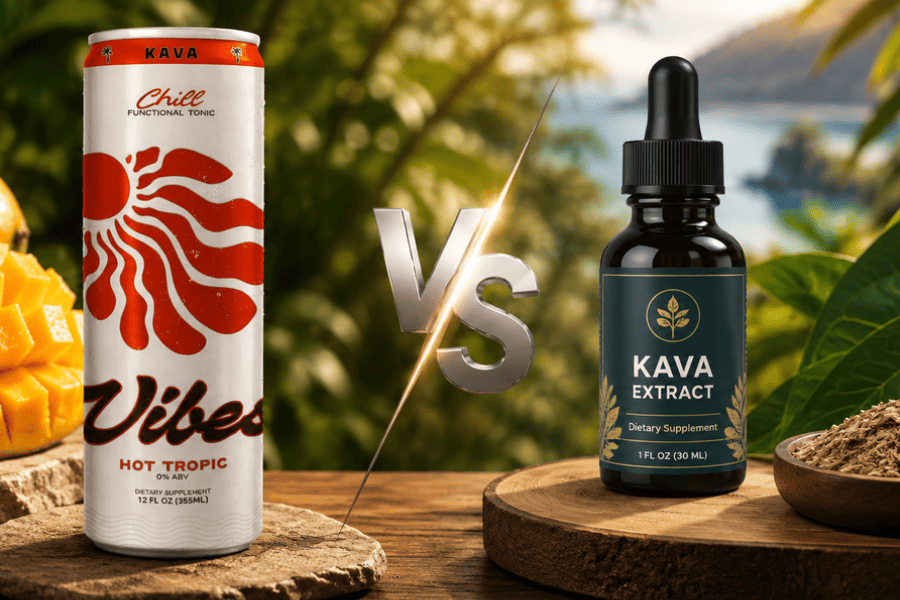
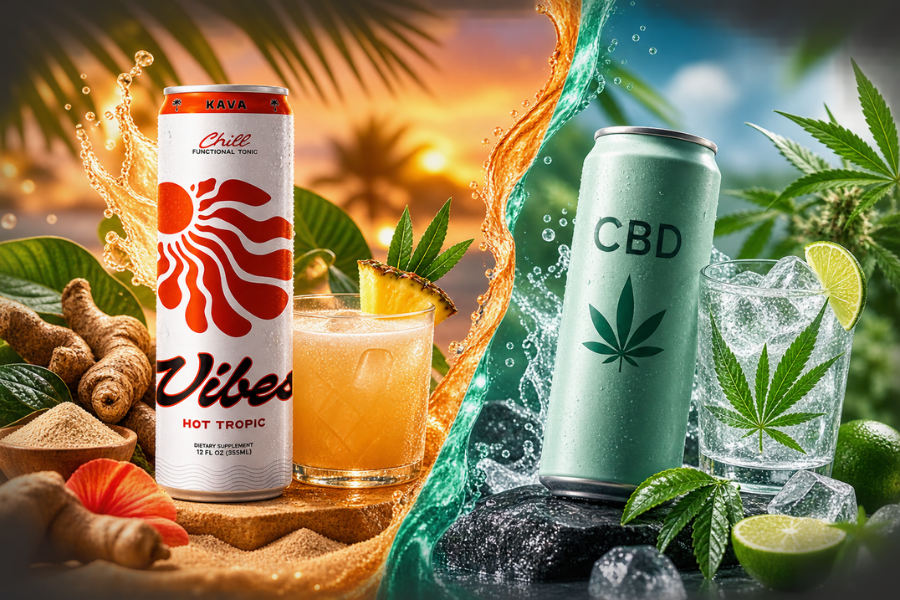
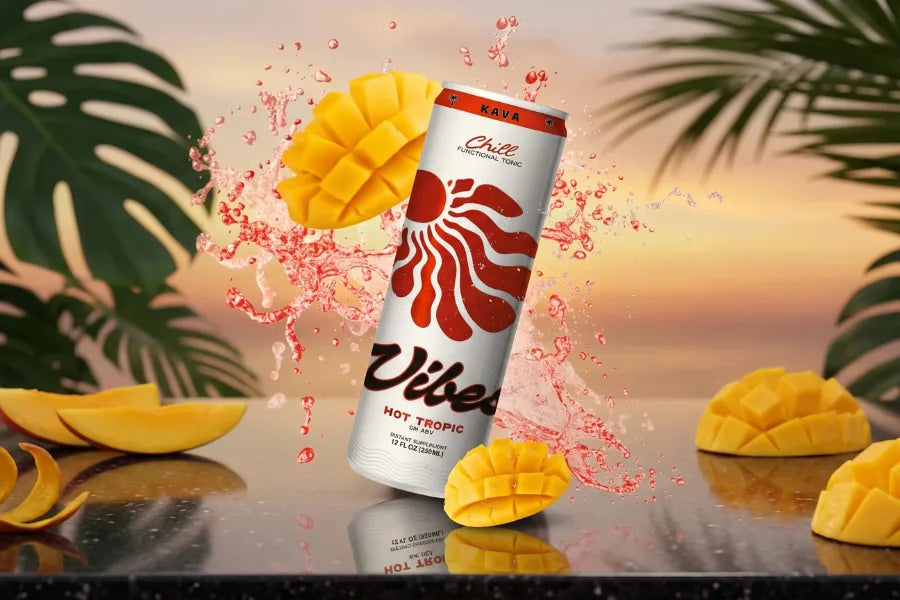
The best Kava for beginners is usually a product with clear labeling, simple serving instructions, and information about its strength. Kava comes in different forms, including powders, extracts, and ready-to-drink beverages. For a convenient option, products like our Kava Hot Tropic Drink provide a pre-formulated alternative to traditional Kava preparation.

The right choice depends on the product format, transparency, and personal preference.

Is 5 grams of Kava a lot?

Five grams of Kava powder is not automatically considered a lot because the strength depends on the product’s Kavalactone content, preparation method, and Kava variety. The same amount of powder from two different products may not have the same strength.

When comparing Kava amounts, it is more useful to look at the product label and strength information rather than grams alone.

Should you drink Kava on an empty stomach?

Some people prefer taking Kava on an empty stomach, while others may choose to have it with food depending on their personal preference and experience. Food intake can influence how someone experiences Kava, and individual responses can vary.

If trying Kava for the first time, following the product instructions and paying attention to how your body responds can help you understand what works best for you.

Can you drink Kava every day?

Some people use Kava regularly, but daily use should be approached carefully because individual responses and product strengths can vary. Factors such as the type of Kava, frequency of use, and overall health can influence how someone experiences it over time.

Anyone considering regular Kava use, especially alongside medications or existing health concerns, should speak with a healthcare professional.

Disclaimer: Kava products can vary in strength, formulation, and individual response. For additional information on Kava safety considerations, you can refer to guidance from the National Center for Complementary and Integrative Health (NCCIH). Always read product labels carefully and consult a qualified healthcare professional if you have questions about using Kava, especially if you have existing health conditions or take medications.

Continue reading
functional beverages vs alcohol

Functional Beverages vs Alcohol: What Are People Choosing in 2026?

The short answer is that functional beverages aren't replacing alcohol—but they're definitely changing the way people drink. In 2026, many Americans are choosing functional beverages for some occasions and alcohol for others.

Think about your last happy hour. Someone probably ordered a craft cocktail, someone else grabbed a mocktail, and another friend reached for a botanical sparkling drink or a social tonic. That mix of drinks would've seemed unusual a few years ago. Today, it's becoming the norm.

That's exactly why functional beverages vs alcohol have become such a topic of conversation. It's less about choosing one over the other and more about having the right drink for the right moment. Let's dive into what's driving this shift and what it means for today's beverage choices.

Key Takeaways:

Here's the short version if you're in a hurry:

  • 🍹 Functional beverages aren't replacing alcohol—they're giving people more choices for different occasions.
  • 🥂 Many Americans now switch between alcohol and functional drinks depending on whether they're at a happy hour, a backyard BBQ, or simply relaxing at home.
  • 🌿 Wellness trends, mindful drinking, and the growing sober curious movement are reshaping modern drinking habits in 2026.
  • 🍸 Social tonics and premium alcohol-free beverages are becoming more common at restaurants, bars, and social gatherings.
  • 👥 Gen Z and Millennials are helping drive demand for functional beverages, but people of all ages are exploring new drink options.
  • 📈 The biggest trend isn't functional beverages vs alcohol—it's having more choices than ever before.

Table Of Contents:

Functional Beverages vs Alcohol: At A Glance

If you're wondering "are people choosing functional drinks over alcohol?", here's the short answer: not exactly. The biggest difference between functional beverages and alcohol comes down to ingredients, alcohol content, and the role they play in social situations.

Think of it this way—you might enjoy a cocktail at a wedding, a beer while watching the big game, or a functional beverage on a weekday when you're just looking for something refreshing. It's all about what fits the moment.

Here's a quick side-by-side comparison to answer your question: “What's the difference between functional beverages and alcohol?”:

Feature

Functional Beverages

Alcoholic Beverages

Primary Purpose

Refreshment with functional ingredients like botanicals, adaptogens, mushrooms, vitamins, or electrolytes

Socializing, celebrations, dining, and recreation

Alcohol Content

Usually alcohol-free

Contains alcohol

Common Ingredients

Botanicals, adaptogens, mushrooms, electrolytes, vitamins, herbs, nootropics

Fermented grains, grapes, fruits, hops, spirits

Popular Occasions

Workdays, post-workout, social gatherings, wellness routines, alcohol-free events

Happy hours, parties, celebrations, restaurants, holidays

Variety

Sparkling drinks, teas, tonics, ready-to-drink beverages, shots, mixes

Beer, wine, cocktails, spirits, hard seltzers

Consumer Trend in 2026

Rapidly growing as consumers explore more beverage choices

Continues to be a popular choice across many social occasions

Who Typically Chooses Them?

Wellness-focused consumers, sober-curious individuals, professionals, fitness enthusiasts, and anyone looking for alcohol-free options

Consumers who enjoy traditional alcoholic beverages for social, cultural, or recreational occasions

At first glance, functional drinks vs alcohol might seem like a competition. In reality, both categories serve different occasions and preferences.

So, what exactly makes a beverage "functional" in the first place? Let's take a closer look to understand why these drinks are becoming such a big part of today’s beverage trends.

What Are Functional Beverages?

Functional beverages are drinks made with ingredients that go beyond basic hydration. Unlike traditional sodas or alcoholic drinks, they're designed to offer consumers a wider variety of beverage choices with unique ingredient blends.

Ever wandered through Target or Trader Joe's and spotted drinks you don't remember seeing a few years ago? You're not imagining it.

The beverage aisle has changed fast, and functional beverages are a big reason why.

Common Ingredients Found In Functional Beverages

While every drink is different, many functional beverages include ingredients like

  • 🌿 Kava
  • BHB Ketones
  • 🌼 Hops
  • 🍄 Mushrooms
  • 🌱 Adaptogens
  • 💧 Electrolytes
  • 🍃 Botanicals
  • 💊 Vitamins and herbal extracts

Not every functional beverage looks or feels the same. Some are designed around ingredients such as Kava, hops, ketones, or botanicals, while others focus on distinct beverage experiences. Learn more about the different types of functional beverages and how they compare.

Bottom line: Functional beverages aren't a single type of drink—they're a growing category that's changing what Americans reach for, whether they're out with friends or relaxing at home.

Why Are People Choosing Functional Beverages Over Alcohol in 2026?

More people are choosing functional beverages because they're looking for greater variety, alcohol-free options, and beverages that fit different occasions. Rather than replacing alcohol altogether, many people are simply expanding their choices to match their lifestyle.
This shift didn't happen overnight. Over the past few years, changing consumer preferences, new product innovations, and evolving social habits have all contributed to the growing popularity of functional beverages.

Here are some of the biggest reasons behind the trend:

🌿 Greater focus on ingredients: Many shoppers are paying closer attention to what goes into their beverages and are exploring drinks made with botanicals, Kava, hops, BHB ketones, and other specialty ingredients.

🍹 More alcohol-free choices: Restaurants, bars, and grocery stores now offer a much wider variety of functional beverages than they did just a few years ago.

🤔 Curiosity and innovation: Consumers are increasingly trying new beverage categories. In fact, an IWSR survey found that 20% tried alcohol-adjacent beverages out of curiosity, while 17% were interested in beverages featuring functional ingredients.

🎉 Different drinks for different occasions: A beer might be perfect for a tailgate, while a functional beverage feels like a better fit for a weekday lunch or a road trip.

🛒 Easy to find: Functional beverages have become more accessible, appearing in major retailers like Target, Whole Foods, and neighborhood grocery stores across the U.S.

✨ More choice, not more restrictions: Consumers aren't necessarily choosing between alcohol and functional beverages—they're enjoying the flexibility to have both as options.
So, are functional drinks better than alcohol? Not necessarily—it depends on the person, the occasion, and what they are looking for from their beverage. In 2026, the bigger shift isn't about choosing one over the other—it's about having more options that fit different moments.

How Are Functional Beverages Changing Modern Drinking Habits?

Functional beverages are making alcohol-free choices feel more socially accepted than they were a few years ago. Today, it's becoming completely normal for people to choose different drinks while still sharing the same table.

Not too long ago, if someone skipped alcohol at a party, they often ended up with a soda or sparkling water.

Today?

The options look very different.

Many restaurants, bars, and even backyard gatherings now include functional beverages alongside beer, wine, cocktails, and mocktails. The focus has shifted from "Why aren't you drinking?" to "What would you like to drink?"

Different Moments, Different Drinks

Occasion

Common Choice

Happy Hour

Cocktail or Social Tonic

Backyard BBQ

Beer or Functional Beverage

Brunch

Mimosa or Botanical Drink

Road Trip

Functional Beverage

Post-Workout

Functional Beverage

Wedding

Depends on personal preference

The biggest change isn't the beverages themselves—it's the expectation that everyone has to make the same choice.

Whether you're hosting friends for a game day, celebrating a birthday, or grabbing dinner after work, it's becoming more common for every guest to have something different in their glass. And that's perfectly normal.

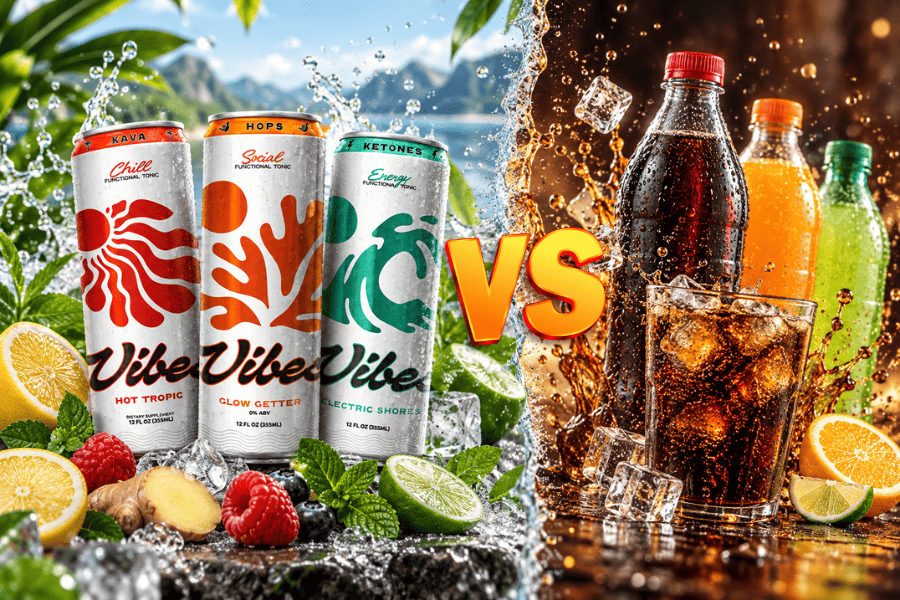
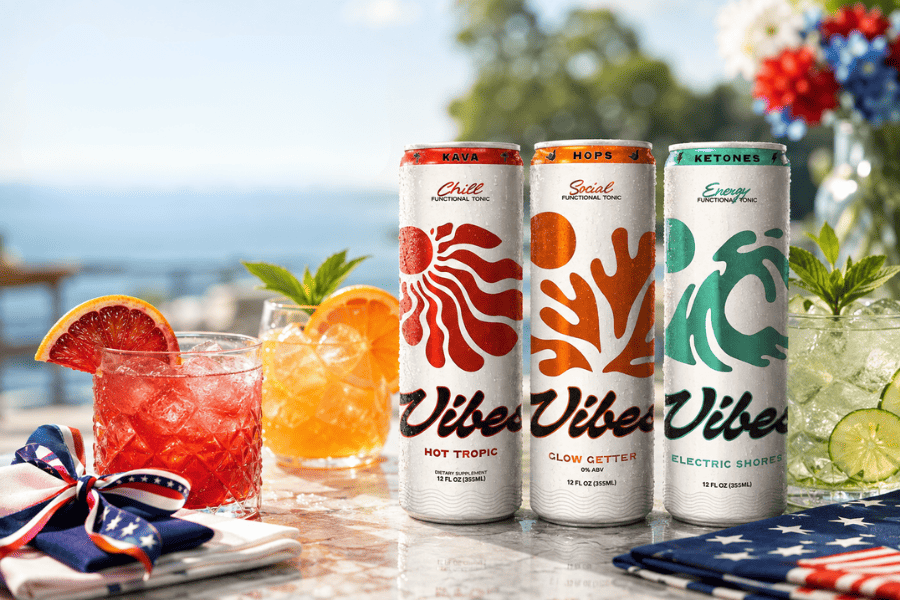
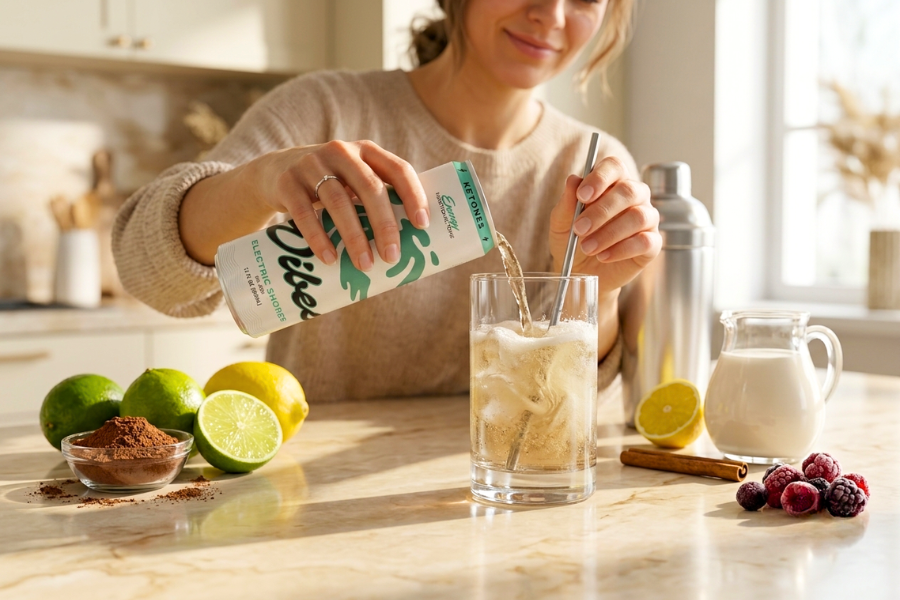
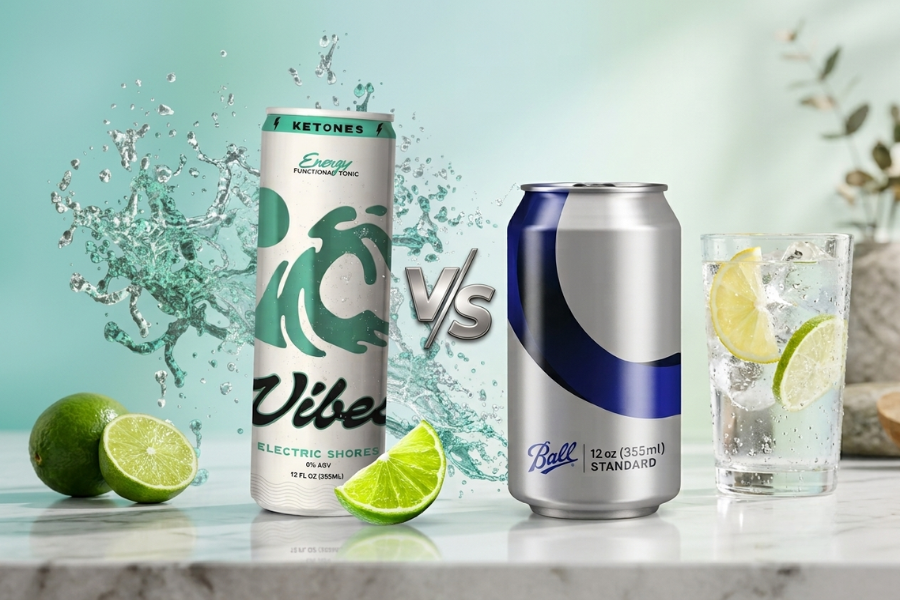
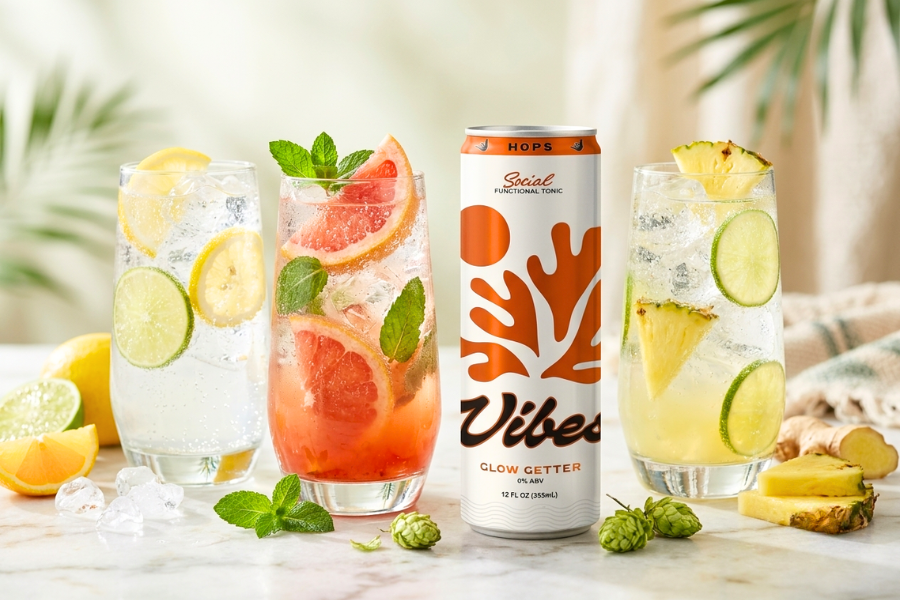
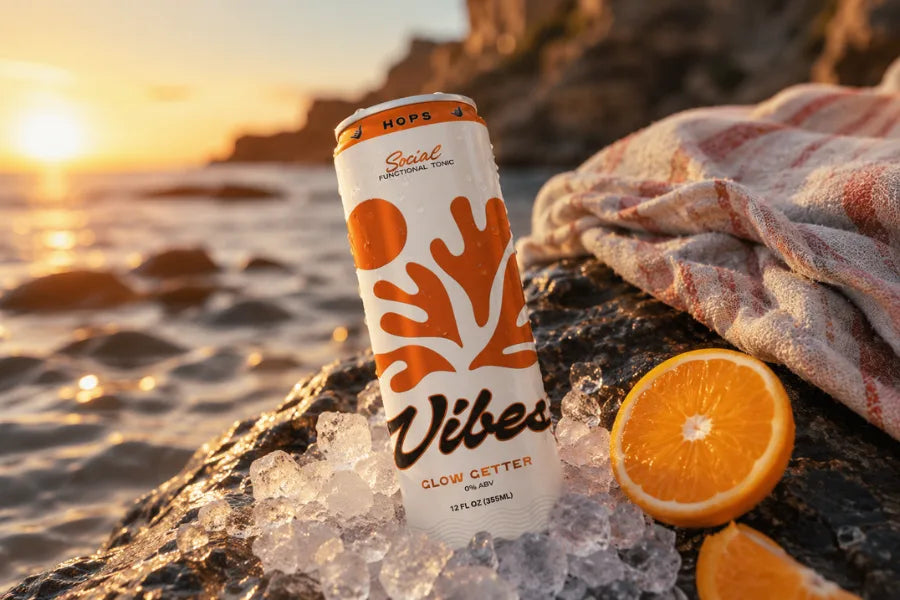
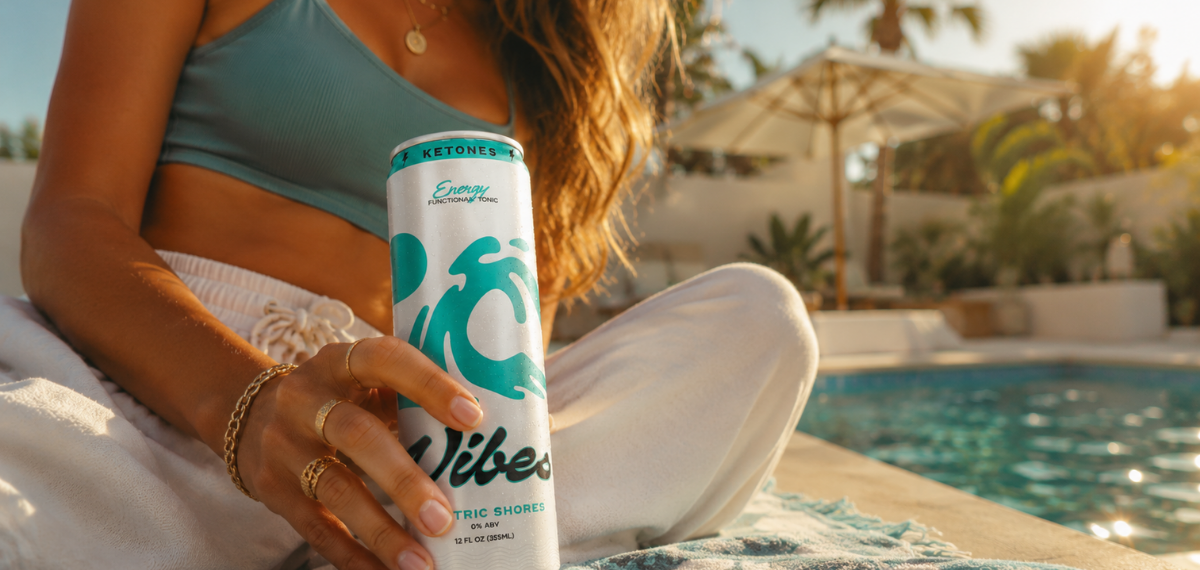
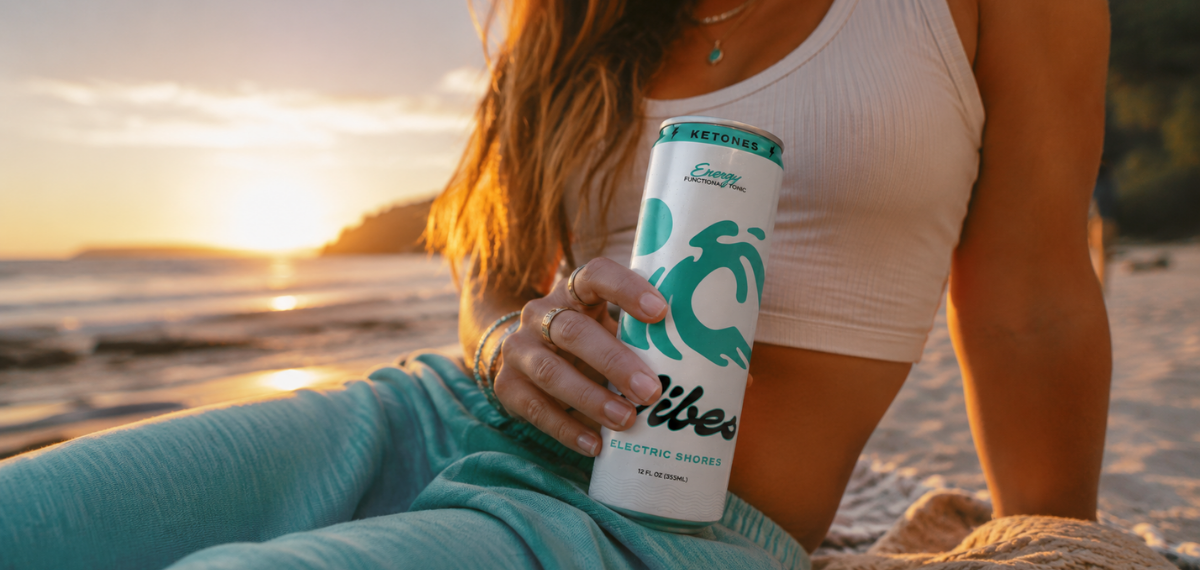
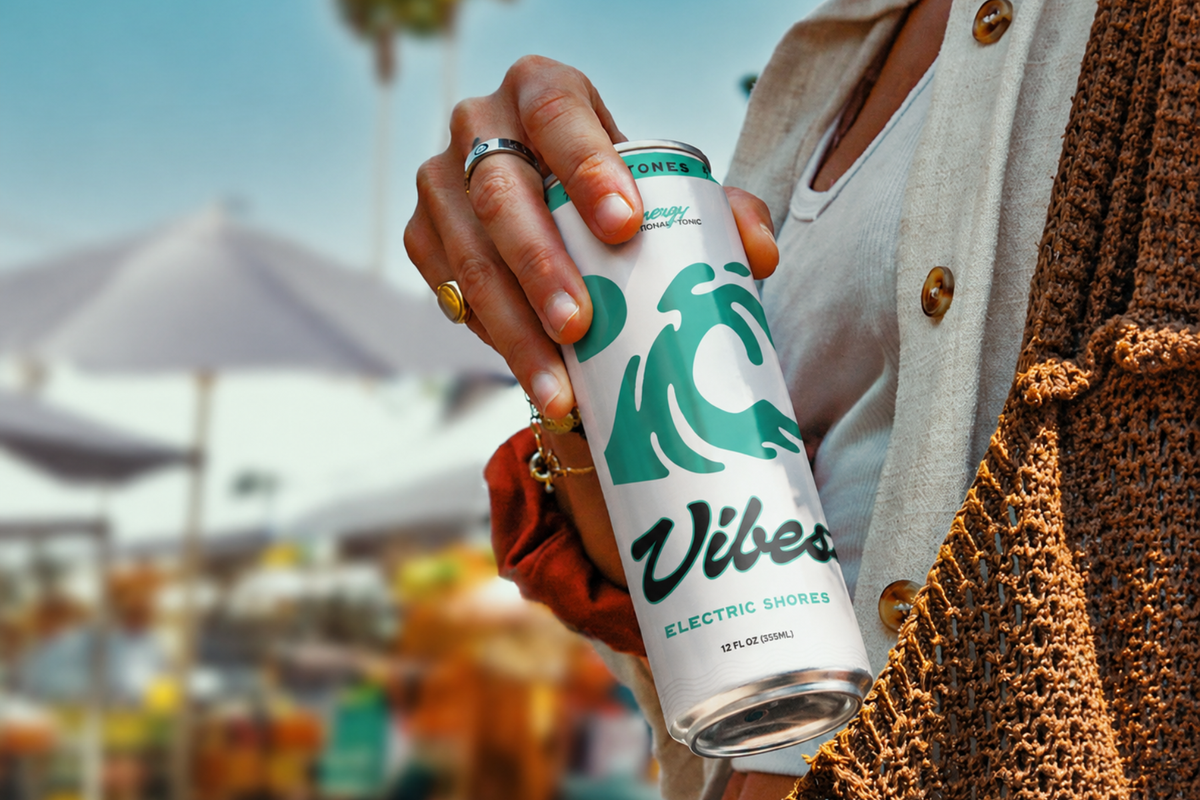
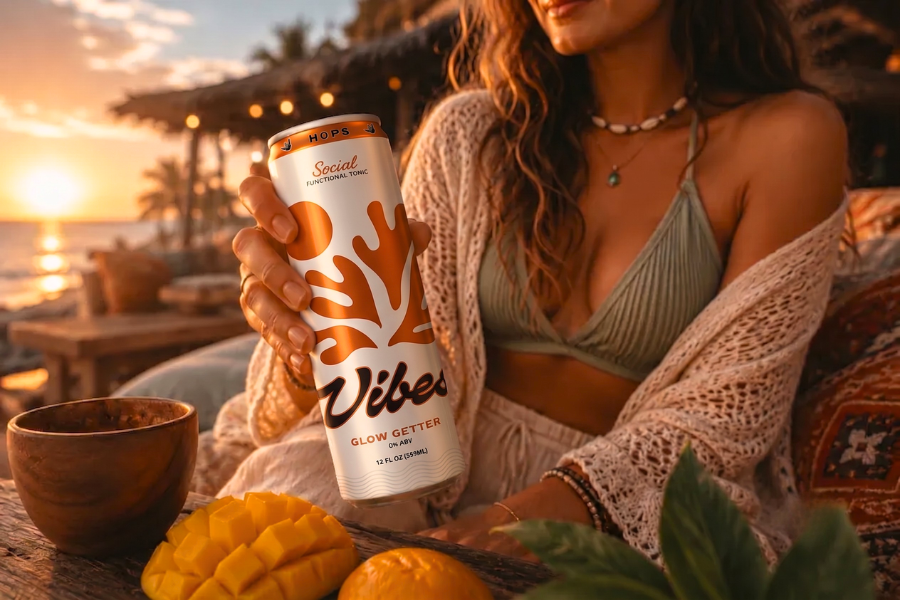
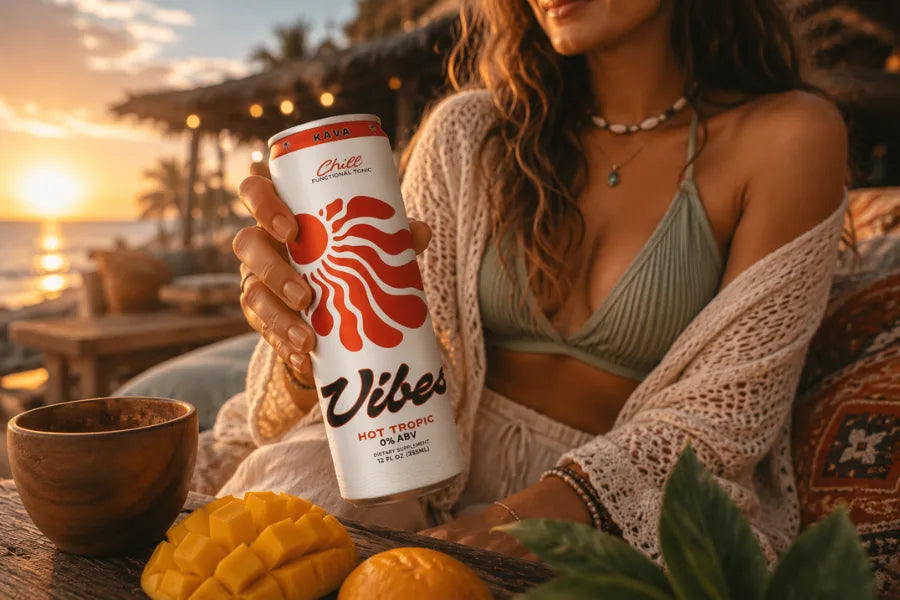
This shift toward more personalized beverage choices is exactly what has helped functional drinks grow. At Drink Vibes, our beverages are created around different moments, from the Kava-based Vibes Chill - Hot Tropic Kava to Vibes Energy - Electric Shores BHB and the hop-inspired Vibes Social - Glow Getter Hops. It’s one example of how today’s beverage landscape is moving beyond a one-size-fits-all approach.

Bottom line: Modern drinking habits are becoming more inclusive. Instead of everyone drinking the same thing, today's gatherings focus on offering options that suit people's preferences.

🔥 Functional Beverage Trends to Watch in 2026

  • Functional ingredients are expanding.
  • Premium hangover-free drinks are on the rise.
  • Ready-to-drink beverages continue to grow.
  • Functional beverages are easier to find than ever.
  • Brands are launching new flavors and formats.

Want to explore more about where the category is heading? Learn more about functional beverage market trends and new product innovation in this Taylor & Francis handbook.

FAQs

What is the difference between functional beverages and alcohol alternatives?

Functional beverages are one type of alcohol alternative, but not every alcohol alternative is a functional beverage. Some focus on recreating traditional drinks, while others include botanicals, adaptogens, electrolytes, and other specialty ingredients.

Will functional beverages replace alcohol?

No, functional beverages are unlikely to completely replace alcohol. Instead, they are expanding the choices available to consumers. Many people are choosing functional beverages for certain occasions while still enjoying traditional alcoholic drinks in other settings.

How are bars and restaurants adapting to the rise of functional beverages?

Bars and restaurants are adding more variety to their menus by offering options like mocktails, social tonics, and botanical beverages as alcohol-free trends continue to grow.

Are functional beverages healthier than alcohol?

Functional beverages and alcoholic drinks are different categories, so they are not a direct one-to-one comparison. Functional beverages are made with ingredients such as botanicals, vitamins, electrolytes, and other functional ingredients, whereas alcoholic beverages contain alcohol. The right choice depends on personal preferences and lifestyle.

What is the difference between functional beverages and mocktails?

Functional beverages are typically made with ingredients intended to provide a unique beverage experience beyond basic refreshment, such as botanicals, adaptogens, or other functional ingredients. Mocktails are alcohol-free versions of traditional cocktails and may or may not contain functional ingredients.

Do functional drinks have the same effects as alcohol?

No. Functional drinks and alcohol are different beverage categories. Functional beverages typically focus on botanicals, vitamins, electrolytes, and other specialty ingredients, while alcoholic drinks contain alcohol.

If you're curious about how functional ingredients are used in these beverages, explore our guide on how functional drinks work.

Are social tonics the same as functional beverages?

Social tonics are a type of functional beverage designed around social occasions. They often feature botanical ingredients and are positioned as alternatives to traditional cocktails, but not every functional beverage is a social tonic.

Popular ingredients appearing in functional beverages include botanicals, kava, hops, mushrooms, adaptogens, electrolytes, vitamins, and BHB ketones. Brands continue experimenting with new ingredient combinations to create different beverage experiences.

Do functional drinks get you 'buzzed' like alcohol?

Functional drinks are not the same as alcoholic beverages and are not designed to provide the same experience as alcohol. They are made with different ingredients and serve different purposes.

Are functional beverages only for people who don't drink alcohol?

No. Functional beverages are not limited to people avoiding alcohol completely. Many consumers enjoy both categories and choose different beverages depending on the occasion, their preferences, or their plans.

Are younger generations driving the growth of functional beverages?

Younger consumers, especially Gen Z and Millennials, are helping shape the growth of functional beverages and mindful drinking trends. Many are exploring alcohol alternatives, new beverage categories, and drinks that fit different lifestyles and social occasions.

However, the interest in functional beverages is not limited to younger generations—people across different age groups are exploring more beverage choices as the category continues to expand.

Are functional beverages just a trend?

While trends come and go, the growth of functional beverages reflects a broader shift toward more personalized beverage choices. The continued expansion of products, retail availability, and consumer interest suggests the category is becoming a bigger part of the beverage market.

Disclaimer:

This article is for informational purposes only and discusses beverage trends, consumer preferences, and industry developments. Always check product labels and ingredient information when choosing beverages that fit your personal preferences.

Continue reading
Kava vs Kratom: What's the Difference?

Kava vs Kratom: What's the Difference?

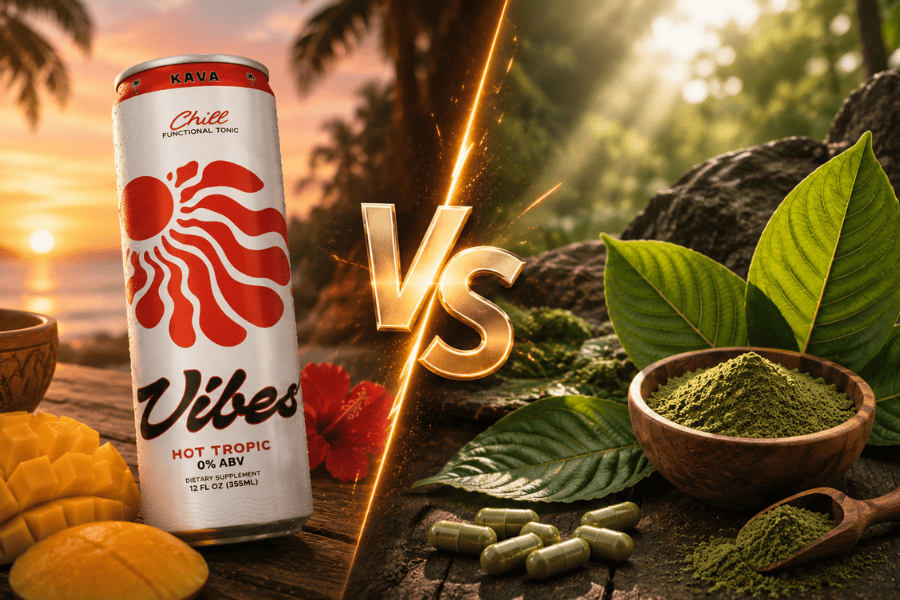
Kava and Kratom are different botanicals that come from separate plants, contain different natural compounds, and have distinct traditional uses. The main difference between “Kava vs Kratom” is that Kava comes from the root of the Piper methysticum plant and contains Kavalactones, while Kratom comes from the leaves of the Mitragyna speciosa tree and contains naturally occurring alkaloids such as Mitragynine.

Although they are often compared because both are plant-based ingredients found in teas, extracts, and modern botanical beverages, they are not the same. Each has a unique background, preparation method, and place within the growing functional beverage market, including alcohol alternatives, ready-to-drink products, and social relaxation drinks.

In this guide, we’ll explore the differences between Kava and Kratom, how they compare as beverage ingredients, their common formats, taste profiles, and legality.

Table Of Contents:

Kava vs Kratom: Key Takeaways

Feature

Kava

Kratom

What it is

A botanical made from the root of the Piper methysticum plant

A botanical made from the leaves of the Mitragyna speciosa tree

Native origin

South Pacific islands

Southeast Asia

Plant Family

Pepper family

Coffee family

Plant part used

Root and rhizome

Leaf

Main natural compounds

Kavalactones

Alkaloids, including mitragynine

Traditional use

Social and ceremonial beverages in Pacific Island cultures

Traditional leaf preparations and beverages in parts of Southeast Asia

Common modern formats

Kava beverages, sparkling Kava drinks, extracts, non-alcoholic social drinks

Kratom beverages, drink mixes, seltzers, shots, and extracts

Taste profile

Earthy, woody, and traditionally peppery; modern drinks may use flavors to balance the profile

Earthy and grassy, flavored beverages may use fruit notes and sweeteners

Legality

Generally available, but product regulations may vary

Legal status varies by state and local jurisdiction in the U.S.

Key difference

Comes from a root and contains Kavalactones

Comes from a leaf and contains mitragynine and other alkaloids

What Is Kava?

Kava is a botanical made from the roots and underground stems of the Piper methysticum plant, a species native to the Pacific Islands. It has a long history of traditional use in cultures across regions such as Fiji, Vanuatu, and other Pacific Island communities.

Quick Facts About Kava

Category

Details

Botanical name

Piper methysticum

Plant family

Pepper family (Piperaceae)

Plant part used

Root and underground stems

Native region

South Pacific Islands

Main active compounds

Kavalactones

Traditional preparation

Root processed and mixed with water

What Are Kavalactones?

As per a ScienceDirect study, Kavalactones are naturally occurring compounds found in Kava root. Different Kava varieties can contain different levels and combinations of these compounds, which contribute to the plant’s unique chemical profile.

How Is Kava Traditionally Used?

Traditionally, Kava has been prepared as a beverage by:

  • Grinding or crushing the dried root
  • Mixing it with water
  • Straining the mixture before consumption

It has historically been used during social gatherings, ceremonies, and cultural events throughout the Pacific Islands.

Common Kava Forms

Today, Kava is available in several forms, including:

  • Traditional root preparations
  • Powdered Kava root
  • Instant Kava products
  • Kava extracts
  • Ready-to-mix beverages

While modern products may vary in preparation and concentration, they are all derived from the same botanical source: Piper methysticum.

What Is Kratom?

According to an article in ACS Publications, Kratom is a botanical derived from the leaves of the Mitragyna speciosa tree, a tropical evergreen plant native to Southeast Asia. Unlike Kava, which comes from a root, Kratom comes from the leaves of the plant and has traditionally been prepared in Thailand, Malaysia, and Indonesia.

Quick Facts About Kratom

Category

Details

Botanical name

Mitragyna speciosa

Plant family

Coffee family (Rubiaceae)

Plant part used

Leaves

Native region

Southeast Asia

Main natural compounds

Mitragynine and other alkaloids

Traditional preparation

Fresh leaves chewed or brewed into tea


What Are Kratom Alkaloids?

Kratom leaves contain naturally occurring alkaloids, with mitragynine being the most abundant and widely recognized compound. The alkaloid composition can vary depending on factors such as the plant source, growing conditions, and processing methods.

Unlike standardized single-compound products, traditional Kratom leaf products contain a naturally occurring combination of plant compounds.

How Is Kratom Traditionally Used?

Historically, Kratom leaves have been prepared in Southeast Asian communities through methods such as:

  • Chewing fresh leaves
  • Brewing leaves into tea
  • Preparing traditional leaf-based drinks

The preparation method and cultural practices surrounding Kratom have varied across different regions.

Common Kratom Forms

Modern Kratom products are available in formats such as:

  • Dried Kratom leaves
  • Kratom powder
  • Kratom capsules
  • Kratom extracts
  • Kratom tea and drink products

While these formats differ in preparation and processing, they are all derived from the leaves of Mitragyna speciosa.

Kava vs Kratom: 5 Main Differences

Although Kava and Kratom are often compared because both are plant-based botanicals, they come from different plants and have distinct origins, compounds, and traditional uses. Understanding these key differences makes it easier to see why they are not interchangeable.

1. Plant Source: Kava Root vs Kratom Leaf

The biggest difference between Kava and Kratom is the part of the plant used.

Differences

Kava

Kratom

Plant source

Piper methysticum

Mitragyna speciosa

Plant family

Pepper family (Piperaceae)

Coffee family (Rubiaceae)

Part used

Root and underground stems

Leaves


Kava is made from the roots of the Kava plant, while Kratom products are made from the leaves.

2. Geographic Origin and Traditional Background

Kava and Kratom come from different parts of the world and have separate cultural histories.

Kava:

  1. Originates from the Pacific Islands
  2. Traditionally prepared as a communal beverage
  3. Used during ceremonies, social gatherings, and cultural events

Kratom:

  1. Originates from Southeast Asia
  2. Traditionally used in countries such as Thailand, Malaysia, and Indonesia
  3. Historically prepared using fresh leaves or brewed leaf-based drinks

3. Natural Compounds: Kavalactones vs Mitragynine

Kava and Kratom contain different naturally occurring compounds.

Kava contains:

  • Kavalactones, a group of compounds naturally found in Kava root

Kratom contains:

  • Alkaloids, including Mitragynine and other naturally occurring plant compounds

These differences in botanical composition are one of the main reasons Kava and Kratom have distinct profiles.

4. Traditional Preparation Methods

The way these botanicals have traditionally been prepared is also different.

Traditional Kava preparation:

  • Kava root is processed into a powder or pulp
  • Mixed with water
  • Strained before serving

Traditional Kratom preparation:

  • Fresh leaves may be chewed
  • Leaves may be brewed into tea
  • Leaf preparations may vary by region

The legal landscape is another important difference between Kava and Kratom.

  • Kava: Generally available in many countries, although regulations around supplements and food products may vary.
  • Kratom: Legal status varies more significantly, especially in the United States, where regulations differ by state and locality.

Consumers should always check current local laws before purchasing or traveling with Kratom products.

Kava vs Kratom Effects: How Do Their Profiles Compare?

Kava and Kratom do not produce identical effects. Kava is more commonly associated with a calming and socially relaxed profile, while Kratom’s reported effects can vary more widely depending on the product, alkaloid concentration, and individual response.

Kava Is Commonly Associated With Relaxation

Kava’s profile comes primarily from Kavalactones, the naturally occurring compounds found in its roots.

People commonly describe Kava as producing:

  • A calm or settled feeling
  • Physical relaxation
  • A more relaxed social experience
  • Temporary tingling or numbness in the mouth

The overall experience may differ based on the Kava variety, preparation method, and Kavalactone concentration. Research into Kava has primarily examined its potential effects on anxiety, but evidence remains limited, and safety considerations still apply.

Kratom May Have a More Variable Profile

Kratom contains naturally occurring alkaloids, with mitragynine being the most prominent. Its reported profile is less consistent than Kava’s and may vary according to:

  • The type of Kratom product
  • Alkaloid concentration
  • Whether it contains leaf material or an extract
  • Product formulation
  • Individual response

According to one ScienceDirect research, Kratom has been reported to produce both stimulant-like and sedative-like effects. However, these effects should not be treated as predictable or guaranteed, particularly because commercial products can differ significantly in composition.

Important: Experiences with either botanical can vary. Neither Kava nor Kratom should be presented as producing guaranteed effects, and concentrated products should not be assumed to have the same profile as traditional plant preparations.

Kava And Kratom In Modern Botanical Beverages

Both Kava and Kratom are now available in convenient drink formats beyond their traditional preparations.

Common options include:

  • Ready-to-drink cans
  • Flavored botanical beverages
  • Drink mixes
  • Sparkling drinks
  • Extract-based shots

However, Kava and Kratom beverages are not interchangeable. Kava drinks contain compounds called Kavalactones, while Kratom drinks contain alkaloids such as mitragynine. Their concentration and formulation can also differ from one product to another.

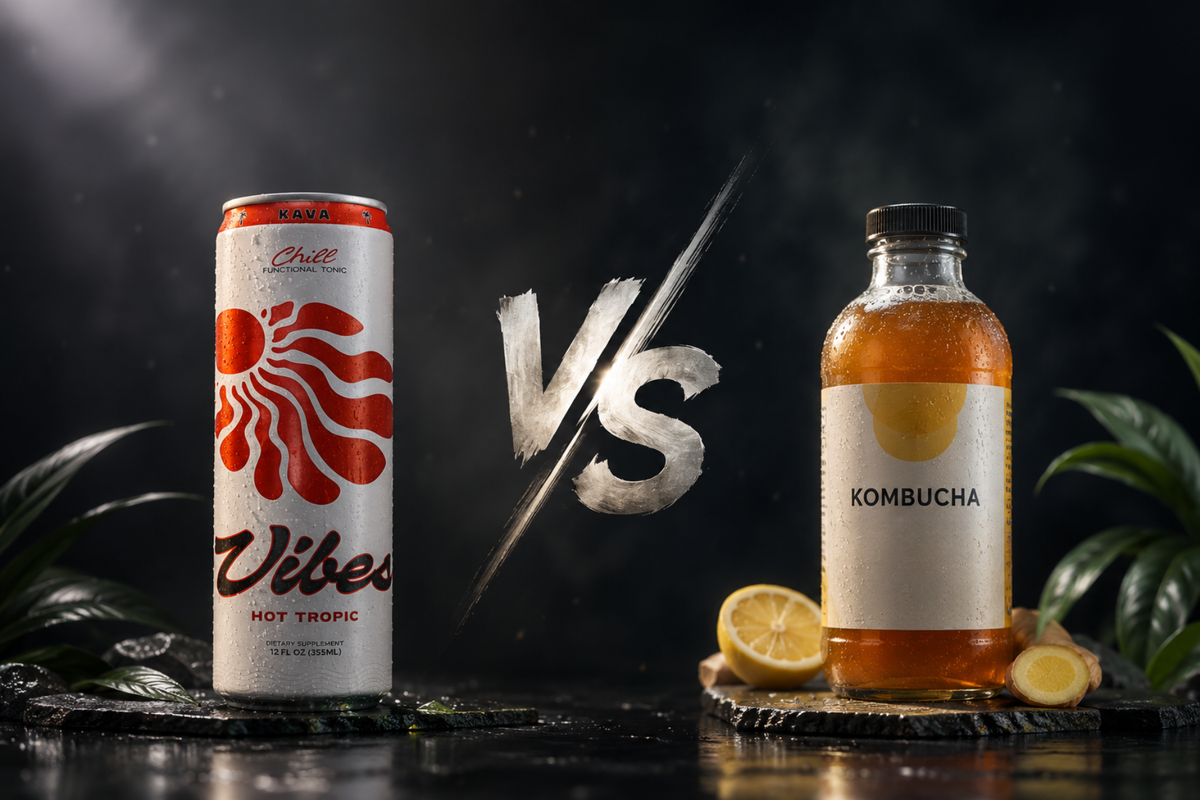
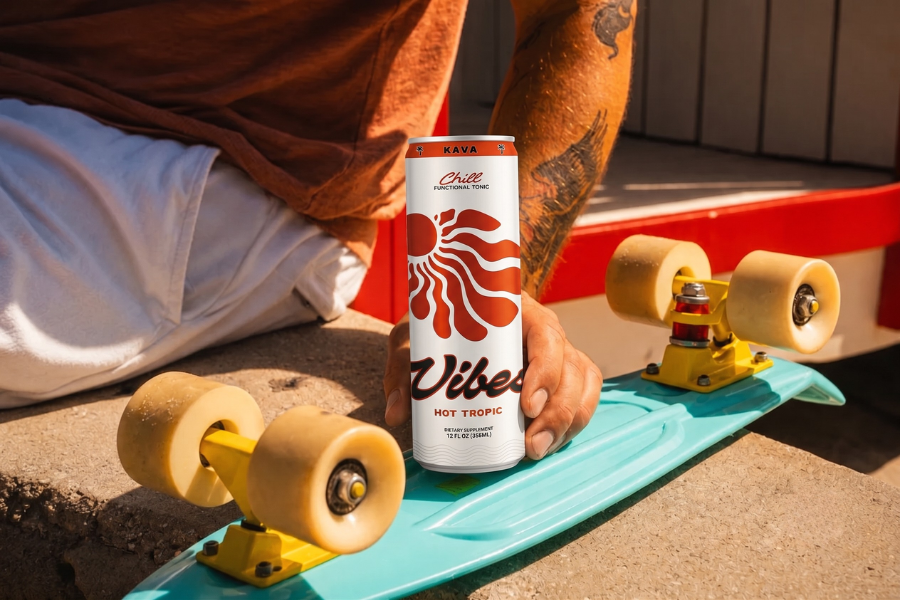
For example, Vibes Chill – Hot Tropic Kava is a ready-to-drink product made with Kava root extract and 60 mg of kavalactones per can. It combines a tropical mango flavor with ingredients such as L-theanine, green tea extract, and Alpha-GPC. This illustrates how modern products may place traditional Kava compounds into a flavored, pre-formulated beverage rather than using the customary root-and-water preparation.

FAQs

Do Kava And Kratom Come From The Same Plant?

No. Kava comes from the roots of Piper methysticum, a plant in the pepper family. Kratom comes from the leaves of Mitragyna speciosa, a tropical tree in the coffee family. They are botanically distinct and contain different natural compounds.

Is Kava Stronger Than Kratom?

Neither Kava nor Kratom is universally stronger because they contain different active compounds and produce different reported profiles.

Is Kava Safer Than Kratom?

Neither Kava nor Kratom can be considered universally safer. The National Center for Complementary and Integrative Health (NCCIH) fact sheet states that Kava products have been associated with rare but potentially serious liver injury, while Kratom has been linked to dependence, withdrawal, and other adverse effects. 

Safety also depends on product quality, concentration, and individual factors.

Which Is More Relaxing, Kava Or Kratom?

Kava is more consistently associated with a calming and relaxation-focused profile. Kratom’s reported profile is more variable and may differ according to alkaloid concentration, formulation, and individual response. Neither botanical should be expected to produce guaranteed effects.

Does Kava Show Up On Drug Tests?

Kava is not typically included in standard workplace drug-test panels. However, testing policies and methods vary, and specialized tests may detect specific compounds. Kavain has also been reported to interfere with some Initial Amphetamine Immunoassays, making confirmatory testing important.

Does Kava Feel The Same As Kratom?

No. Kava and Kratom contain different compounds and do not have identical profiles. Kava is generally associated with relaxation, whereas Kratom has been reported to produce stimulant-like or sedative-like effects (DEA), depending on the product and other factors.

Is Kava Addictive Like Kratom?

Kava and Kratom do not have the same dependence profile. According to the National Institute on Drug Abuse, regular Kratom use can lead to dependence and withdrawal in some people. Kava is not known for the same opioid-receptor activity, but frequent use should not automatically be considered risk-free.

Kava is generally available in the United States, although food and product regulations still apply.

According to LAPPA's state-by-state analysis, Kratom is not federally scheduled under the Controlled Substances Act, but its legal status varies by state and locality. Some jurisdictions prohibit it, while others regulate matters such as age limits, labeling, or product composition.

Read our blog, “Is Kava Legal?,” to learn about its legality in detail.

Can You Mix Kava And Kratom?

Mixing Kava and Kratom is not recommended without guidance from a qualified healthcare professional. One short-term study in healthy adults found that a specific commercial liquid blend containing both botanicals was generally well tolerated at the tested amounts. However, the findings apply only to that formulation and study period, so they should not be taken as proof that every Kava–Kratom combination is safe.

Consult a qualified healthcare professional before combining them, especially if you take medication, use alcohol, or have an existing health condition.

Which Lasts Longer: Kava Or Kratom?

Kratom is often reported to last longer than Kava, but duration varies widely by product, concentration, and individual response.

Learn the answer to “How Long Does Kava Last?” with our detailed guide.

Disclaimer: This content is for informational purposes only and is not medical or legal advice. Effects, product quality, and laws may vary. Consult a qualified professional and check current local regulations before use.

Bibliography

Continue reading
Hop water vs beer

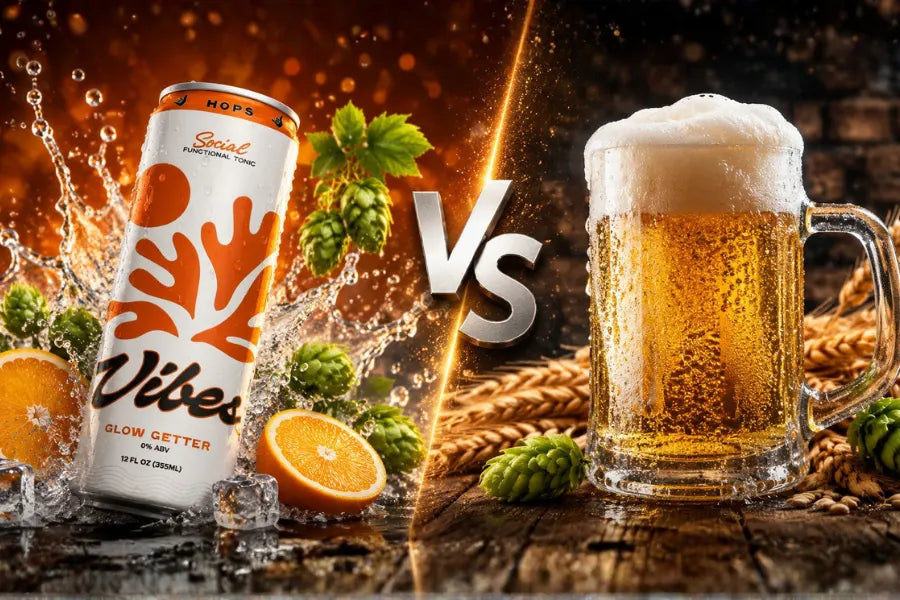
Hop Water vs Beer: The Alcohol-Free Alternative Explained

That familiar bittersweet, floral taste of hops can be enjoyed in hop water, the same plant that has long been used to flavor beer, but without the alcohol, calories, or gluten that are found in a regular beer. For those who are being drawn toward cutting back on alcohol, or who are simply looking for something more interesting than plain sparkling water, that difference is felt more than it might initially appear.

No impairment is experienced and no next day grogginess is felt. A straightforward swap is being made by a growing number of people, and the reasons behind it are easy to understand.

In this guide, every angle of how hop water and beer compare is broken down, from alcohol content and calories to carbs, gluten, and hydration, along with who each drink is best suited for, so that by the end a clear picture can be formed of which one makes more sense and when.

Hop water and Beer

Hop Water vs Beer: Side-by-Side Comparison

Factor

Hop Water

Regular Beer

Non-Alcoholic Beer

Alcohol (ABV)

0.0%

Typically 4 to 6%

Usually under 0.5%

Calories per serving

Usually 0 to 10

Around 150 per 12oz

50 to 100

Carbohydrates

Usually 0g

Around 13g per 12oz

10 to 20g

Sugar

Usually 0g

Low, 0 to 2g

Often higher due to added sugar

Gluten

Usually gluten-free

Contains gluten

Often contains gluten or gluten-removed grains

Hydrating

Yes

Mildly dehydrating

More hydrating than beer

Made with malted barley

No

Yes

Usually yes

Hangover risk

None

Yes

Low to none

What Is Hop Water, and What Is It Not?

Hop water is made from hops, the female cones of the Humulus lupulus plant, which are widely known for giving beer its characteristic bitterness and aroma. In hop water, those same cones are steeped directly in water and carbonated, and that is genuinely most of what goes into it. Some versions add a natural flavor like citrus or a botanical along the way, and occasionally a small amount of sweetener to soften the bitterness, but the base stays simple.

There is no malted barley in it, no wheat, no yeast, and no alcohol. Because of that, it is also not made the way beer is made. It does not ferment, it does not go through a grain-based brewing process, and it is not beer with the alcohol removed. It is its own drink that just happens to use hops as its main flavor.

The bitterness and aroma that hops bring are very much present, and if you already enjoy that side of beer it will feel quite familiar. But without the malty, grainy body that a traditional brew carries, it drinks considerably lighter and sits much closer to a sparkling water in terms of how it actually feels.

Why People Are Switching from Beer to Hop Water

The sober curious movement has been growing steadily, and hop water has found a pretty natural place inside it. Nearly half of all Americans said they planned to drink less alcohol in 2025, a 44 percent increase from 2023, and people who are cutting back, taking a break, or just looking for something more interesting to hold at a social event have been a big part of why hop water has caught on the way it has.

A few reasons come up again and again when people talk about why they made the switch.

No hangover

Because hop water contains zero alcohol, there is none of the dehydration, headache, or next day fatigue that tends to follow a night of drinking. You can have a few in an evening and wake up the next morning feeling exactly the way you did before you sat down.

It actually tastes like something

Plain sparkling water does the job, but it does not scratch the itch for something with real flavor and a little bitterness to it. Hop water fills that gap in a way that soda and juice simply do not, which is a bigger deal than it sounds for people who genuinely enjoy the taste of beer.

Fewer calories

Most hop waters come in at zero to ten calories per serving, while a standard 12oz beer contains around 153 calories according to the USDA FoodData Central database. Across a few drinks a week, that difference starts to add up in a way that is hard to ignore.

Easier on the gluten front

For anyone avoiding gluten, hop water is a much more straightforward choice than trying to figure out which beers are genuinely gluten-free versus which ones have just had the gluten reduced. Hops are naturally gluten-free, and most hop water products are made without any grain-based ingredients at all.

Does Hop Water Have Any Effect on the Body?

Hop water is not beer, and it does not behave like beer in your body. But that does not mean nothing is going on.

No alcohol, no buzz

Most hop waters are 0.0% ABV, as confirmed by the Brewers Association. There is no alcohol in them, which means drinking hop water will not get you drunk or impaired in any way.

Hops and relaxation

Hops have been studied beyond their role in brewing. A study published in the National Library of Medicine found that hop extract had a measurable effect on sleep quality and relaxation. That said, the amount of hops in most hop water products is quite different from what is used in supplement form, so a direct connection to feeling calmer is not something the research fully supports yet.

Added functional ingredients

Some hop water products include adaptogens, nootropics, or botanicals positioned around relaxation, focus, or mood. These are not in every hop water, and any effects vary depending on the product, the dose, and the person drinking it.

👉Hop water hydrates, contains no alcohol, and is very low in calories. Anything beyond that depends entirely on what else is in the specific product you are drinking.

Hop Water vs Non-Alcoholic Beer: Which Is Better?

These two drinks get compared a lot, but they are genuinely different products that work for different people.

Non-alcoholic beer is brewed the same way regular beer is, using malted barley and the standard brewing process, then has its alcohol reduced to below 0.5% ABV. Hop water skips that process entirely. No brewing, no fermentation, no grain.

Which One Is Right for You?

What You Are Looking For

Better Choice

Closest taste to regular beer

Non-alcoholic beer

Zero alcohol, no trace amounts

Hop water

Fewer calories and carbs

Hop water

Gluten-free with celiac disease

Hop water with a certified gluten-free label

Final Thoughts

Hop water is not designed to replace beer, and that is actually what makes it interesting. It is its own category, a sparkling, hop-forward drink from which zero alcohol, very few calories, and a naturally gluten-free profile are delivered. For anyone by whom the taste of hops is enjoyed but the effects of a regular beer are not wanted, it is a genuinely useful and increasingly popular choice.

When hop water vs beer is being compared, no universal right answer can be given. The decision is shaped entirely by what is being looked for in the drink at that particular moment, and with everything that has been covered in this guide, that call can now be made with confidence.

FAQs

Does hop water have alcohol?

No. Most hop waters are 0.0% ABV and contain no alcohol. They are made by infusing hops in water rather than fermenting grain, so no alcohol is produced at any point in the process.

Is hop water gluten-free?

Hops are naturally gluten-free, and most hop waters are made without any gluten-containing grains. That said, always check the label for a certified gluten-free claim, particularly for flavored varieties or products made in facilities that also handle grain-based drinks.

Is hop water healthier than beer?

In terms of alcohol content, calories, carbohydrates, and gluten, hop water compares very favorably to regular beer. Whether that makes it healthier depends on which health factors matter most to you personally.

Is hop water hydrating?

Yes. Since hop water is primarily carbonated water with hops, it hydrates in the same way sparkling water does. Regular beer, on the other hand, can be mildly dehydrating because of its alcohol content.

Is hop water better than non-alcoholic beer?

It depends on what you are looking for. Hop water has zero alcohol, fewer calories, and is more likely to be gluten-free. Non-alcoholic beer tastes closer to regular beer because it goes through the same brewing process. They serve different purposes depending on your priorities.

Disclaimer: This blog is for informational purposes only and is not intended as medical, nutritional, or dietary advice. The information shared here is based on available research and general knowledge at the time of writing. Individual responses to hop water and beer may vary. If you have celiac disease, a gluten sensitivity, or any other health condition, always consult a healthcare professional before making changes to your diet or drink choices. 

Sources

  1. USDA FoodData Central. Alcoholic Beverage, Beer, Regular. United States Department of Agriculture. https://fdc.nal.usda.gov/food-details/168746/nutrients
  2. Brewers Association. Hop Water: Production and Labeling Regulations. https://www.brewersassociation.org/brewing-industry-updates/hop-water-production-and-labeling-regulations/
  3. Celiac Disease Foundation. What is Gluten? https://celiac.org/gluten-free-living/what-is-gluten/
  4. Beyond Celiac. Is It Gluten-Free? Beer. https://www.beyondceliac.org/gluten-free-diet/is-it-gluten-free/beer/
  5. FDA. Gluten-Free Labeling of Foods. United States Food and Drug Administration. https://www.fda.gov/food/food-labeling-nutrition/gluten-free-labeling-foods
  6. National Institute on Alcohol Abuse and Alcoholism. Sober Curious Young Americans May Be Changing the Conversation Around Alcohol. 2024. https://www.niaaa.nih.gov/news-events/spectrum/volume-16-issue-3-fall-2024/sober-curious-young-americans-may-be-changing-conversation-around-alcohol
  7. The Educated Patient. The Rise of the Sober Curious Movement. 2025. https://www.theeducatedpatient.com/view/the-rise-of-the-sober-curious-movement
  8. Dostálek P et al. Gluten in Beer. PubMed. 2006. https://pubmed.ncbi.nlm.nih.gov/17071509/
  9. Zanoli P, Zavatti M. Pharmacognostic and Pharmacological Profile of Humulus lupulus L. National Library of Medicine. 2008. https://pubmed.ncbi.nlm.nih.gov/22543849/
  10. Kowalczyk A et al. Biologically Active Compounds from Hops and Prospects for Their Use. PubMed. 2021. https://pubmed.ncbi.nlm.nih.gov/33401815/
  11. ScienceDirect. Humulus lupulus. https://www.sciencedirect.com/topics/agricultural-nd-biological-sciences/humulus-lupulu
Continue reading
are hops gluten free

Are Hops Gluten Free? The Allergen Guide for Hop Drinkers

Yes, hops are naturally gluten-free. Beer is what brings most people to the question are hops gluten free” in the first place, and that makes total sense. But hops come from the flowers of the Humulus lupulus plant, not from a grain, and gluten only comes from grains like wheat, barley, and rye.

This guide covers everything gluten-sensitive and celiac readers need to know about hops, hop water, cross-contamination, and how to verify a gluten-free product.

Why Hops Are Naturally Gluten-Free

Hops are the small cone-like flowers that grow on the Humulus lupulus plant. They go into drinks to add bitterness, aroma, and flavor. They are not a grain and are not related to wheat, barley, or rye in any way.

Gluten is a protein found only in certain cereal grains, mainly wheat, barley, and rye. The Celiac Disease Foundation defines these as the primary sources of gluten that people with celiac disease and gluten sensitivity need to avoid. Since hops grow on a flowering plant and not a grain crop, they do not carry gluten at all.

Then Why Is Beer Not Gluten-Free If Hops Are?

This is the question that trips most people up, and it is a fair one.

Beer is typically made from malted barley, and sometimes wheat. Since both barley and wheat contain gluten, beers made from either are not gluten-free. Hops are also part of the recipe, but they are only there for bitterness and aroma. They bring no gluten into the drink at all.

So the short answer is this 👉 Hops are innocent. The grains are where the gluten comes from.

Is Hop Water Safe for Celiac Disease?

For most people, yes. Hop water is made from carbonated water and hops, both of which are naturally gluten-free.

But for anyone managing celiac disease, there is one thing worth knowing.

The Part Most People Miss

A product can contain zero gluten ingredients and still carry a cross contamination risk. If it was made in a facility that also handles wheat, barley, or rye, trace amounts of gluten can make their way into the final product.

For someone with celiac disease, even that small amount can trigger a reaction.

According to the Celiac Disease Foundation, strict gluten avoidance is essential for managing celiac disease, which means looking beyond just the ingredients list.

Plain vs Flavored Hop Water

Type

Gluten Risk

Plain hop water

Almost always fine

Flavored hop water

Needs a closer look

Flavored versions with added botanicals or natural flavors can sometimes introduce unexpected ingredients, so always check the label before buying.

How to Verify a Gluten-Free Hop Water

In the U.S., a "gluten-free" label on packaged food or beverages means the product must meet the FDA's standard of less than 20 ppm gluten. Third-party certification can add another layer of confidence by requiring independent testing and facility review.

Gluten-Free Hop Water Checklist:

✅ Look for "gluten-free" on the can or bottle

✅ Check the brand's FAQ or website

✅ Review the full ingredient list

✅ Look for an allergen statement

✅ Check whether it is made in a facility that also processes wheat, barley, or rye

✅ Contact the manufacturer if the product is not clearly labeled

Red Flags to Watch For

If you see any of these in the ingredient list, the product is not gluten-free:

🚩 Malt

🚩 Barley malt

🚩 Wheat

🚩 Rye

If the label is not clear, contact the manufacturer directly and ask about their allergen controls before buying. 

Other Allergens and Who Should Check First

Hops are naturally gluten-free, but it is worth knowing a couple of other things before making hop water a regular part of your routine.

Can You Be Allergic to Hops?

It is not common, but it does happen. Some people have a sensitivity to hops itself, which can show up as mild skin or respiratory reactions. If you have ever had an unusual reaction to beer that did not seem related to the alcohol, hops could be worth looking into.

A Few Groups Worth Mentioning

Pregnant or breastfeeding: Research on hops in these situations is still limited, so it is generally worth checking with your doctor first just to be safe.

People on sedative medications: Hops have a naturally calming quality that could interact with certain medications. Nothing alarming, just worth a quick conversation with your healthcare provider if this applies to you.

People with hormone sensitive conditions: Hops contain compounds that may have mild estrogen-like effects. Again, not a reason to panic, but worth mentioning to your doctor if you have a relevant condition.

📌 Most people can enjoy hop water without giving any of this a second thought, but, any of the above sounds like it could apply to you, just check with a healthcare professional before making it a daily habit. That is all.

Best Gluten-Free Beer Alternatives for Hop Drinkers

For people who enjoy the hoppy flavor profile but need to avoid gluten, there are several options worth knowing about:

  • Gluten-free hop water: Carbonated water infused with hops, usually naturally gluten-free when labeled as such
  • Certified gluten-free beer: Made with gluten-free grains from the start, not processed to remove gluten
  • Sparkling botanical drinks with hops: Some functional beverages include hops alongside other botanicals in a gluten-free base
  • Non-alcoholic hop seltzers: Carbonated drinks that use hops for flavor without alcohol or grain-based ingredients

Final Takeaway: Are Hops Gluten Free?

Hops are naturally gluten-free. They come from a flowering plant, not a grain, and do not contain gluten. Beer gets its gluten from barley, wheat, or rye, not from the hops.

Hop water can be a good gluten-free beer alternative when it is labeled or verified gluten-free. For people with celiac disease, the label and production practices matter as much as the ingredients themselves.

Hops are not the problem for gluten-free drinkers. The real question is always what else is in the drink, how it was made, and whether the finished product clearly states gluten-free.

FAQs

Is Hop Water Cross-Contaminated?

It can be, depending on where and how it is made. Cross-contamination may happen on shared equipment or in facilities that also handle gluten-containing grains. A gluten-free label or certification offers stronger reassurance than reading the ingredient list alone.

Are Flavored Hop Waters Gluten-Free?

Many flavored hop waters may be gluten-free, but added flavorings make label checking more important. Look for a gluten-free claim, allergen statement, and brand FAQ before assuming a flavored product is safe for celiac disease.

Can You Brew a Gluten-Free Beer with Fresh Hops?

Yes, fresh hops can be used in gluten-free beer because hops do not contain gluten. The beer must also use gluten-free grains and avoid contamination from barley, wheat, or rye for the final product to be genuinely gluten-free.

Is Gluten-Removed Beer Safe for Celiac Disease?

Gluten-removed beer is different from gluten-free beer. It is made from gluten-containing grains and processed to reduce gluten levels. People with celiac disease should be cautious and follow guidance from healthcare professionals or celiac organizations before consuming gluten-removed products.

Continue reading
what does hops taste like

What Does Hops Taste Like? A Complete Flavor Guide

If you have ever wondered what hops taste like, the honest answer is that it depends. Bitter, citrusy, floral, piney, earthy, herbal, grassy, tropical, fruity, sometimes all of those things at once, and sometimes just one or two depending on the variety and how it is used.

That range is exactly what makes hops so interesting, and also what makes them hard to pin down in a single word.

In beer, hops are responsible for the bitterness, the aroma, and a significant part of the overall flavor profile. In hop water, that same plant comes through in a lighter, cleaner way, where the citrus and floral notes tend to be more noticeable without malt and yeast in the background competing for attention.

If you are trying hops for the first time, the bitterness is usually what hits first. Give it a moment though, because the more interesting flavors tend to follow right behind it.

What Are Hops and What Do They Look Like?

Hops are the cone-like flowers of the Humulus lupulus plant, small, green, and papery, shaped a little like tiny pinecones with soft layered petals.

✔️Fresh hops look bright green and slightly fuzzy
✔️Dried hops are more compact and darker in color
✔️Hop pellets, the most commonly used form in commercial brewing, look like small compressed green cylinders

According to research published in ACS Omega, hops serve three primary functions in brewing: adding bitterness, aroma, and flavor. Different varieties are better suited to different jobs, with some prized purely for bitterness and others valued almost entirely for their aroma.

In hop water, hops are used without the malt, yeast, and fermentation that give beer its body, which is why the hoppy character comes through in a lighter and cleaner way.

How Do You Describe the Flavor of Hops?

If you have ever wondered why hops taste different from one beer or hop water to the next, it comes down to the variety. You might pick up citrus in one, pine in another, and something tropical or floral in a third.

Here are the main flavor families that hops are grouped into:

🍋 Citrus

Grapefruit, lemon, lime, orange, tangerine, and zest are among the most commonly detected notes. This category is widely recognized as one of the most approachable hop flavor profiles, and it is what gives many IPAs their fresh, sharp edge.

🌸 Floral

Jasmine, rose, lavender, chamomile, and elderflower are the notes most often associated with floral hops. These varieties are generally experienced as lighter and more delicate than citrus or pine.

🌲 Pine and Resin

Sharp, forest-like, and slightly sticky. A needle-like quality is often detected with pine hops, and the finish tends to linger longer than other flavor families.

🥭 Tropical Fruit

Mango, pineapple, passion fruit, guava, lychee, and peach are the notes most commonly found here. Tropical hops are considered some of the most popular in modern brewing because they are experienced as approachable and juicy.

🌿 Herbal and Grassy

Fresh cut grass, green tea, mint, basil, and thyme are the flavors most often detected in this category. These notes are more commonly found in traditional European hop varieties.

🪵 Earthy and Spicy

Wood, soil, pepper, cedar, and clove are the defining characteristics here. Earthy hops are generally considered more rustic and complex in flavor, and are most commonly encountered in English style ales.

Are Hops Bitter?

Yes, bitterness is one of the things hops are best known for. But it is only one part of a much bigger flavor picture.

The bitterness that is tasted in a hoppy drink comes from compounds called alpha acids, which are naturally found inside the hop cone. When hops are boiled during brewing, those acids are transformed through a chemical process, and that transformation is what creates the sharp, bitter edge that is noticed in the first sip. The higher the alpha acid content of a variety, and the longer it is boiled, the more bitterness is contributed to the final drink.

Do Hops Taste Like Beer?

Hops are one part of beer flavor, but they do not taste exactly like beer on their own.

Beer gets its full character from a combination of things working together at once. Malt, yeast, fermentation, alcohol, carbonation, and whatever else goes into the recipe all play a role. 

Hops bring the bitter, citrusy, piney, floral, and tropical notes that most people associate with beer, but without everything else around them, what you taste is quite different.Beer gets its full character from a combination of things working together at once. Malt, yeast, fermentation, alcohol, carbonation, and whatever else goes into the recipe all play a role. Hops bring the bitter, citrusy, piney, floral, and tropical notes that most people associate with beer, but without everything else around them, what you taste is quite different from a pint.

What Does Hop Water Taste Like?

Hop water tastes like sparkling water with a hoppy edge. It is lighter, crisper, and more refreshing than beer, with a flavor that leans toward bitterness and aroma rather than malt or yeast character.

Depending on the product and the hops used, hop water can taste:

  • Lightly bitter
  • Citrus-forward
  • Piney or resinous
  • Floral and delicate
  • Herbal or slightly grassy
  • Clean and dry with a lingering aroma

Some brands add citrus, fruit, tea, or botanicals to soften the bitterness and make the experience more approachable. Others keep it simple and let the hops speak for themselves.

The overall feel is closer to a botanical sparkling water than to beer. There is no malt body, no alcohol warmth, and no fermentation character. Just water, carbonation, and hops.

What Does Hop Water Taste Like Compared to Beer?

Flavor Factor

Hop Water

Beer

Body

Light and sparkling

Fuller and heavier

Sweetness

Usually low or none

Can have malt sweetness

Bitterness

Light to moderate

Can be mild to intense

Aroma

Hoppy, citrusy, herbal, piney

Hoppy plus malt and yeast notes

Alcohol

Usually none

Usually contains alcohol

Aftertaste

Clean and dry

Can be malty, bitter, or yeasty

First-timer feel

Crisp and refreshing

More complex and heavier

Hop water gives you the hoppy side of beer without the malt, alcohol, or yeast character. Beer may taste rounder and richer because of those additional elements. Hop water tends to feel sharper, cleaner, and more sparkling in comparison.

Best Hop Flavor Profiles for First-Timers

If you are new to hops and not sure where to start, here are the flavor directions that tend to work best:

  • Citrus hops for people who enjoy sparkling water, lemon drinks, or anything with a fresh, zesty edge
  • Tropical hops for people who like fruit-forward drinks and juicy flavors
  • Floral hops for people who enjoy botanical drinks, herbal teas, or light floral flavors
  • Piney hops for people who already enjoy IPAs or strong herbal flavors

Earthy or intensely resinous hops tend to feel more intense and are usually better appreciated once you have some hop experience.

Final Thoughts

Hops taste different depending on where they come from, how they are used, and what they are paired with. That is what makes the question of “what does hops taste like” so hard to answer in a single word, and also what makes them genuinely interesting to explore. Bitterness is the most obvious thing, but the citrus, floral, tropical, and earthy qualities that different varieties carry are what make hops worth paying attention to beyond that first sip.

If you are just getting started, hop water is one of the easiest ways to get a feel for what hops actually taste like on their own, without malt, alcohol, or yeast getting in the way. Start with something citrusy or tropical, and pay attention to what comes through after that first bitter hit. That is usually where the more interesting flavors are.

FAQs

How Do You Describe the Flavor of Hops?

Hops can be described as bitter, citrusy, floral, piney, resinous, herbal, grassy, earthy, spicy, tropical, or fruity. The exact flavor depends on the hop variety, how much is used, and whether it appears in beer, hop water, or another drink.

Does Hop Water Taste Like Beer?

Hop water can taste beer-adjacent because it uses hops, but it does not taste exactly like beer. It usually lacks malt sweetness, alcohol warmth, yeast character, and the fuller body of traditional beer.

What Do Citra Hops Taste Like?

Citra hops are characterized by citrusy aromas, primarily grapefruit, lime, and orange, alongside tropical notes like mango and passion fruit. They are bright, fresh, and juicy in character.

What Do Mosaic Hops Taste Like?

Mosaic hops are known for their layered complexity, with tropical fruit, blueberry, mango, and citrus as the dominant notes, alongside pine and earthy undertones.

Is Hop Water an Acquired Taste?

Hop water can be an acquired taste if you are sensitive to bitterness or herbal flavors. Citrus-flavored or lightly hopped versions are usually easier for first-timers than very bitter or pine-heavy options.

Continue reading
Does Kava Get You Drunk

Does Kava Get You Drunk? What Kava Feels Like

Kava does not get you drunk in the traditional sense. It does not work on the body the way alcohol does, and it will not give you the same buzz, impairment, or hangover the next day. But it does have a real, noticeable effect, and that is exactly what makes it such a popular alcohol alternative right now.

This guide breaks down what kava actually feels like, how it compares to alcohol, and everything else you need to know before trying it.

Does Kava Get You Drunk Like Alcohol?

No. Kava and alcohol work in completely different ways, even though both are commonly used in social settings.

Alcohol is known for the buzz it creates, followed by impaired coordination, slowed reactions, and eventually a hangover. Kava does not follow that same pattern. Its active compounds, kavalactones, are associated with a sense of calm and relaxation, but without the same kind of buzz or impairment people associate with alcohol.

So, while kava can help you feel relaxed and at ease in a social setting, similar to what people look for in a drink, the experience is fundamentally different from drinking alcohol.

Kava vs Alcohol: How Are They Different?

The comparison between kava and alcohol comes up so often because both fit into the same kind of moments, like dinners and get-togethers. However, there are some fundamental differences between the two. 

Aspects

Kava

Alcohol

Primary effect

Calm, relaxed, social ease

Buzz, lowered inhibition

Coordination

Generally unaffected

Impaired

Mental clarity

Stays clear

Becomes foggy

Hangover

None

Common (headache, nausea, fatigue)

Social behavior

Calm, in-control conversations  

Spontaneous, impulsive

Escalation

Settles naturally 

Intensifies the more you drink 

Kava offers the social, relaxed feeling people look for, but without the downsides that typically come with alcohol. And, this is a big part of why people drink kava instead of alcohol.

Kava vs alcohol

What Does Kava Actually Feel Like

Kava has built a reputation as the calm, social alternative to alcohol, and that reputation comes down to a fairly consistent set of effects that most people notice pretty quickly.

Here is what you might feel:

Light Tingling

One of the first things you may notice is a slight tingling or numbing feeling on your lips or tongue. It is subtle, but it is usually the first sign that the kava is doing something.

Relaxed Body Feel

Your body may start to feel calmer and a little heavier in a good way. Many people describe the kava experience as physically grounding, like the tension you have been carrying all day is quietly leaving.

Clear Mind 

Unlike alcohol, kava tends to relax you without making your head feel foggy or heavy. Your thoughts stay clear, which is part of what makes it different.

Social Ease

A lot of people reach for kava in social settings because it takes the edge off without making them feel out of it. You feel more at ease, less tense, and still fully present in the conversation.

Some People Feel Sleepy 

If you drink kava later in the evening or go for a stronger product, you might find yourself feeling drowsy. Not everyone experiences this, but it is worth knowing going in.

👉 In simple terms, what kava feels like is usually much closer to calm relaxation than anything resembling drunkenness.

How Quickly Does Kava Kick In?

Kava typically starts to kick in within 15 to 30 minutes of consumption, but the exact timing can vary. Some people may feel it sooner, while others may need more time.

The timing can depend on:

  • The type of kava drink
  • The amount of kavalactones
  • Whether it is traditional kava or ready-to-drink kava
  • Personal sensitivity
  • Whether you have eaten recently

Because kava products vary so much, it is always better to read the product label and follow the serving guidance provided by the brand.

How Long Do Kava Effects Last?

Kava's relaxing effects generally stick around for 2 to 4 hours, with the peak usually hitting somewhere between 1 and 2 hours after drinking it. After that, the feeling fades gradually rather than dropping off suddenly. 

Factors that may affect the experience include:

  • Product strength
  • Kavalactone content
  • Serving size
  • Body sensitivity
  • Whether it is taken with food
  • Other ingredients in the drink

If you are trying kava for the first time, avoid assuming every kava beverage will feel the same. A traditional kava root drink, a kava shot, and a sparkling kava drink can all feel different.

The Kava Experince

Yes, kava is legal in the United States. It is legal throughout the country at the federal level, it is not a controlled substance, and adults can buy, possess, and consume it without breaking any federal law. Kava is regulated more like a food or supplement than anything resembling a controlled substance. 

That said, some states and local jurisdictions have their own rules around how kava can be served commercially. 

📌 For a closer look at how this plays out state by state, our guide on Is Kava Legal? Kava Legality in the USA breaks it down in more detail.

Final Takeaway on Does Kava Get You Drunk

As covered throughout this guide, kava does not get you drunk the way alcohol does. It does not produce the same kind of intoxication, which is exactly why it has become such a popular part of alcohol-free social drinking.

What kava does offer is a calm, mellow, lightly relaxed feeling. Some people call this a kava buzz, but it is better understood as a botanical relaxation experience rather than anything resembling drunkenness. So, if you are reaching for a kava beverage, think of it less as a substitute for alcohol's effects and more as a relaxing alternative to it.

FAQs

Does Kava Cause a Hangover?

Typically, no. Most people feel completely normal the next morning, without the headache, nausea, or fatigue that often follows a night of drinking.

Can You Mix Kava With Alcohol?

It is best to avoid combining the two. Mixing them can intensify sedative effects unpredictably.

Can Kava Affect Coordination?

In smaller amounts, kava typically does not affect coordination. In larger amounts, some people may notice a more sedative effect, so it is worth gauging how you feel before driving or doing anything that needs full alertness.

Does Kava Make You Sleepy?

It can, especially in larger amounts or later in the evening. In smaller amounts, kava is more associated with calm relaxation than drowsiness.

Can You Drive After Drinking Kava?

It is best not to drive after drinking kava until you know how it affects you. Kava does not get you drunk like alcohol, but it may still make some people feel relaxed, drowsy or slower. This matters especially if you are new to kava.

Where Can I Buy Kava?

Kava is widely available today, from kava bars and health stores to ready-to-drink kava beverages sold online and in stores. If you are looking for kava drinks near you, it is easier to find than ever. 

Disclaimer: This blog is for informational purposes only and is not intended as medical or nutritional advice. Kava affects individuals differently. If you are pregnant, nursing, taking medication, or have a liver condition, consult a healthcare professional before consuming kava. Always drink responsibly and check local regulations regarding kava in your area. 


Continue reading
What Are Ketone Drinks?

What Are Ketone Drinks?

Ketone drinks are rightly called the "Keto in a Bottle." This is because where a keto diet asks you to cut carbs for months before your body starts responding, these drinks raise your blood ketone levels just by drinking them.

Ketone drinks are basically functional beverages that are made with exogenous ketones. When you drink them, your ketone levels go up, and you do not have to overhaul your entire diet for it. And that is why these drinks are one of the most accessible forms of ketone supplements available today.

If you are curious about these drinks and thinking about adding them to your routine, this guide will help you. It covers what ketone drinks actually are, how they work in your body, the difference between ketone esters and ketone salts, who is using them and why, and whether they are worth it.


What Are Exogenous Ketones?

Before jumping straight into “What Ketone Drinks are?”, it becomes essential to define what exogenous ketones mean. This is because these drinks are nothing but exogenous ketones only.

Exogenous ketones are ketones that come from outside your body. They are different from the ones that your body makes naturally when you follow a defined eating pattern like fasting, low-carb eating, or a ketogenic diet. And, these exogenous ketones are widely available and can be consumed as drinks, powders, or even supplements.

According to a study published in Frontiers in Physiology, an alternative to the ketogenic diet is the consumption of drinks containing exogenous dietary ketones, such as ketone esters and ketone salts.

BHB Ketones

Most ketone drinks use beta-hydroxybutyrate, or BHB, as their primary ingredient, as it is one of the main ketones that shows up in blood ketone testing, and that is why it has become the standard across most ketone supplements available today.

What Do Ketone Drinks Do?

In simple terms, these drinks raise the BHB levels in your blood, which is the compound that your body actually uses for energy.

What that means in practice is that a drink like this does not put you into the same state that a strict ketogenic diet does. That kind of metabolic shift is something that has traditionally required a high-fat, low-carbohydrate eating pattern, which can be difficult to stick to for many people. These drinks offer an alternative way to raise blood BHB levels without requiring that kind of dietary commitment.

👉 Think of it as a short-term BHB boost rather than a full metabolic shift. 

Who Uses Ketone Drinks, and What Are They Looking For? 

The people who reach for these drinks come from different backgrounds and have different reasons for doing so.

  • Ketogenic diet followers use them to top up between meals or during periods when they want an extra push.
  • Athletes reach for them as a quick fuel source, particularly before or during training.
  • Curious newcomers use them to explore what elevated ketone levels feel like without committing to a full dietary change.
  • Low-carb eaters find them useful for bridging the gaps on days when carb intake creeps slightly higher than usual.

📍 Remember, they are not a replacement for a ketogenic diet, but they do offer a convenient, ready-to-drink option for anyone who wants a temporary ketone boost. 

Ketone Ester vs Ketone Salt: What Is the Difference?

The two most common types of ketone drinks are ketone ester drinks and ketone salt drinks. And both of them provide exogenous ketones, but they get there in different ways and with different results.

Feature

Ketone Ester Drink

Ketone Salt Drink

Main form

Ketone ester or ketone monoester

BHB attached to minerals

Ketone rise

Usually stronger

Usually milder

Taste

Often stronger or more bitter

Usually easier to flavor

Common use

Performance, research, advanced keto users

Everyday ketone supplements

Mineral content

Usually lower

Often contains sodium, potassium, calcium, or magnesium

Duration

Often several hours

Usually a few hours

👉 Esters are generally the stronger option. Salts are more common in flavored, ready-to-drink formats because they are easier to formulate and more pleasant to drink. 

Do Ketone Drinks Put You in Ketosis?

Yes, but there is an important catch. 

Ketone drinks can raise your blood ketone levels, putting you into a temporary state sometimes called exogenous ketosis. That means ketones are present in your blood because you consumed them, not because your body produced them on its own.

Are Ketone Drinks the Same as a Keto Diet?

No, they are not the same thing.

A ketogenic diet is a long-term way of eating that cuts carbs low enough for your body to start making its own ketones. Ketone drinks do not require any of that. They simply deliver ketones to your body directly, without any dietary change.

Ketone Drinks

Ketogenic Diet

Ketones come from outside the body

The body makes its own ketones

Effects last a few hours

Lasts as long as the diet is maintained

Can raise BHB even after eating carbs

Generally requires low carb intake

A short-term ketone boost

A longer-term metabolic state

Comes as a beverage or supplement

A full eating pattern

👉 A ketone drink can raise your blood ketone levels. What it cannot do is replicate the full, sustained state of nutritional ketosis that comes from actually following the diet.

Are Ketone Drinks Worth It?

That depends entirely on what you are looking for.

If you are already following a ketogenic diet and want a convenient way to top up your ketone levels, they can be a useful addition to your routine. If you are simply curious about what elevated ketone levels feel like without committing to a full dietary change, they offer a low-barrier way to find out.

If you are looking for a functional, ready-to-drink option that combines ketones with nootropics and hydration minerals, Electric Shores is worth exploring.

Final Thoughts

Ketone drinks are functional beverages that deliver exogenous ketones, usually in the form of BHB, directly into your bloodstream. They raise blood ketone levels temporarily, work faster than dietary ketosis, and are available in a range of formats from ketone esters to ketone salts.

They are not a replacement for a ketogenic diet, but they do not need to be. For the right person and the right moment, a ketone drink offers something straightforward: a quick, accessible ketone boost without the commitment of a full dietary change.

FAQs

What Do Ketone Drinks Do?

Ketone drinks raise blood BHB levels temporarily, usually within 15 to 30 minutes. They provide a short-term ketone boost rather than sustained nutritional ketosis.

How Long Do Ketone Drinks Last?

Most ketone drinks keep blood BHB elevated for around 2 to 5 hours, depending on the type and dose. 

What Does BHB Mean in a Ketone Drink?

BHB stands for beta-hydroxybutyrate. It is the primary active ingredient in most ketone drinks and the one most commonly measured in blood ketone testing.

Can You Drink Ketones Every Day? 

It depends on the product and your reason for using it. Most people use ketone drinks occasionally rather than daily, and it is always worth following the serving guidance on the label.

Do Ketone Drinks Have Side Effects?

Some people report mild digestive discomfort, particularly with ketone salt drinks that contain higher mineral content. Starting with a smaller amount and building up gradually is generally the best approach for anyone new to ketone drinks.

Disclaimer: The information in this blog is for general informational purposes only and is not intended as medical or nutritional advice. Ketone drinks are dietary supplements and are not designed to diagnose, treat, cure, or prevent any condition. If you have a medical condition, are pregnant, breastfeeding, or are taking any medications, consult a qualified healthcare professional before adding ketone supplements to your routine. Individual results may vary.

Continue reading
Pride Month Drinks

Pride Month Drinks: Inclusive Functional Tonics for Every Celebration

Pride Month is not just a celebration. It is a statement, a gathering, and for a lot of people, one of the few times a year they feel completely and unapologetically themselves. The drinks that are served at any Pride celebration should carry that same energy.

That is why Pride Month drinks have evolved into something far more interesting than a basic cocktail list. Functional tonics, non-alcoholic pride drinks, and vibrant rainbow drinks are now being poured at Pride gatherings of every size, because inclusion means making sure every single person in the room has something genuinely worth raising. 

In this guide, the best pride mocktails, functional beverages, and rainbow drink ideas are covered for every kind of Pride celebration, whether it is a backyard party, a bar night, or a quiet evening with the people who mean the most to you.

Why Non-Alcoholic Pride Drinks Matter More Than Ever

Inclusion is at the heart of Pride, but for a long time celebration culture has been built almost entirely around alcohol. And that quietly leaves out a significant part of the community: people in recovery, those who do not drink for health or personal reasons, pregnant guests, designated drivers, and anyone who simply does not want to.

That is changing. By the end of 2025, adult non-alcoholic beverage sales in the US are expected to exceed $1 billion according to NielsenIQ, driven by a growing demand for flavorful, sophisticated alternatives that carry the feeling of celebration without the alcohol. 

Non-alcoholic pride drinks are not a compromise. They are a choice, and an increasingly exciting one.

What Makes a Great Pride Month Drink?

Not every drink belongs at a Pride celebration. The ones that do tend to share a few things in common.

Color that means something

Pride is one of the most visually expressive celebrations in the world, and the drinks on the table should reflect that. Rainbow drinks and layered colorful tonics do not just look good, they feel like they belong in the moment in a way that a plain glass simply does not.

A drink that works for everyone in the room

The best pride party drink ideas are the ones that do not require anyone to explain themselves. Whether someone drinks alcohol or not, they should be able to reach for something that feels festive, flavorful, and genuinely made for them, not just handed sparkling water as an afterthought.

Flavor that actually earns its place

According to Forbes, consumers are no longer simply avoiding alcohol. They are actively seeking elevated pride mocktails and crafted functional drinks that support well-being and intentional living. The drink in your hand at Pride should taste like it was made for the occasion, not like it was settling for less.

Pride Mocktails and Functional Tonic Ideas

Whether you are planning a big Pride party or a quieter celebration with the people closest to you, these are the drinks that are worth having on your table this June.

🌈 Rainbow Layered Sparkling Tonic

Ingredients:

  • Grenadine
  • Orange juice
  • Pineapple juice
  • Blue spirulina water
  • Grape juice

Recipe:

  • Pour grenadine into a tall clear glass first
  • Slowly add orange juice over the back of a spoon
  • Follow with pineapple juice the same way
  • Add blue spirulina water next
  • Finish with grape juice at the top
  • Do not stir. Let every color hold its place.

The key here is patience. Pour each layer slowly and the colors will stay separated on their own, giving you that full rainbow effect in the glass.

🍋 Citrus Hop Water Spritz

Ingredients:

  • 1 can citrus hop water
  • Juice of half a lemon
  • A few fresh mint leaves
  • Splash of sparkling water
  • Ice

Recipe:

  • Fill a glass with ice
  • Add fresh lemon juice and mint leaves
  • Pour hop water over the top
  • Finish with a splash of sparkling water
  • Garnish with a lemon slice and a sprig of mint

A citrus or tropical hop water works best here. The natural bitterness and aroma it brings ties the whole drink together in a way that plain sparkling water simply cannot replicate.

🌺 Hibiscus Adaptogen Tonic

Ingredients:

  • 1 cup brewed hibiscus tea, cooled
  • Half cup ashwagandha or L-theanine adaptogen tonic
  • Juice of half a lime
  • Ice

Recipe:

  • Brew hibiscus tea strong and let it cool completely
  • Fill a glass with ice
  • Pour hibiscus tea over ice
  • Add adaptogen tonic and lime juice
  • Stir gently and garnish with a dried hibiscus flower or lime wheel

Brewing the hibiscus tea strong is what gives this drink that deep vivid red that looks so striking in the glass. A weak brew will give you pink, which is lovely but not quite the same impact.

🫐 Blue Spirulina Lemonade

Ingredients:

  • 1 cup fresh lemonade
  • Half teaspoon blue spirulina powder
  • Sparkling water
  • Ice

Recipe:

  • Stir blue spirulina powder into fresh lemonade until fully dissolved
  • Fill a glass with ice
  • Pour the blue lemonade over ice
  • Top with sparkling water
  • Garnish with a lemon slice

Dissolving the spirulina fully before adding ice is the step most people skip, and it is what makes the difference between a vivid turquoise drink and a patchy one.

🍓 Strawberry Kava Cooler

Ingredients:

  • 1 serving kava extract
  • 3 to 4 tablespoons fresh strawberry puree
  • Juice of half a lime
  • Sparkling water
  • Ice

Recipe:

  • Combine kava extract, strawberry puree, and lime juice in a glass
  • Stir well until combined
  • Add ice
  • Top with sparkling water
  • Garnish with a fresh strawberry and lime wheel

A good quality kava extract can make all the difference here. It brings that naturally calming, earthy depth that makes this cooler feel like more than just a fruit drink.

🍵 Matcha Mint Sparkler

Ingredients:

  • 1 teaspoon matcha powder
  • A few fresh mint leaves
  • Sparkling water
  • Ice
  • Optional: a small drizzle of honey or agave

Recipe:

  • Whisk matcha powder with 2 tablespoons of cold water until smooth
  • Add mint leaves to a glass and gently press them
  • Add ice
  • Pour matcha mixture over ice
  • Top with sparkling water
  • Optional: drizzle a little honey or agave and stir gently

Whisking the matcha with cold water first rather than hot is what keeps the flavor smooth and bright rather than bitter and grainy. It makes a bigger difference than most people expect.

Final Thoughts

Pride Month drinks have come a long way from being an afterthought on a party table. The rainbow drinks, pride mocktails, and functional tonics that are being poured at celebrations today are genuinely exciting, and more importantly they are made for everyone, not just for the people who drink alcohol.

What makes a Pride celebration feel truly inclusive is not just who is invited. It is whether every single person who walks through the door feels like they belong there, drink in hand, without having to explain themselves or settle for less.

The drinks on your table this June can say a lot about the kind of space you are creating. Make them count.

FAQs

1. Can Pride Drinks be Made Ahead of Time?

Most of them can. Hibiscus tea, strawberry puree, and matcha concentrate can all be prepared a day in advance and stored in the fridge. The only step that should be left until serving time is the carbonation, so hold off on adding sparkling water or hop water until guests are actually ready to drink.

2. Do Functional Drinks like Kava or Adaptogens Interact With Medications?

Some functional ingredients can interact with certain medications. Kava in particular has been noted for potential interactions with sedatives and liver related medications. If you or any of your guests are on medication, it is worth checking with a healthcare professional before consuming functional drinks containing kava, ashwagandha, or other adaptogens.

3. How Do You Keep Layered Rainbow Drinks from Mixing at a Party?

The trick is temperature and density. Keep each juice cold before layering and pour very slowly over the back of a spoon. If you are serving a crowd, layer individual glasses just before serving rather than making them too far in advance since the layers will eventually begin to blend together.

Continue reading
How Long Do Ketone Drinks Last?

How Long Do Ketone Drinks Last?

Ketone drinks have become a go-to for people who want the benefits of ketosis without committing to a strict keto diet or a multi-day fast. But once you crack one open, the question that naturally follows is: how long do ketone drinks last?

Most start working within 15 to 30 minutes and peak somewhere between one and two hours later. From there, several factors, the type of ketone, the dose, whether you have eaten, and your own body, decide how long that peak actually sticks around.

This guide breaks down exactly what that timeline looks like, what affects it, how often you can drink ketones, and whether they ever expire.

      ⚡ Quick Answer: How Long Do Ketone Drinks Last? 

Most ketone drinks keep your BHB Ketones level up for about 3 to 4 hours. Stronger ketone ester drinks tend to last on the longer end of that, while ketone salts usually give a smaller, shorter boost.

Here is what that timeline typically looks like:

  • 10–30 minutes: Ketones start to rise
  • 30–60 minutes: The rise becomes noticeable
  • 1–2 hours: BHB levels typically peak
  • 3–4 hours: Ketones stay elevated, slowly tapering off
  • 4+ hours: Levels return to normal

This is the typical pattern, but the exact shape can shift a bit depending on the drink, the dose, and the person drinking it.


How Long Does It Take for Ketone Drinks to Work?

In terms of raising blood ketones, ketone drinks start working fast, usually within 15 to 30 minutes. But "working" can mean two different things here, and it's worth knowing the difference.

Blood BHB levels begin climbing within that same 15 to 30 minute window. That part is measurable and consistent. What is less consistent is whether you actually feel anything. Some people notice a shift, a bit of mental clarity or steadier energy, fairly quickly. Others may not notice much of anything, even while their BHB levels are rising right on schedule.

So if you are waiting to "feel" a ketone drink kick in the way you might feel a cup of coffee, you might be waiting on the wrong signal. The more reliable marker is what is happening in your blood, not necessarily what you are feeling at the moment.

How Long Do Exogenous Ketones Last?

Exogenous ketones usually last for a few hours after one drink. For many people, blood ketones stay elevated for around 3 to 4 hours, depending on the dose and type of ketone.

Type of Exogenous Ketone

Typical Duration

Ketone salts

Around 2–3 hours

Ketone ester drinks

Around 3–5 hours

Higher-dose ketone drinks

Can run longer

Taken with food

Often a lower peak

Ketone esters are usually stronger than ketone salts, so they may raise blood BHB higher and keep ketones elevated for longer.

What Does "Exogenous Ketone" Mean?

Exogenous simply means "from outside the body." So exogenous ketones are ketones you get from a drink or supplement, rather than ones your body produces on its own through fasting or a low-carb diet. 

How Long Does a Ketone Drink Keep You in Ketosis?

A ketone drink can keep your blood ketones elevated for a few hours. This temporary state is sometimes called "exogenous ketosis," since the ketones are coming from what you just drank, not from your body producing them on its own.

That said, it is not quite the same as nutritional ketosis, the kind you reach through a low-carb or ketogenic diet. A ketone drink can raise your blood ketones even if you have recently eaten carbs, but that boost is short-lived rather than a true metabolic shift.

What Affects Ketone Drink Duration?

The exact duration shifts from person to person and drink to drink, and it usually comes down to a handful of factors. 

Factor

How It Affects Duration

Type of ketone

Esters usually last longer than salts

BHB amount

A higher dose tends to stretch out the effect

Food intake

Drinking it with food can lower the peak

Activity level

Exercise can change how fast your body uses up the ketones

Carb intake

A high-carb meal can work against your overall ketosis state

Individual metabolism

Some people simply clear ketones faster than others


Ketone Ester vs Ketone Salt: Which Lasts Longer?

If you are asking how long ketosis lasts after a ketone ester, the short answer is usually several hours, longer than what you would typically get from a ketone salt drink.

That is really the heart of the difference between the two. Esters push BHB higher and keep it there longer, which is why they show up so often in performance and research settings. Salts are the more common, milder option, usually paired with minerals, and they still raise BHB, just with a smaller, shorter bump.

How Often Can You Take Ketone Drinks?

How often you can take ketone drinks depends on the product, serving size, and your reason for using them. Some people use them occasionally before workouts, during low-carb routines, or when they want a temporary ketone boost.

The best rule is to follow the label instructions and avoid stacking multiple servings without understanding the formula. Ketone salts, in particular, may contain minerals like sodium, potassium, calcium, or magnesium, so serving size matters.

Do Ketone Drinks Expire?

Like other functional beverages, they usually have a printed expiration date or best-by date on the bottle, can, or packaging.

Over time, the flavor, freshness, carbonation, texture, or ingredient quality may change. If a ketone drink is expired, smells off, tastes unusual, has damaged packaging, or was stored improperly, it is better not to use it.

Final Takeaway

So, how long do ketone drinks last? As we have seen in this guide, they start working within 15 to 30 minutes, often peak around 1 to 2 hours, and may keep blood ketones elevated for 3 to 4 hours or longer. Ketone esters generally last longer than ketone salts, while food, dose, activity level, and individual metabolism can all affect the final duration.

Ketone drinks can be useful for a short-term BHB boost, but they do not replace the longer-lasting ketosis that comes from a consistent low-carb or ketogenic routine.

FAQs

Is It Normal Not to Feel Anything After a Ketone Drink?

Yes. Blood BHB can rise measurably even if you do not notice a strong physical sensation. The effect is more about what is happening in your blood than a guaranteed, noticeable feeling.

Can You Take Ketone Drinks Every Day?

It depends on the product and your reason for using them. Many people use them occasionally rather than daily, and it is best to follow the label's serving guidance rather than stacking multiple servings.

Do Ketone Drinks Put You in the Same Ketosis as a Keto Diet?

Not exactly. A ketone drink temporarily raises blood ketones, sometimes called exogenous ketosis, but it does not replicate the full metabolic shift of nutritional ketosis from a sustained low-carb or ketogenic diet.

Do Ketone Drinks Work Faster on an Empty Stomach?

Yes. Taking a ketone drink with food can blunt and delay the rise in blood BHB, while drinking it on an empty stomach generally leads to a faster, more pronounced peak. 

Disclaimer: This blog is for informational purposes only and is not intended as medical or nutritional advice. Ketone drinks affect everyone differently depending on individual metabolism, health status, and lifestyle. If you have any existing health conditions, are on medication, or are pregnant, it is always best to speak with a healthcare professional before adding ketone drinks to your routine. 

Continue reading
Is It Safe To Drink Ketone Drinks?

Is It Safe To Drink Ketone Drinks?

For many healthy adults, ketone drinks are ones that appear to be generally tolerated in the short term. But is it safe to drink ketone drinks for everyone? Not necessarily.

The answer is one that depends on several things. The type of ketone that is used, how much you drink, how often you drink it, and the health situation that you are personally in. This guide covers the side effects that are most commonly reported, who should be cautious, and what the research that exists actually says about all of it.

Is It Safe To Drink Ketone Drinks

Table of Contents

  1. The Short Answer: Are Ketone Drinks Safe?
  2. What Are the Side Effects of Ketone Drinks?
  3. Ketone Esters vs Ketone Salts: Which Has More Safety Concerns?
  4. Are Exogenous Ketones Safe Long Term?
  5. Who Should Not Take Ketone Supplements?
  6. Can Ketone Drinks Cause Ketoacidosis?
  7. How to Read a Ketone Drink Label for Safety
  8. Final Takeaway
  9. FAQs

The Short Answer: Are Ketone Drinks Safe?

Ketone drinks are ones that may be safe for some healthy adults when used occasionally and as directed. But "safe" is not a one-size-fits-all answer here, and it is one that depends on a few things: 

👉The form of ketone used, whether that is an ester, a salt, or a precursor

👉 The serving size

👉 How often do you drink it

👉 Your overall health status

👉 Whether you have kidney disease, diabetes, blood pressure concerns, or take medications

Short-term tolerability in healthy adults is also not the same as proven long-term safety. Research that has looked at exogenous ketone products in the short term suggests they are generally tolerated, but the questions that remain around dosage, frequency, and long-term use across different populations are ones that still need more study before any firm conclusions can be drawn. 

What Are the Side Effects of Ketone Drinks?

The side effects that have been most commonly reported from ketone drinks are digestive, and for most people, they tend to be mild. A peer-reviewed study in the International Journal of Sport Nutrition and Exercise Metabolism has found that both ketone esters and ketone salts have produced mild GI symptoms in some participants, most of which were temporary and directly tied to the dose that was taken. 

Digestive Discomfort 

The side effects that tend to show up most often are ones like stomach cramps, bloating, gas, nausea, and loose stools, which are more commonly reported with ketone salts and higher doses of ketone esters. For most people, these are ones that are mild and temporary rather than persistent.

Dehydration

Ketone salt drinks are ones that carry minerals like sodium, potassium, and calcium. Too much of these at once is something that can disrupt your body's fluid balance and contribute to dehydration over time. 

Blood Glucose Changes 

Exogenous ketones are ones that may cause a mild reduction in blood sugar levels, which is something that matters more for people with diabetes or those who are on glucose-lowering medications. For that group, even a small shift in blood sugar is one that needs careful attention and medical guidance.

Higher servings have tended to be harder on the stomach than smaller ones. The type of ketone that is used matters too, since esters and salts do not always behave the same way at the same dose. 

Ketone Esters vs Ketone Salts: Which Has More Safety Concerns?

Both have generally been tolerated well by healthy adults. That said, they do come with slightly different things that are worth knowing about. 

Ketone Esters

Ketone esters tend to produce a stronger rise in blood ketone levels. They are not tied to any added mineral load, which keeps the electrolyte picture simpler. The main things people notice are taste, which can be sharp or bitter, and mild stomach discomfort at higher doses.

Ketone Salts

Ketone salts are BHB attached to minerals like sodium, potassium, calcium, or magnesium. That mineral content is something worth paying attention to, particularly for people who are already watching their sodium intake or managing blood pressure. It is not a reason to avoid them outright, just something to factor in when reading the label.

Safety Factor

Ketone Esters

Ketone Salts

Main consideration

Stronger ketone rise, taste, mild nausea

Added mineral load

GI side effects

Possible, usually mild

Possible, usually mild

Electrolyte consideration

Usually lower

Worth checking on the label

Best label check

Ketone form and serving size

Sodium, potassium, magnesium, calcium per serving

Both ketone esters and ketone salts are generally well tolerated, but how your body responds to either one can vary quite a bit. Your sensitivity to minerals, how your stomach handles new supplements, and how much you are consuming can all shape the experience differently for you. If you are trying either of them for the first time, starting with a smaller amount and paying attention to how you feel is always the smarter move. 

📖 BHB Ketones are the primary active compound found in most ketone drinks, and the one that is responsible for raising blood ketone levels after you drink one. You can know more about it in our detailed guide on What Are BHB Ketones? 

Are Exogenous Ketones Safe Long Term?

Short-term studies on ketone drinks have been encouraging. Research that has looked at ketone monoester consumption over several weeks has found it to be generally well tolerated in healthy adults. One study that has been conducted over 28 days found no significant safety concerns.

However, long-term safety data that has been gathered so far remains limited, especially regarding potential effects on liver and kidney function.

The better framing here is not "unsafe," but "not fully established." The data that has been collected around long-term daily use, particularly around kidney and liver function, is still something that needs more research before any firm conclusions can be drawn.

Who Should Not Take Ketone Supplements?

Most healthy adults who have used ketone drinks occasionally are unlikely to have run into serious issues. But there are some groups for whom checking with a healthcare professional first is something that is worth doing before getting started.

People with kidney disease

The kidneys are what regulate fluid and electrolyte balance in the body. Ketone salt products, which contain minerals like sodium, potassium, magnesium, or calcium, add to that load with every serving. Anyone who has kidney concerns should get medical guidance before adding any ketone supplement to their routine.

People with diabetes or blood glucose concerns

Ketone drinks can influence blood glucose levels. For people with diabetes that needs medical context, especially for anyone using insulin or SGLT2 inhibitors, where the relationship between ketone levels and blood glucose is one that requires careful attention.

Pregnant or breastfeeding people

Safety data for ketone supplements during pregnancy and breastfeeding is limited. Medical guidance before using any supplement in these situations is the right approach.

People taking blood pressure, heart, kidney, or glucose-lowering medications

Electrolyte changes and blood glucose effects from ketone drinks are ones that may interact indirectly with medications in these categories. That is not a certainty, but it is a reason to check before starting.

People on sodium-restricted diets

Ketone salt products can add a meaningful amount of sodium per serving. For anyone watching sodium intake, checking the label before choosing a ketone salt product is a simple and sensible step.

Can Ketone Drinks Cause Ketoacidosis?

Nutritional ketosis is a state where ketone levels have been mildly elevated, which is something that happens naturally during fasting, a ketogenic diet, or after drinking exogenous ketones. It is controlled, and for most healthy adults, it is not something that has been a cause for concern.

Ketoacidosis is a different thing entirely. It is a medical emergency that has been associated with dangerously high ketone levels, blood acidity, and in most cases, abnormal blood glucose regulation. It is something that has most commonly been linked to type 1 diabetes and insulin deficiency.

For most healthy adults, drinking a ketone supplement is not something that has been shown to cause ketoacidosis. The two are not the same thing, and treating them as if they are has created unnecessary confusion around a product that many healthy people have used without issue.

Can Ketone Drinks Cause Ketoacidosis

How to Read a Ketone Drink Label for Safety

Choosing the right ketone drink starts with knowing what to look for. The label is where most of the important information has been listed, and these are the things that matter most:

✔️ Type of ketone: Is it a ketone ester, ketone salt, BHB, ketone monoester, 1,3-butanediol, or a blend?

✔️ Sodium per serving: Especially relevant for ketone salt products

✔️ Potassium, magnesium, and calcium per serving: Total mineral load matters for daily use

✔️ Total serving size: Larger servings generally carry higher GI risk

✔️ Caffeine or stimulant ingredients: Some ketone products add stimulants that have their own considerations

✔️ Sugar alcohols or sweeteners: These can affect digestion, especially at higher doses

✔️ Suggested frequency of use: Check whether the label recommends occasional or daily use

✔️ Third-party testing: Look for products that document quality and purity testing

✔️ Warning labels: Check for any specific warnings around pregnancy, medical conditions, or medication use

The safest-looking product is not always the one with the biggest ketone number. A clear label, a reasonable serving size, and transparent mineral content matter just as much.

Final Takeaway: Is It Safe To Drink Ketone Drinks?

For many healthy adults, ketone drinks have appeared to be generally tolerated in the short term. The concerns that have come up most often are GI side effects, the electrolyte and sodium load that has been associated with ketone salts, and the fact that long-term daily safety is something that has not yet been fully established by the research that exists.

Ketone drinks are not automatically dangerous, but they are also not automatically appropriate for everyone. The approach that has worked best for most people is to treat them the way that any supplement would be treated: read the label carefully, start with a smaller serving, and speak with a healthcare professional if there are any existing health conditions or medications that are involved.

FAQs

Can You Drink Ketones Every Day?

Some healthy adults may tolerate ketone drinks daily in the short term, but everyday use and occasional use are different safety questions. Long-term daily safety is not fully established, particularly for ketone salt products that add sodium and other minerals with every serving. 

Do Ketone Drinks Interact With Medications?

Ketone drinks, particularly ketone salt products, may interact indirectly with medications that affect blood pressure, blood glucose, kidney function, or electrolyte balance. If you take any prescription medications, checking with a healthcare professional before using ketone drinks is the right step. 

Is It Safe To Mix Ketone Drinks With Alcohol?

There is limited research on combining ketone supplements with alcohol. Both can affect blood glucose and fluid balance, and combining them is generally not recommended, particularly for people with diabetes, blood pressure concerns, or those taking medications.

Continue reading
Kava vs Kombucha

Kava vs Kombucha: Which Is Better for You?

Kava and kombucha are two drinks that have been showing up in the same conversation a lot lately, both of which have been riding the bigger shift toward functional, alcohol-free options. But side by side on the same shelf, what is inside those cans could not be more different.

Kava is a botanical root drink that has been known for the calm, relaxed feeling that it brings. Kombucha is a fermented tea, one that has built its reputation on being tart, fizzy, and refreshing. One of them eases you into the evening. The other has found its place as a bright, gut-friendly pick-me-up that tends to work better during the day.

Which one is better? That has always depended on what you are actually looking for. This guide breaks down the real differences that exist between the two, from the taste and effects that each one has been associated with, so you can figure out which one fits.

Kava vs Kombucha: Which Is Better for You?

Kava vs Kombucha: Key Differences At A Glance

If you have been trying to decide between kava and kombucha, the easiest way to compare the two is by looking at how each one has been made, how it tastes, and what kind of drinking experience it has been known to offer. 

Feature

Kava 🌿 

Kombucha 🍵 

Drink type

Botanical root beverage

Fermented tea beverage

Made from

Kava root

Tea, sugar, bacteria, and yeast

Main purpose

Often chosen for calm, relaxed social sipping

Often chosen for tart refreshment and fermented tea flavor

Taste

Earthy, botanical, slightly peppery, and sometimes bitter

Tart, fizzy, acidic, and lightly sweet

Fermented?

No, traditional kava is not fermented like kombucha

Yes, kombucha is a fermented drink

Carbonated?

Traditional kava is not carbonated, but kava seltzers can be

Usually fizzy or sparkling

Caffeine

Naturally caffeine-free

Usually contains some caffeine from tea

Alcohol content

Traditional kava is alcohol-free

May contain trace alcohol from fermentation

Best for

Calm, Relaxed, and Mellow Feeling.

Bright, Energized, and Refreshed Feeling.

What Is Kava?

Kava is a drink that has been made from the root of the Piper methysticum plant, which has traditionally been dried, ground into a fine powder, and mixed with water to produce a simple, earthy drink that has been part of Pacific Island social and ceremonial life for generations. It is one that has been valued for the calm, grounded feeling that it has been known to bring.

Today, kava has also shown up in easier, more modern formats, among which are ready-to-drink cans and sparkling kava seltzers. These are versions that have been made for people who want something relaxing to sip on, without reaching for alcohol.

What Is Kombucha?

Kombucha has taken a completely different path to get to your glass. It starts as brewed tea, and then sugar, bacteria, and yeast are added, which is what starts the fermentation process. That fermentation is what has given kombucha its signature tart taste and light fizz.

Most kombucha beverages end up with a sharp, refreshing flavor that has often been layered with fruit, ginger, herbs, or citrus depending on the brand. And since it starts with tea, kombucha has typically carried a small amount of caffeine too, which is something that sets it apart from kava.

Kava vs Kombucha Taste: Do They Taste Similar?

Kava's taste has been described as earthy and slightly bitter. That distinct botanical edge that comes with it has been traced straight back to the root itself. Some of the newer ready-to-drink options have smoothed this out, particularly the ones that have been built around fruit flavors or a touch of carbonation.

Kombucha is a different story. The fermentation process that it has gone through is what has given it that tart, fizzy quality. Sharp on the tongue. Flavored versions have often leaned into ginger, citrus, berries, or tropical fruit to round out whatever tang the fermentation has left behind.

Crisp and tangy? Kombucha is probably the one. Smoother and calmer? A modern kava drink has tended to be the easier fit for most people in that position.

Kava vs Kombucha: Do they taste similar?

Kava vs Kombucha Effects: What Do They Feel Like?

The way kava feels and the way kombucha feels are not the same. Each one has been built for a different kind of moment, and that has always been the clearest way to tell them apart. 

What Kava Feels Like

People who reach for kava usually do so when they want to unwind without alcohol. A few things that have tended to stand out with it:

  • A mild tingling or numbing sensation on the lips or tongue is something that has been noticed fairly quickly after drinking it.
  • Most people who have tried it have described the feeling as calming and grounding rather than energizing.
  • It works well in evening or social settings, since it offers that relaxed feeling without any alcohol.

What Kombucha Feels Like

Kombucha has tended to get picked when someone wants something brighter and more refreshing. Here is what usually comes through:

  • The fermentation that it has gone through is what gives it that sharp, slightly acidic edge.
  • Natural carbonation makes it feel light and refreshing, which is something that has made it a popular daytime choice.

👉 Put simply, when it comes to kava vs kombucha effects, kava is the one that has been associated with calm, while kombucha is the one that has been known for refreshment.

Kava vs Kombucha Benefits: What Are People Looking For?

The kava vs kombucha benefits conversation usually starts where taste ends, with people wanting to know what each drink actually offers beyond flavor. 

What kava has been associated with:

  • Calm, relaxed sipping that does not involve alcohol
  • Kavalactones, which are the compounds that have been most commonly linked to kava's relaxing quality
  • Being naturally caffeine-free, which has made it a useful option for evening drinking
  • Fitting into a more intentional, alcohol-free routine

What kombucha has been associated with:

So when someone asks which one is better, the answer is neither. Neither one has been objectively the better choice. It has always depended on what the moment and the person actually need.

Is Kava Healthier Than Kombucha?

Kava is not automatically healthier than kombucha, and kombucha is not automatically healthier than kava. Both are drinks that can fit into a modern functional beverage routine, but they have served different purposes for different people.

Kava may be the better fit if what you are looking for is a caffeine-free botanical drink for relaxed moments. Kombucha may work better if a fermented tea with a tart taste and possible live-culture content is what suits you.

The better option has always come down to personal preference.

Kava vs Kombucha: Which Is Better for You?

There is no universal winner here. It really comes down to what you are looking for, what your body responds to, and honestly, what you are willing to deal with in terms of taste and how you feel afterward.

Here is the simplest way to think about it:

If Your Goal Is To...

Choose Kava

Choose Kombucha

Unwind after a long day

✔️


Start your day with something light and tea-based


✔️

Skip alcohol at a social event

✔️


Skip soda or sugary juice


✔️

Sip something calming in the evening

✔️


Get a refreshing, fizzy drink


✔️

Wind down before bed

✔️


Enjoy a fermented, tangy flavor


✔️

So when it comes down to kava vs kombucha, there is no clear winner and there does not need to be. Kava is the one you reach for when the day is done and you want something calm and alcohol-free. Kombucha is the one you reach for when you want something light, crisp, and refreshing. They are two different drinks built for two different moments, and honestly, there is room for both. 

FAQs

Is Kombucha Alcohol-Free, and Can It Replace Alcohol? 

Kombucha can contain trace amounts of alcohol as a result of fermentation, though most commercially sold versions are made to stay within the non-alcoholic limit. That said, it works well as an alcohol-free option for meals, daytime sipping, or casual plans, especially for anyone who wants something more interesting than plain sparkling water or soda. 

Are Kava Drinks Carbonated?

Traditional kava is not naturally carbonated because it is usually made by mixing kava root powder with water. However, many modern kava beverages, especially kava seltzers, are carbonated for a lighter and more refreshing feel.

Which is More Refreshing: Kava or Kombucha?

Kombucha usually feels more refreshing because it is tart, fizzy, and slightly acidic. Sparkling kava can also feel refreshing, especially when served cold, but traditional kava has a more earthy taste.

Can Kava Replace Alcohol?

Kava may be a useful alcohol alternative for adults who want a calming drink without choosing beer, wine, or cocktails. It does not work exactly like alcohol, but it may fit into alcohol-free social or evening plans.

Which Has More Caffeine: Kava or Kombucha?

Kava is naturally caffeine-free, which makes it a straightforward choice for anyone avoiding caffeine. Kombucha, on the other hand, is made from tea and typically carries a small amount of caffeine, though the exact level can vary depending on the brand and how it has been made. Always check the label if caffeine is something you are watching. 

Can You Drink Kava and Kombucha Together?

You can include both in your routine, but they work better as separate drinks for different moments. Kombucha may fit better during the day, while kava may fit better when you want a calmer drink without alcohol or caffeine.

Disclaimer: This blog is for informational purposes only and is not intended as medical or nutritional advice. Kava affects individuals differently. If you are pregnant, nursing, taking medication, or have a liver condition, consult a healthcare professional before consuming kava. Always drink responsibly and check local regulations regarding kava in your area. 

Continue reading
How Long Does Kava Stay in Your System

How Long Does Kava Stay in Your System?

If you have tried kava, or are thinking about trying it, one of the first questions that tends to come up is how long does kava stay in your system. Kava is a botanical drink that is known for its relaxing, social feel. It is one that does not involve alcohol, and one that tends to wind things down rather than ramp them up. Like anything you consume, though, the effects that it produces are not going to stick forever.

This guide walks through the kava effects timeline in plain terms. How long it takes to kick in, how long the effects that most people notice tend to last, and whether kava is something that shows up on a standard drug test.

Table of Contents

  1. How Long Does Kava Take to Kick In?
  2. How Long Do Kava Effects Last?
  3. What Is Kava Half-Life?
  4. Kava Effects Timeline
  5. Does Kava Show Up on a Drug Test?
  6. How Long Does Kava Stay in Your Body?
  7. Does Ready-to-Drink Kava Last Longer?
  8. Final Takeaway
  9. FAQs

Quick Answer: How Long Does Kava Stay in Your System?

Most people feel the effects of kava for about 2 to 6 hours.

That said, the active compounds in kava, which are called kavalactones, can linger in your body for quite a bit longer than that. Not in a way that you'd necessarily feel, but your body is still quietly working through them in the background. Think of it the same way you'd think about caffeine. That afternoon cup of coffee stops feeling like much after a couple of hours, but that doesn't mean it's gone.

Here's a general sense of the timeline:

Time

What's Happening

15 to 45 minutes

You may start to notice the first effects

1 to 3 hours

Effects are often at their peak

2 to 6 hours

Most of the noticeable effects gradually fade

9 or more hours

Kavalactones may still be clearing from your system

24 to 48 hours

Your body may still be finishing up the process

👉 Something that is worth keeping in mind is that everyone who has consumed kava processes it a little differently. Things like how much has been consumed, whether food has been eaten beforehand, body weight, and how fast the metabolism runs are all factors that have played a role in how long it sticks around.

There is also no single, universally agreed-upon number for how long kava takes to fully clear, which is something that has varied across studies and individuals depending on the dose that has been taken, how frequently it has been used, and the metabolism of the person who has consumed it.

How Long Does Kava Stay in Your System - kava timeline

How Long Does Kava Take to Kick In?

Kava usually starts to kick in within 15 to 45 minutes. Some people may notice it sooner, especially with ready-to-drink kava beverages, while others may feel it more gradually.

The first signs are usually subtle. Instead of a sudden “hit,” kava often builds into a calm, relaxed feeling over time.

How Long Do Kava Effects Last?

Kava effects usually last around 2 to 6 hours. A lighter kava beverage may feel shorter, while a stronger kava root extract or higher-kavalactone drink may last longer.

Kava Type

Typical Duration

Light kava beverage

1.5–3 hours

Ready-to-drink kava

2–5 hours

Traditional kava drink

2–4 hours

Stronger kava root extract

3–6+ hours

What Is Kava Half-Life?

The half-life of kava refers to how long it may take your body to reduce the level of kavalactones by half. Some sources commonly reference a kavalactone half-life of around 9 hours, but this can vary depending on the product, serving size, and person.

This does not mean kava effects last for 9 hours. Most people feel the effects for a shorter period. The half-life simply helps explain why kava may still be processed by the body after the relaxed feeling has worn off.

Kava Effects Timeline

Stage

Timeframe

What Happens

Onset

15–45 minutes

The first effects may begin

Build-up

45–90 minutes

Relaxed feeling may become more noticeable

Peak

1–3 hours

Effects may feel strongest

Fade

3–6 hours

Effects gradually wear off

After-effect window

6+ hours

Body continues processing kavalactones

Does Kava Show Up on a Drug Test?

Kava is not usually included in standard drug tests. Most common workplace drug tests, including typical 5-panel and 10-panel tests, are designed to screen for specific controlled substances. Kava and kavalactones are not usually part of those standard panels.

That said, testing policies can vary. A specialized lab test could look for kava compounds if specifically requested, but that is not common for routine workplace testing.

Wondering If Kava Is Legal In Your State Or Country? Here Is What You Should Know Before You Order 

Does Kava Show Up on a 5-Panel or 10-Panel Drug Test?

In most cases, no. Kava is not normally screened on standard 5-panel or 10-panel drug tests.

Test Type

Is Kava Usually Included?

5-panel drug test

Usually no

10-panel drug test

Usually no

Standard workplace screen

Usually no

Specialized lab test

Possible, if specifically requested

Can Kava Cause a False Positive Drug Test?

Kava is not commonly known as something that causes drug test issues, but false positives can happen with some screening tests for many reasons. As per the report published in the Journal of Analytical Toxicology, certain kava compounds may interfere with specific test methods, but confirmatory lab testing is usually used to clarify unclear results.

How Long Does Kava Stay in Urine?

There is no standard urine detection window for kava because routine urine tests usually do not look for kava. However, since kavalactones are processed by the body, some compounds may be eliminated through urine over time.

A general estimate is that the body may continue processing kava for 1 to 3 days, depending on the drink strength, amount consumed, and frequency of use.

How Long Does Kava Stay in Blood?

Kavalactones may appear in the bloodstream after drinking kava, often reaching their strongest levels within the first few hours. After that, the body gradually breaks them down and clears them.

For most people, the noticeable effects wear off much sooner than the full clearance process.

Does Ready-to-Drink Kava Last Longer?

Ready-to-drink kava does not automatically last longer. The duration depends more on the kavalactone content than the format.

A light canned kava drink may feel shorter and smoother, while a stronger kava extract beverage may last longer. Always check the product label so you know what kind of kava beverage you are choosing.

How Long Before Kava Wears Off?

For most people, kava wears off within 2 to 6 hours. If the drink is stronger or if multiple servings are taken, the effects may feel noticeable for longer.

If you still feel sleepy, relaxed, or less alert, it is best to wait before driving, working, or doing anything that requires full focus.

More and more people are turning to kava as an alternative to alcohol. But are they really that different? See How Kava And Alcohol Compare Before You Make The Switch 

Final Takeaway

How long does kava stay in your system is not a one size fits all answer, but the general picture is pretty simple. Most people feel the effects for 2 to 6 hours, and the body tends to finish processing things within a day or two. Start with a lighter serving, pay attention to how your body responds, and you will have a much better sense of what works for you personally.

FAQs 

Can You Build Up A Tolerance To Kava Over Time?

Some regular kava drinkers report something called reverse tolerance, where the effects actually become more noticeable with repeated use rather than less. This is considered unusual compared to most substances and is still not fully understood.

Does Drinking Kava On An Empty Stomach Make It Stronger?

Many people find that kava hits faster and feels more noticeable on an empty stomach. Having a fatty meal beforehand, on the other hand, may actually help with absorption since kavalactones are fat soluble.

Is It Safe To Drink Kava And Then Sleep?

Most people find that kava naturally eases them toward sleep, especially after the peak effects have passed. However, because kavalactones are still being processed for several hours, some people may notice they feel a little groggy the morning after a stronger session.

Does The Type Of Water Used To Prepare Kava Change How Long It Lasts?

Water temperature and preparation method can affect how much of the active compounds actually make it into your drink. Traditional preparation using cool or lukewarm water tends to preserve kavalactones better than hot water, which may degrade them.

Can You Drink Kava The Morning Of A Drug Test?

Given that certain kava compounds have been shown to interfere with specific rapid screening tests, drinking kava shortly before a test is something worth avoiding, particularly if you do not know what type of screening is being used.

Disclaimer: The information shared in this blog is for general informational purposes only and is not intended as medical advice. Kava affects everyone differently, and if you have any existing health conditions, are on medication, or are pregnant, it is always best to speak with a healthcare professional before adding kava to your routine. 

Continue reading
Juneteenth Red Drinks: Functional, Alcohol-Free Recipes to Celebrate

Juneteenth Red Drinks: Functional, Alcohol-Free Recipes to Celebrate

Juneteenth is about freedom, family, and a whole lot of good food. And if you have ever been to a Juneteenth celebration, you already know, there is always something red in the cup.

That red drink is not just a tradition. It is a story. One that traces back to West African hibiscus culture, crossed oceans, and has been poured at Juneteenth tables for generations. 

This guide gets into where Juneteenth red drinks come from and shares functional, alcohol-free recipes that honor that tradition while giving it a modern twist. 

Why Red Drinks Are a Juneteenth Tradition 

On June 19, 1865, enslaved people in Galveston, Texas learned they were free. That day became what we now know as Juneteenth. And from the very first celebrations, there was always something red on the table.

That was not a coincidence. The tradition traces back to West Africa, where drinks made from hibiscus flowers were part of everyday and ceremonial life. Bissap in Senegal, zobo in Nigeria, sobolo in Ghana. When enslaved Africans were brought to America, that tradition made the journey too. It showed up in hibiscus teas, fruit punches, and eventually red sodas, each one a different version of the same cultural thread.

Today, that red drink on the Juneteenth table is not just a beverage. It is a symbol of resilience, remembrance, and joy.

Traditional Juneteenth Red Drink Recipes With A Functional Twist 

Over the years, that symbol of resilience and joy has taken many forms. And some of those forms have been a permanent part of the Juneteenth red drink tradition. But over time, a new generation has brought its own twist to the tradition, adding functional, alcohol-free ingredients that give the classic red drink a more modern feel. Here are a few of those recipes worth trying this Juneteenth.

1. Hibiscus Tea / Sorrel 

This classic, deeply red drink, often called Sorrel, is made by steeping dried hibiscus flowers with ginger, cinnamon, and citrus, giving it a tart and refreshing floral taste, usually served cold.

What You Need [ Serving Size : 8 cups ]

  • 2 cups dried hibiscus flowers
  • 1 piece fresh ginger (2 inches), sliced
  • 4–6 whole cloves
  • 1 cinnamon stick
  • 1 orange, sliced into wheels
  • 1 cup sugar
  • 1 tbsp fresh lime juice
  • 8 cups of water

How to Make It

  1. Boil the water. Add ginger, cloves, cinnamon, and orange. Let it go for 5 minutes.
  2. Turn off the heat. Add the hibiscus flowers and cover the pot.
  3. Steep for at least 4 hours. Overnight is better.
  4. Strain into a pitcher. Discard the solids.
  5. Stir in sugar and lime juice. Taste and adjust.
  6. Refrigerate until cold. Serve over ice.

Upgrade It

Add a shot of kava tonic before serving. The two blend well together and give the drink a calm, grounding edge.

📖 Also Read: If you are wondering whether kava is legal where you live, read our blog on Is Kava Legal? to understand kava's legal status in the USA. 


2. Homemade Fresh Strawberry Soda 

This one is fresh, fruity, and fizzy and is made from a simple strawberry syrup. Plus, you can keep it in the fridge all week. 

What You Need  [ Serving Size: 6–8 sodas ]

  • 1 lb (450g) fresh strawberries, hulled and sliced
  • 1 cup granulated sugar
  • 1 cup water
  • 1 tbsp fresh lemon juice
  • Cold sparkling water or club soda
  • Ice cubes

How to Make It

  1. Add strawberries, sugar, and water to a saucepan. Bring to a gentle boil, stirring until the sugar dissolves.
  2. Reduce heat. Simmer for 10–12 minutes until the strawberries are soft, and the liquid turns deep red.
  3. Remove from heat. Stir in lemon juice.
  4. Strain through a fine-mesh strainer into a jar. Press the fruit firmly to get all the juice out. Discard the pulp.
  5. Cool to room temperature, then refrigerate. Keeps for up to two weeks.
  6. To serve — fill a glass with ice, add 3 tbsp of syrup, top with 6–8 oz of sparkling water. Stir gently.

Upgrade It

Swap the sparkling water for a hops-based drink for relaxed social energy. [Read more about hops here.]

3. Jubilee Punch 

A simple, family-friendly mix, Jubilee Punch combines lemonade, ginger ale, various fruit juices, and hibiscus tea, making it perfect for sharing with a crowd.

What You Need [ Serving Size: 15-18 glasses ]

  • 4 cups brewed hibiscus tea, cooled
  • 4 cups lemonade
  • 4 cups cranberry or pomegranate juice
  • 4 cups ginger ale, chilled
  • 2 cups orange juice, pulp-free
  • Orange and lemon wheels, for garnish
  • Fresh strawberries or raspberries, for garnish
  • Large ice block or ice cubes

How to Make It

  1. Combine hibiscus tea, lemonade, cranberry or pomegranate juice, and orange juice in a large punch bowl. Stir well.
  2. Refrigerate for at least 2 hours until completely cold.
  3. Just before serving, gently stir in the chilled ginger ale.
  4. Add the orange and lemon wheels and fresh berries to the bowl. Float a large ice block to keep it cold. Serve immediately.

Upgrade It 

Right before serving, gently stir in the chilled ketone-based drinks. Using a berry or citrus flavor will perfectly enhance the existing fruit notes. [Read more about ketones here.]

📌 During the Jim Crow era, Black Americans were often banned from public parks, which is part of why so many Juneteenth celebrations moved to private, community-owned land, including Houston's Emancipation Park. Around this time, bottled red sodas like strawberry soda and Big Red became popular at gatherings, since they were easier to transport and share at large community celebrations. Read more about the history of the Jim Crow Era here.


The Color That Carries a Legacy 

Juneteenth red drinks have always been more than just a beverage. They carry a history that goes back centuries, a cultural thread that traveled across oceans and found its way to every Juneteenth table in America.

That tradition is not going anywhere. But like every living tradition, it keeps finding new expressions. Functional, alcohol-free Juneteenth red drinks are one of those expressions, a way for a new generation to show up at the table with something that honors the history while fitting the way they live today.

However you choose to celebrate this Juneteenth, make sure there is something red in the cup.

FAQs

What Are Sorrel And Bissap?

Sorrel and bissap are both regional names for the same hibiscus-based drink. Bissap is the West African version, most commonly associated with Senegal, while sorrel is the Caribbean variation, usually spiced with cinnamon, cloves, and ginger. Both are among the most well known Juneteenth red drinks.

What Red Foods Are Eaten On Juneteenth?

Watermelon, red velvet cake, and barbecue with red-tinted sauces are common at Juneteenth gatherings, alongside red drinks. The color red carries the same symbolic weight across both food and drink at the celebration.

Are Juneteenth Red Drinks Always Alcohol-Free?

Not always, but many traditional versions are. Hibiscus tea, sorrel, and fruit punch are naturally alcohol-free, while some modern recipes add rum or vodka. Functional Juneteenth red drinks offer an alcohol-free alternative for the whole family.

Can I Make Juneteenth Red Drinks Ahead Of Time?

Yes. You can brew hibiscus-based drinks a day in advance and store them in the refrigerator, which makes them easy to prepare for a crowd ahead of a Juneteenth gathering.

Do Juneteenth Red Drinks Have To Be Made With Hibiscus?

No. While hibiscus is the most traditional base, watermelon, berries, and even red soda are also considered part of the Juneteenth red drink tradition.

Disclaimer: The recipes in this blog are for informational purposes only and are not intended as medical or nutritional advice. If you have any allergies, dietary restrictions, or health conditions, please consult a healthcare professional before trying any of the ingredients mentioned.

Continue reading
Kava Drinks Near Me

Kava Drinks Near Me: Local Vs Online Delivery

Finding Kava drinks should feel simple, but local availability can be uneven. One store may carry canned options, another may only have shots, and a nearby bar may serve fresh Kava instead of packaged drinks. When you search for " Kava drinks near me, the real question is not just where to go, but which option fits what you want today.

Maybe you want something nearby. Maybe you want more flavor choices online.

This guide compares both routes so you can choose without wasting time.

Table of Contents:

What Are Kava Drinks?

Kava drinks are beverages made with Kava root or Kava extract.

Traditional Kava is usually prepared by mixing the root with water and served as a fresh drink, often at a Kava bar or in a social setting. That style is different from the packaged options you may find in stores or online.

Today, these drinks are available in several convenient formats. You may see bottled tonics, shots, canned Kava drinks, and ready-to-drink beverages like VIBES Chill Hot Tropic Kava.

Some are made for quick pickup from local stores, while others are better suited for online ordering because you can check the flavor, ingredients, and product details before buying.

This format difference matters. A freshly served Kava bar drink may be more about the in-person experience, while a packaged Kava tonic is easier to order. So before choosing where to buy, check what kind of Kava drink you actually want.

Where Can I Buy Kava Drinks Near Me?

Searching for “Kava drinks near me” can point you in the right direction, but it will not always tell you whether the drink is fresh, canned, bottled, or available for pickup. That is why it helps to check each source with the format in mind.

Here are the main places worth checking:

Option 1: Kava bars

A Kava bar is usually the best local option if you want a freshly prepared drink in a communal setup instead of a packaged can or bottled tonic. It is also useful when you want to ask questions before ordering, especially if you are new to Kava drinks.

If this sounds like the kind of experience you want, search “Kava bar near me” and review a few details before heading out:

  • Recent reviews
  • Menu photos
  • Opening hours
  • Whether the bar serves traditional Kava, flavored Kava, or bottled options.

Note: Age rules can vary by location. Some Kava bars may allow a wider age range because they mainly serve non-alcoholic drinks, while others may require visitors to be 21 or older. Always check the bar’s age policy before visiting.

Option 2: Specialty beverage & wellness stores

These stores may carry bottled Kava tonics, functional drinks, shots, or cans. They are worth checking when you want more variety than a typical convenience store.

Many specialty beverage and wellness stores are also more likely to test new botanical drink options as interest in the Kava root market in the US continues to grow. This makes them a sensible place to check when you are looking for locally available, ready-to-drink Kava beverages.

Option 3: Gas stations

You may find Kava at gas station locations in some areas, especially where functional drinks are popular. Still, this route can be unpredictable because gas station inventory changes often. Additionally, quality levels can vary.

Good to know! If you are looking for traditional loose-leaf Kava root, you may have better luck with Kava bars, natural health stores, or trusted online shops. These places are more likely to offer a better variety than quick-stop stores.

Option 4: Walmart & Target

You may find Kava drinks at Walmart, but local stock can vary by store, city, and beverage section. Target may also carry select kava or functional drink options depending on location, but it is better to check the aisle and label carefully before buying.

Follow this quick checklist before you buy Kava drinks at Walmart or Target:

  • Check the functional drink or wellness beverage section.
  • See whether it is a kava drink, not just a botanical drink.
  • Look for Kava root or Kava extract on the label.
  • Check whether it is a can, tonic, shot, or ready-to-drink bottle.
  • Confirm the pack size and flavor before adding it to your cart.

Option 5: Delivery & pickup apps

Delivery and pickup apps like Instacart and Doordash can help you find stores that sell Kava drinks nearby without visiting each one individually. The main advantage is convenience. You can compare nearby options, check available formats, and see whether pickup or delivery works better for your timing.

Also Read: Kava Drink Recipes: 5 Easy Ways To Enjoy Kava At Home

Which local source works best?

Which local source works best?

It depends on what you want.

  • Pick a Kava bar for a fresh drink, staff help, or a communal setup.
  • Pick a specialty beverage or wellness store for tonics, shots, cans, or ready-to-drink options.
  • Use delivery or pickup apps to check nearby options quickly.
  • Be extra careful with gas stations, smoke shops, and convenience stores because details can vary.

What If Nearby Stores Don’t Have Kava Drinks?

Local stores are helpful when you want something close by, but they may not always carry the format, flavor, or brand you are looking for. One store may have cans, another may have shots, and some may not carry kava at all.

That is where online buying becomes useful.

When you shop online, you can usually check:

  • Flavor details before ordering.
  • Whether it is a tonic, shot, can, or ready-to-drink bottle.
  • Ingredient information.
  • Pack size and price.
  • Shipping details.
  • Customer reviews.

Another reason online buying is helpful is when you already know you want a packaged option instead of a freshly served kava bar drink. It also gives you more control when local stores only carry limited choices.

Note: If you cannot find many results for “Kava drinks near me,” check your local laws before assuming nearby stores are simply out of stock. Online buying might be an alternative, but a local ban or restriction can also stop vendors from shipping to your state, city, or area.

Local Vs Online Delivery: Which Is Better For Kava Drinks?

where to buy kava drinks? Local or Online

Local buying and online delivery solve two different problems.

Local buying helps when you want something close by, especially if a nearby store has the right format in stock. Online delivery helps when local choices feel limited, or when you want to compare flavors, ingredients, and product details before ordering.

The table below shares more advantages.

Your Shopping Goal

Local Buying

Online Delivery

Need it today

Better when a nearby store has stock.

Better when you can wait.

Want more choices

Depends on nearby stores.

Usually gives more options.

Want a fresh drink

Best through a kava bar.

Not the right fit.

Want packaged drinks

Possible, but store-dependent.

Better for cans, tonics, and ready-to-drink options.

Want product details

Labels may be all you get.

Easier to check ingredients, flavor, and reviews.

Want less store-hopping

May require visiting or calling around.

Easier to compare from one place.


FAQs

Where can I buy Kava drinks near me?

You can check Kava bars, specialty beverage stores, wellness stores, smoke shops, convenience stores, select gas stations, and delivery apps. Always check the drink format before buying because local options may include fresh drinks, cans, shots, or bottled tonics.

Where is the best place to buy Kava drinks online?

The best place to buy Kava drinks online is usually a trusted brand website or retailer that shares product details, ingredients, flavor notes, shipping information, and customer reviews. Checking everything helps you compare the best Kava drink brands before ordering.

Can I buy Kava drinks at gas stations?

Yes, some gas stations may carry Kava drinks, especially ready-to-drink cans, shots, or tonics. However, this might not be the best buying route because quality and storage conditions can vary. You may not know how long the drink has been sitting there, so check the label, expiry date, and packaging condition.

Are Kava drinks legal in all 50 states?

Kava is not listed under the federal Controlled Substances Act, but states and local health departments can have their own rules. Confirm the legality of Kava in your state before buying. Also, check local Kava bar rules, as some health departments may restrict bars from serving Kava drinks.

How do I find a Kava bar near me?

Search “Kava bar near me” on Google or Google Maps. Local options should start appearing if any are available around you. Before visiting, check opening hours, photos, reviews, and menu details. You can also use localized platforms like Yelp to compare nearby bars before buying.

Can I buy Kava drinks at Target?

You may find Kava drinks at Target depending on your location, local stock, and online availability. Check the Target website or app before visiting, and confirm whether the product is a ready-to-drink Kava beverage with Kava root or Kava extract on the label.

How much do Kava drinks usually cost?

Pricing depends on the format. A single serving at a Kava bar, a stronger serving, a flavored drink, a ready-to-drink can, and loose Kava root for home preparation can all be priced differently.

What should I ask the staff before buying Kava locally?

Ask what type of Kava drink it is, whether it is fresh or packaged, and if there are any age rules. You can also ask about flavor, format, and availability.

Conclusion

A “Kava drinks near me” search is a helpful starting point, but it should not be the only step. The best buying route comes down to timing and choice. Kava bars work well for fresh drinks and a communal setup, while stores, gas stations, and delivery apps may help with quick local pickup.

If nearby choices feel limited, online buying can give you more control over flavor, format, and product details. The right choice depends on what matters more today: speed, variety, or a specific ready-to-drink option.


Continue reading
How Functional Drinks Work

How Functional Drinks Work: Key Ingredients and What They Do

Functional drinks are made for more than refreshment. Some are made for energy, some for focus, some for hydration, and some for feeling calm. But before choosing one, you need to understand what is inside the drink and what each ingredient is supposed to do.

To understand how functional drinks work, start with the ingredients. This blog explains the common ingredients, what they may do, how long the effects may take, and how to choose a drink without getting confused by fancy labels.

Table of Contents:

What Makes a Drink “Functional”?

It is the ingredients that make a drink functional. It does more than just refresh you. It may be made for energy, focus, hydration, calmness, digestion, or recovery. The ingredient is what gives the drink its purpose.

Common ingredients in functional drinks include 

  • Electrolytes
  • Adaptogens
  • Nootropics
  • Vitamins
  • Minerals
  • Botanicals
  • Amino acids
  • Kava
  • Ketones
  • Probiotics
  • Prebiotics

Each one plays a different role, so two functional drinks can feel very different even if they look similar on the outside.

For example, an electrolyte drink may be used for hydration, while a caffeine drink gives you an instant energy boost. Whereas a Kava drink is usually made for a calmer feeling.

So, do not judge the drink only by its flavor or name. Check the functional beverage ingredients, why they were added, and whether they align with what you want. That is the simplest way to understand how functional drinks work.

What Makes a Drink “Functional”

Popular Types of Functional Beverages

Functional beverages are available in different forms. Some are made for energy, some for hydration, some for digestion, and some for calmness.

These are some types of functional beverages:

  • Energy drinks
  • Probiotic drinks
  • Enhanced waters
  • Herbal teas
  • Protein shakes
  • Functional juices
  • Kava drinks
  • Ketone drinks
  • Adaptogen drinks
  • Nootropic drinks

Functional Drinks vs Coffee and Energy Drinks

This is where many get confused. Coffee, energy drinks, and functional drinks can all be used for energy, but they are not the same.

The table below makes the difference easier to compare.

Drink

Main ingredient

Helps with

Before you choose, check

Coffee

Caffeine

A familiar energy lift.

Caffeine amount, acidity, sugar, creamers.

Energy drinks

Caffeine, taurine, B vitamins, sugar, or sweeteners

Quick energy and alertness.

High caffeine, sugar, sweeteners, serving size.

Functional drinks

Purpose-based ingredients

Different goals, such as energy, focus, hydration, calmness, gut support, or recovery.

Main ingredients, caffeine level, sugar, ingredient amount, drink purpose.

Key Ingredients in Functional Drinks and What They Do

The table below lists common ingredients in functional beverages and the functions they usually support.

Ingredients for functional beverages

Reason for addition

Examples

Adaptogens

May help with stress and balance

ashwagandha, rhodiola

Nootropics

May help with focus

L-theanine, lion’s mane, Alpha GPC

Kava compounds

May help you feel calmer

Kava root extract, kavalactones

Ketones

May help with energy

BHB ketones

Electrolytes

Help add back minerals lost through sweat

magnesium, potassium, sodium

Botanicals

May add a calming, energizing, or mood-based purpose

hops, green tea extract

Amino acids

May help with calmness, focus, or recovery

L-theanine, BCAAs

Natural caffeine

May help you feel more alert

green tea caffeine, coffee extract, guarana, yerba mate

B vitamins

Help your body get energy from food

vitamin B6, vitamin B12, niacin

Probiotics

Add good bacteria to your gut

Lactobacillus, Bifidobacterium

Prebiotics

Feed the good bacteria already in your gut

inulin, chicory root fiber

Fiber

May support regular digestion

soluble fiber, plant fiber

Protein ingredients

May help after exercise or a tiring day

collagen, pea protein, whey protein

Vitamins and minerals

May support everyday nutrient needs

vitamin C, vitamin D, zinc

Antioxidants

May help your body deal with daily stress

pomegranate, turmeric, green tea extract

Calming ingredients

May help with relaxation or sleep support

chamomile, tart cherry, L-theanine

👉🏻 We make the ingredient-purpose connection easy to see in our formulas. Glow Getter Hops has hops extract, L-Theanine, Alpha GPC, and green tea caffeine for focus and social energy. Hot Tropic Kava has Kava root extract, L-Theanine, and green tea extract for calmness without alcohol.

How Do Functional Ingredients Work in Your Body?

To understand how functional drinks work, start with the ingredient. After you drink it, your body may absorb it, break it down, or use it to support a specific process.

That is the simple science behind functional beverages.

The role changes from ingredient to ingredient, so have a look:

Energy and alertness

Caffeine from green tea, coffee beans, guarana, or yerba mate can help you feel more awake. B vitamins help your body get energy from food.

Focus

Nootropics like L-theanine, Lion’s Mane, and Alpha-GPC are often added to drinks designed for attention and clear thinking.

Calmness

Kava, chamomile, hops, tart cherry, and L-theanine may be added when making the drink to help you feel relaxed.

Stress

Adaptogens such as ashwagandha, rhodiola, and ginseng are often added to drinks made to help the body deal with stress.

Digestion

Fiber can support regular digestion. Probiotics add good bacteria, while prebiotics feed the good bacteria already in your stomach.

Hydration

Electrolytes such as sodium, potassium, and magnesium help add back minerals you may lose through sweat.

After exercise or a long day

Protein ingredients, amino acids, collagen, or plant proteins may be added to drinks made for recovery.

Everyday nutrient support

Vitamins, minerals, and antioxidants such as vitamin C, vitamin D, zinc, turmeric, pomegranate, or green tea extract may be included for regular nutrient support.

A drink may include one main ingredient or combine several, such as Electric Shores BHB. It is a functional beverage that combines BHB ketones, Alpha GPC, green tea extract, and hydration minerals in one formula.

The Evolution of Functional Drinks

The journey started with basic choices: water for refreshment, tea or coffee for a lift, and sports drinks for hydration. Then energy drinks became popular for quick energy, but many were criticized for high sugar, heavy caffeine, artificial ingredients, jitters, and crashes.

This shift reflects a fast-growing category. The global functional beverage market was valued at over $175 billion in 2022 and is projected to exceed $339 billion by 2030, according to industry research. Now, functional beverages in the 21st century are no longer only about energy. They may be made for different purposes:

  1. Hydration
  2. Focus
  3. Calmness
  4. Gut support
  5. Alcohol-free occasions
  6. Energy with less sugar-heavy formulas
Evolution of Functional Drinks

How Long Do Functional Drinks Take to Work and Last?

Timing depends on the ingredient category, though general patterns exist across most formulas:

Ingredient Type

Typical Onset

Caffeine / energy-focused

15–45 minutes

Electrolytes

15–45 minutes, faster if you're already dehydrated

Kava, calming botanicals

30–60 minutes

Adaptogens, nootropics, probiotics

Cumulative — often several weeks of regular intake before a noticeable difference

These are general ranges, not guarantees. Actual timing still depends on ingredient amount per can or bottle, caffeine level, food intake, individual body response, and how regularly you consume that type of drink.

How long effects last follows a similar pattern: a caffeine-led drink typically feels different from a Kava drink, and hydration-focused formulas may not register as a distinct "effect" at all, since their role is replenishment rather than stimulation.

How to Choose the Right Functional Drink?

Once you understand how functional drinks work, choosing one becomes much easier. Start with the reason you want the drink.

Use this quick checklist:

  1. What is the main goal: energy, calm, focus, hydration, or social sipping?
  2. Which active ingredients are included?
  3. Are the ingredient amounts shared?
  4. Does it contain caffeine?
  5. How much sugar is in it?
  6. Does the drink match the moment?

Beyond checking whether an ingredient is listed, it's worth checking how much of it is included. An ingredient can have strong research behind it and still do very little in a specific drink if the amount included is far below what studies actually used, which is why brands that disclose exact ingredient amounts are generally easier to evaluate than those that don't.

Do not choose a drink only because it mentions a trendy ingredient. Look at the full formula.

For alcohol-free functional drinks, you can start with what you want the drink to do. At Drink Vibes, our formulas are made around different moments. You can browse our functional drinks collection based on what fits your day.

FAQs

1. Are functional drinks safe to drink daily?

Many functional drinks can be taken daily, but it depends on what is inside. Check caffeine, sugar, calories, herbal extracts, and serving size. Too much caffeine may cause jitters, while sugar-heavy drinks can add extra calories. Strong herbal ingredients should also be checked carefully, especially if you take medication.

2. Are all functional drinks the same?

No. Functional drinks are made for different goals. Some are made for energy, some for focus, some for hydration, some for gut support, and some for calmness. That is why the ingredient list matters more than the drink category.

3. What makes functional drinks effective?

Functional drinks can be effective when they contain the right active ingredients in the right amount. Since they come in liquid form, your body may process them faster than some solid foods. For example, electrolytes are added for hydration, caffeine for alertness, and Kava for calmness.

4. Can functional drinks replace coffee or energy drinks?

Sometimes, yes. It depends on what you want from the drink. If you want alertness, check caffeine or green tea extract. If you want focus, look for ingredients like l-theanine, lion’s mane, or Alpha GPC. If you want energy without a regular energy drink, check formulas with BHB ketones or similar energy-focused ingredients.

5. Do functional drinks actually work?

Some functional drinks may work, but it depends on the ingredients, the amount, and the drink's goal. For example, an electrolyte drink makes more sense for hydration than a drink that lists a trendy ingredient in a tiny amount. Check the label, caffeine level, sugar content, and active ingredients.

6. Can functional drinks replace water?

No. Water should remain your main source of hydration. Functional drinks can add fluids, vitamins, or electrolytes, but many also contain sugar, calories, caffeine, or other strong ingredients. That makes them unsuitable as your main drink throughout the day.

7. What are the most common ingredients in functional beverages?

The most common ingredients include adaptogens (ashwagandha, rhodiola), nootropics (L-theanine, lion's mane), electrolytes (sodium, potassium, magnesium), natural caffeine sources, probiotics, prebiotics, and botanicals like kava or hops. Which ingredients matter most depends on the drink's intended purpose.

8. Can functional ingredients lose potency over time in a can or bottle?

Some functional ingredients can degrade over time when exposed to heat, light, or oxygen, which is why formulation, packaging, and storage conditions matter for ready-to-drink functional beverages. Checking a product's best-by date and storing it away from heat and direct light helps preserve ingredient quality until you drink it.

Continue reading