Vibes Blogs: Functional Beverage Trends and Guides

Kava Drinks Near Me

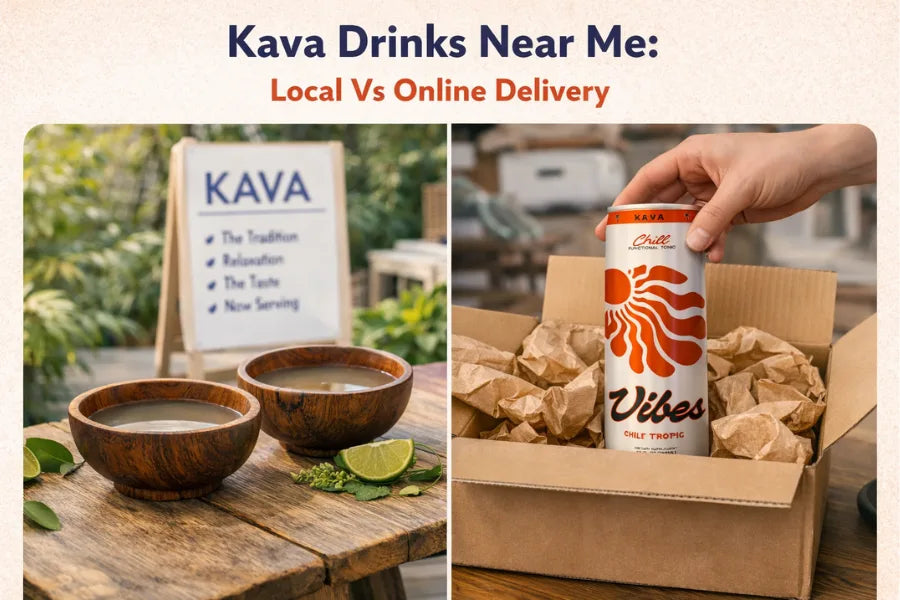
Kava Drinks Near Me: Local Vs Online Delivery

Finding Kava drinks should feel simple, but local availability can be uneven. One store may carry canned options, another may only have shots, and a nearby bar may serve fresh Kava instead of packaged drinks. When you search for " Kava drinks near me, the real question is not just where to go, but which option fits what you want today.

Maybe you want something nearby. Maybe you want more flavor choices online.

This guide compares both routes so you can choose without wasting time.

Table of Contents:

What Are Kava Drinks?

Kava drinks are beverages made with Kava root or Kava extract.

Traditional Kava is usually prepared by mixing the root with water and served as a fresh drink, often at a Kava bar or in a social setting. That style is different from the packaged options you may find in stores or online.

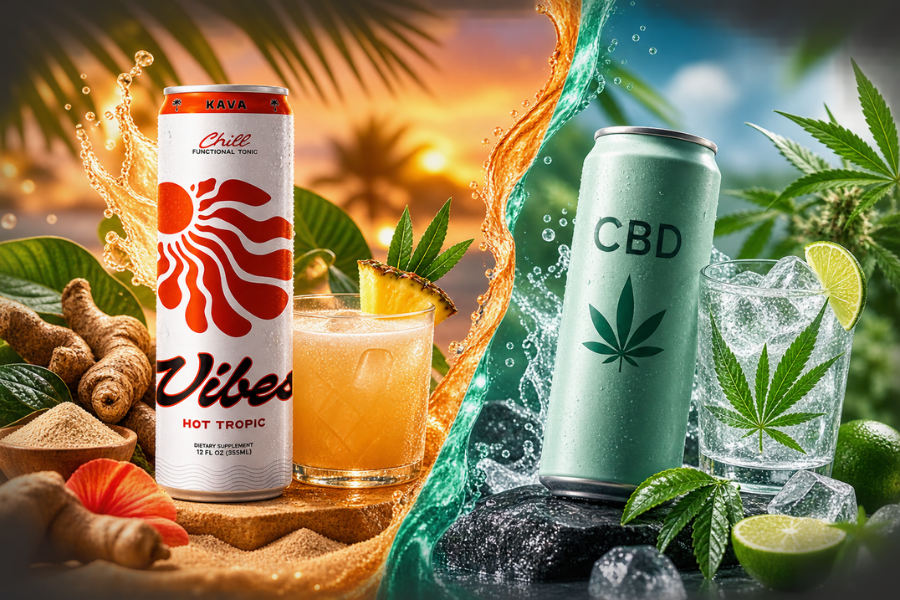
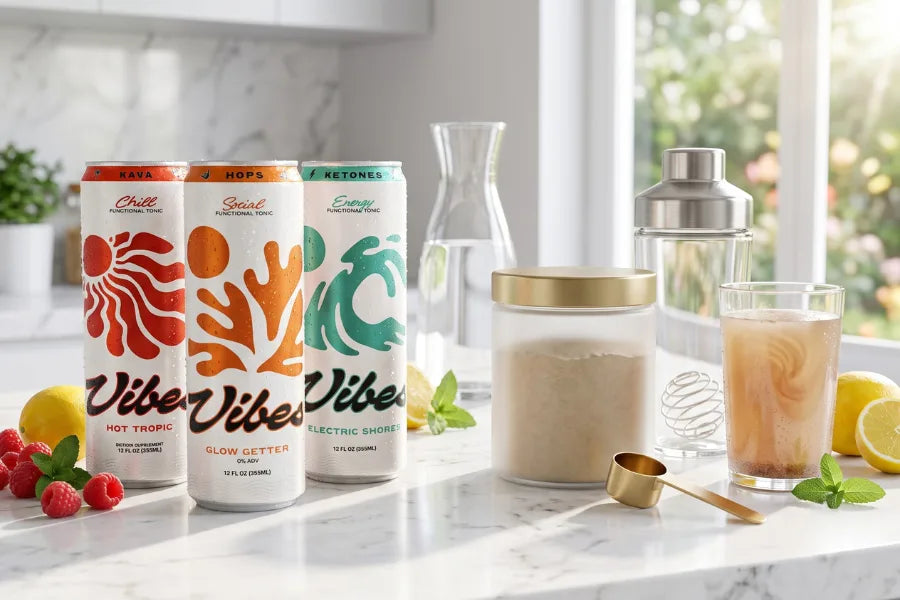
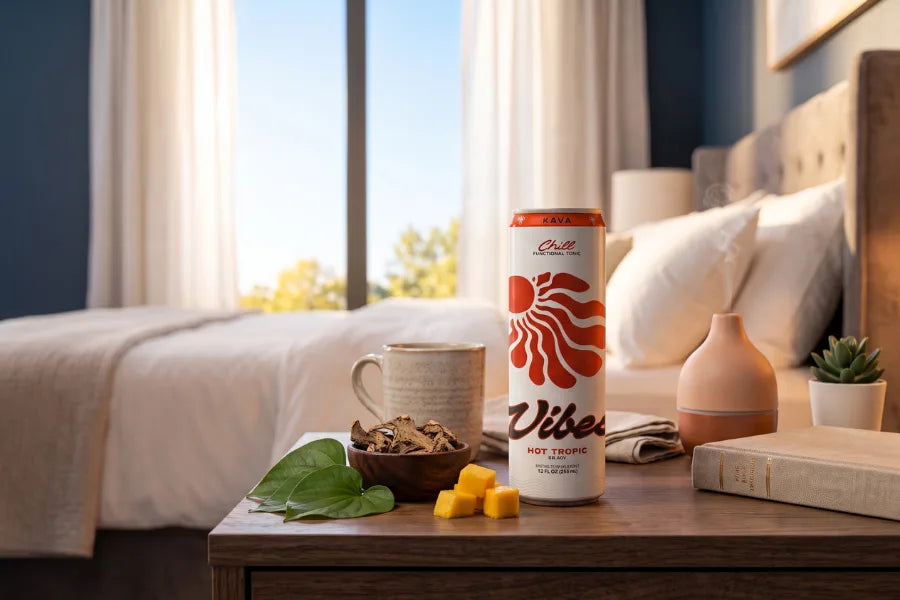
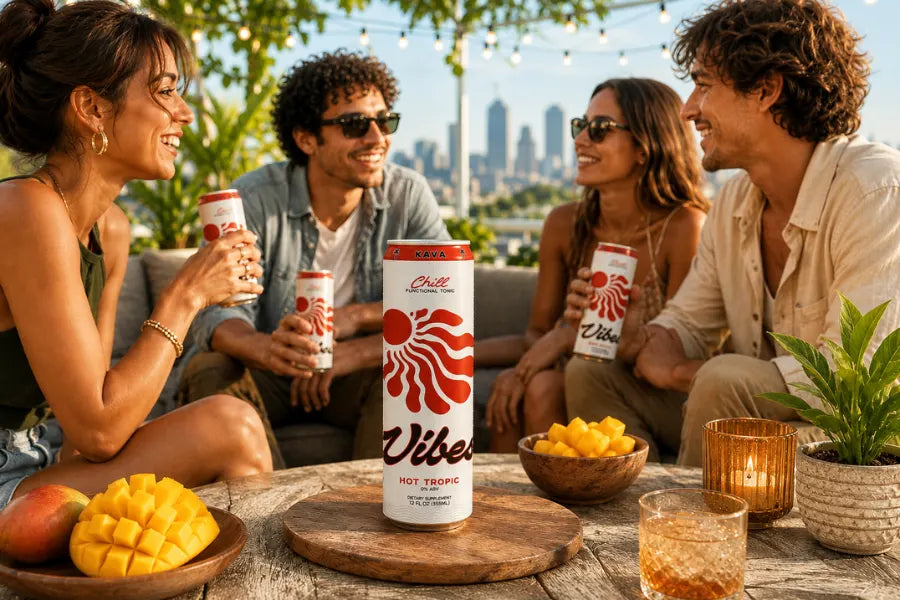
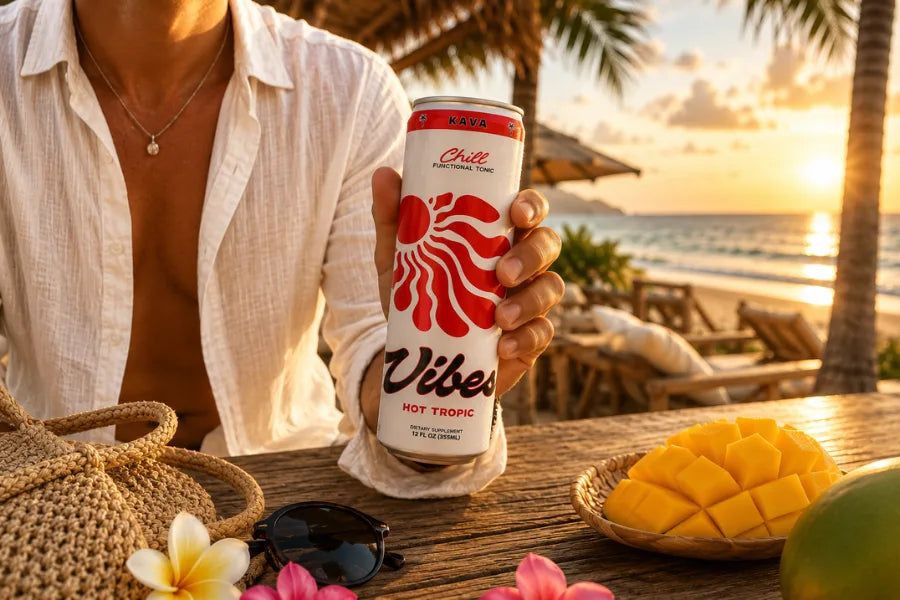
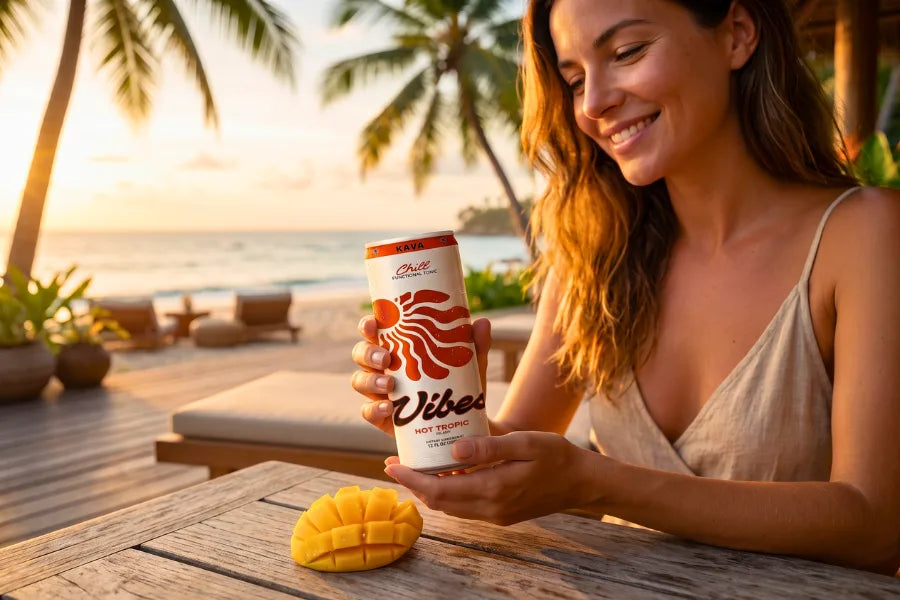
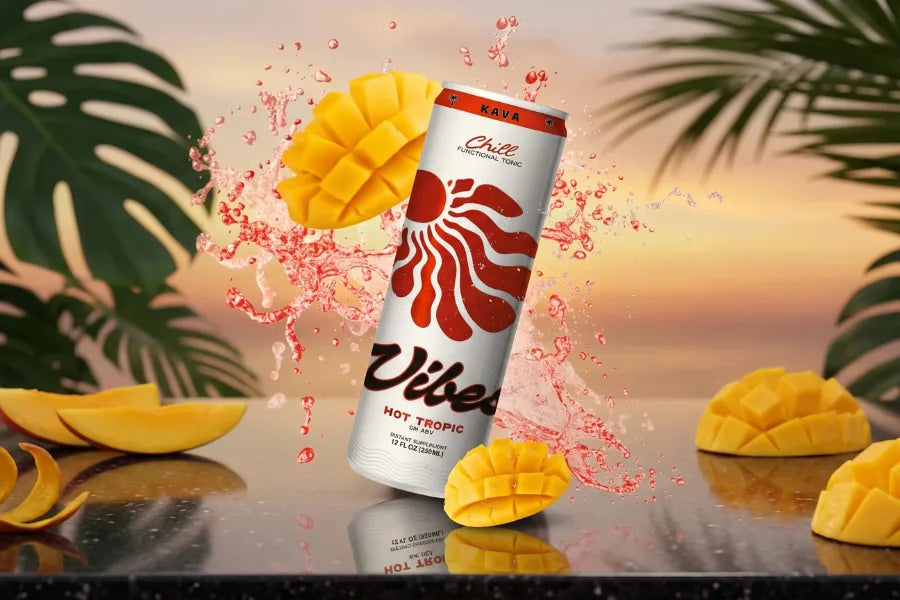
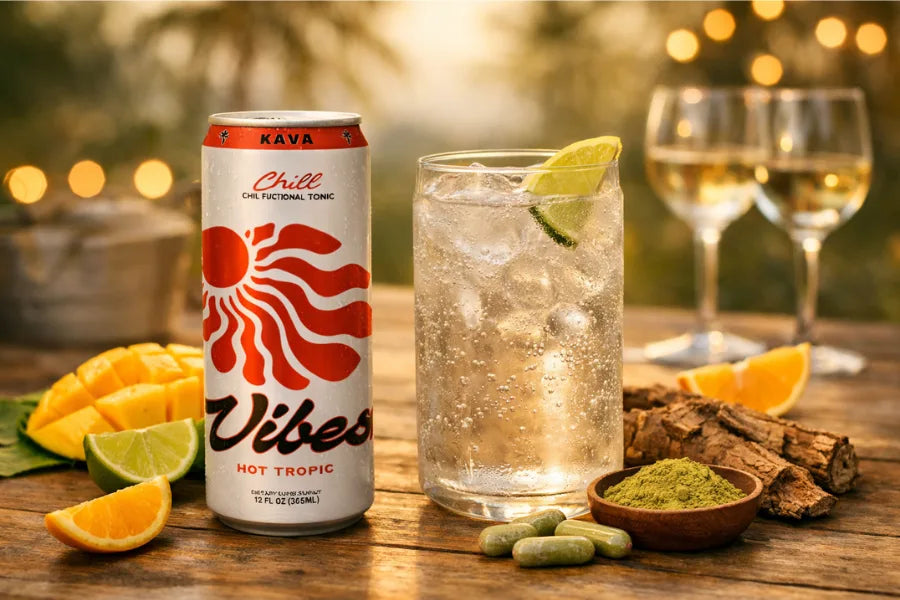
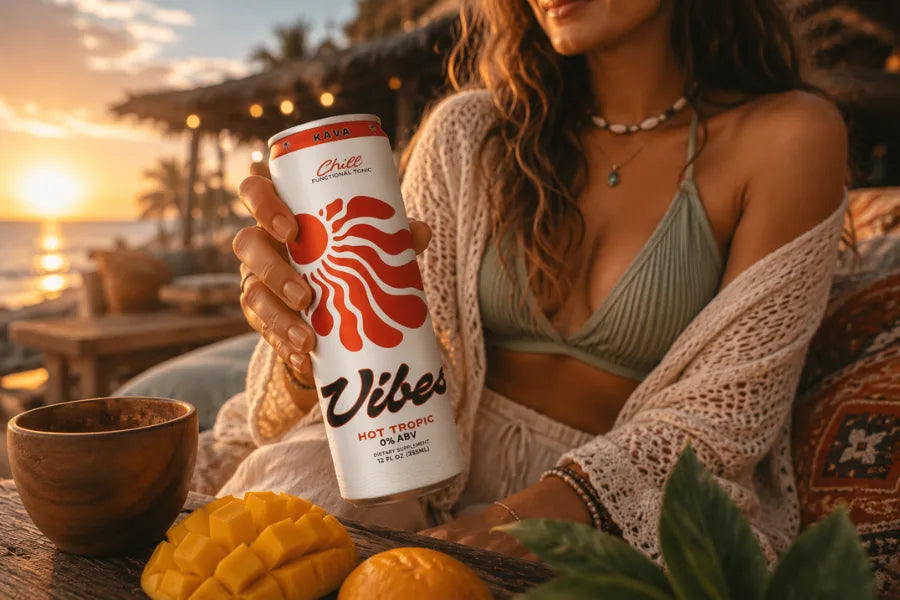
Today, these drinks are available in several convenient formats. You may see bottled tonics, shots, canned Kava drinks, and ready-to-drink beverages like VIBES Chill Hot Tropic Kava.

Some are made for quick pickup from local stores, while others are better suited for online ordering because you can check the flavor, ingredients, and product details before buying.

This format difference matters. A freshly served Kava bar drink may be more about the in-person experience, while a packaged Kava tonic is easier to order. So before choosing where to buy, check what kind of Kava drink you actually want.

Where Can I Buy Kava Drinks Near Me?

Searching for “Kava drinks near me” can point you in the right direction, but it will not always tell you whether the drink is fresh, canned, bottled, or available for pickup. That is why it helps to check each source with the format in mind.

Here are the main places worth checking:

Option 1: Kava bars

A Kava bar is usually the best local option if you want a freshly prepared drink in a communal setup instead of a packaged can or bottled tonic. It is also useful when you want to ask questions before ordering, especially if you are new to Kava drinks.

If this sounds like the kind of experience you want, search “Kava bar near me” and review a few details before heading out:

  • Recent reviews
  • Menu photos
  • Opening hours
  • Whether the bar serves traditional Kava, flavored Kava, or bottled options.

Note: Age rules can vary by location. Some Kava bars may allow a wider age range because they mainly serve non-alcoholic drinks, while others may require visitors to be 21 or older. Always check the bar’s age policy before visiting.

Option 2: Specialty beverage & wellness stores

These stores may carry bottled Kava tonics, functional drinks, shots, or cans. They are worth checking when you want more variety than a typical convenience store.

Many specialty beverage and wellness stores are also more likely to test new botanical drink options as interest in the Kava root market in the US continues to grow. This makes them a sensible place to check when you are looking for locally available, ready-to-drink Kava beverages.

Option 3: Gas stations

You may find Kava at gas station locations in some areas, especially where functional drinks are popular. Still, this route can be unpredictable because gas station inventory changes often. Additionally, quality levels can vary.

Good to know! If you are looking for traditional loose-leaf Kava root, you may have better luck with Kava bars, natural health stores, or trusted online shops. These places are more likely to offer a better variety than quick-stop stores.

Option 4: Walmart & Target

You may find Kava drinks at Walmart, but local stock can vary by store, city, and beverage section. Target may also carry select kava or functional drink options depending on location, but it is better to check the aisle and label carefully before buying.

Follow this quick checklist before you buy Kava drinks at Walmart or Target:

  • Check the functional drink or wellness beverage section.
  • See whether it is a kava drink, not just a botanical drink.
  • Look for Kava root or Kava extract on the label.
  • Check whether it is a can, tonic, shot, or ready-to-drink bottle.
  • Confirm the pack size and flavor before adding it to your cart.

Option 5: Delivery & pickup apps

Delivery and pickup apps like Instacart and Doordash can help you find stores that sell Kava drinks nearby without visiting each one individually. The main advantage is convenience. You can compare nearby options, check available formats, and see whether pickup or delivery works better for your timing.

Also Read: Kava Drink Recipes: 5 Easy Ways To Enjoy Kava At Home

Which local source works best?

Which local source works best?

It depends on what you want.

  • Pick a Kava bar for a fresh drink, staff help, or a communal setup.
  • Pick a specialty beverage or wellness store for tonics, shots, cans, or ready-to-drink options.
  • Use delivery or pickup apps to check nearby options quickly.
  • Be extra careful with gas stations, smoke shops, and convenience stores because details can vary.

What If Nearby Stores Don’t Have Kava Drinks?

Local stores are helpful when you want something close by, but they may not always carry the format, flavor, or brand you are looking for. One store may have cans, another may have shots, and some may not carry kava at all.

That is where online buying becomes useful.

When you shop online, you can usually check:

  • Flavor details before ordering.
  • Whether it is a tonic, shot, can, or ready-to-drink bottle.
  • Ingredient information.
  • Pack size and price.
  • Shipping details.
  • Customer reviews.

Another reason online buying is helpful is when you already know you want a packaged option instead of a freshly served kava bar drink. It also gives you more control when local stores only carry limited choices.

Note: If you cannot find many results for “Kava drinks near me,” check your local laws before assuming nearby stores are simply out of stock. Online buying might be an alternative, but a local ban or restriction can also stop vendors from shipping to your state, city, or area.

Local Vs Online Delivery: Which Is Better For Kava Drinks?

where to buy kava drinks? Local or Online

Local buying and online delivery solve two different problems.

Local buying helps when you want something close by, especially if a nearby store has the right format in stock. Online delivery helps when local choices feel limited, or when you want to compare flavors, ingredients, and product details before ordering.

The table below shares more advantages.

Your Shopping Goal

Local Buying

Online Delivery

Need it today

Better when a nearby store has stock.

Better when you can wait.

Want more choices

Depends on nearby stores.

Usually gives more options.

Want a fresh drink

Best through a kava bar.

Not the right fit.

Want packaged drinks

Possible, but store-dependent.

Better for cans, tonics, and ready-to-drink options.

Want product details

Labels may be all you get.

Easier to check ingredients, flavor, and reviews.

Want less store-hopping

May require visiting or calling around.

Easier to compare from one place.


FAQs

Where can I buy Kava drinks near me?

You can check Kava bars, specialty beverage stores, wellness stores, smoke shops, convenience stores, select gas stations, and delivery apps. Always check the drink format before buying because local options may include fresh drinks, cans, shots, or bottled tonics.

Where is the best place to buy Kava drinks online?

The best place to buy Kava drinks online is usually a trusted brand website or retailer that shares product details, ingredients, flavor notes, shipping information, and customer reviews. Checking everything helps you compare the best Kava drink brands before ordering.

Can I buy Kava drinks at gas stations?

Yes, some gas stations may carry Kava drinks, especially ready-to-drink cans, shots, or tonics. However, this might not be the best buying route because quality and storage conditions can vary. You may not know how long the drink has been sitting there, so check the label, expiry date, and packaging condition.

Are Kava drinks legal in all 50 states?

Kava is not listed under the federal Controlled Substances Act, but states and local health departments can have their own rules. Confirm the legality of Kava in your state before buying. Also, check local Kava bar rules, as some health departments may restrict bars from serving Kava drinks.

How do I find a Kava bar near me?

Search “Kava bar near me” on Google or Google Maps. Local options should start appearing if any are available around you. Before visiting, check opening hours, photos, reviews, and menu details. You can also use localized platforms like Yelp to compare nearby bars before buying.

Can I buy Kava drinks at Target?

You may find Kava drinks at Target depending on your location, local stock, and online availability. Check the Target website or app before visiting, and confirm whether the product is a ready-to-drink Kava beverage with Kava root or Kava extract on the label.

How much do Kava drinks usually cost?

Pricing depends on the format. A single serving at a Kava bar, a stronger serving, a flavored drink, a ready-to-drink can, and loose Kava root for home preparation can all be priced differently.

What should I ask the staff before buying Kava locally?

Ask what type of Kava drink it is, whether it is fresh or packaged, and if there are any age rules. You can also ask about flavor, format, and availability.

Conclusion

A “Kava drinks near me” search is a helpful starting point, but it should not be the only step. The best buying route comes down to timing and choice. Kava bars work well for fresh drinks and a communal setup, while stores, gas stations, and delivery apps may help with quick local pickup.

If nearby choices feel limited, online buying can give you more control over flavor, format, and product details. The right choice depends on what matters more today: speed, variety, or a specific ready-to-drink option.

Continue reading
How Functional Drinks Work

How Functional Drinks Work: Key Ingredients and What They Do

Functional drinks are made for more than refreshment. Some are made for energy, some for focus, some for hydration, and some for feeling calm. But before choosing one, you need to understand what is inside the drink and what each ingredient is supposed to do.

To understand how functional drinks work, start with the ingredients. This blog explains the common ingredients, what they may do, how long the effects may take, and how to choose a drink without getting confused by fancy labels.

Table of Contents:

What Makes a Drink “Functional”?

It is the ingredients that make a drink functional. It does more than just refresh you. It may be made for energy, focus, hydration, calmness, digestion, or recovery. The ingredient is what gives the drink its purpose.

Common ingredients in functional drinks include 

  • Electrolytes
  • Adaptogens
  • Nootropics
  • Vitamins
  • Minerals
  • Botanicals
  • Amino acids
  • Kava
  • Ketones
  • Probiotics
  • Prebiotics

Each one plays a different role, so two functional drinks can feel very different even if they look similar on the outside.

For example, an electrolyte drink may be used for hydration, while a caffeine drink gives you an instant energy boost. Whereas a Kava drink is usually made for a calmer feeling.

So, do not judge the drink only by its flavor or name. Check the functional beverage ingredients, why they were added, and whether they align with what you want. That is the simplest way to understand how functional drinks work.

What Makes a Drink “Functional”

Popular Types of Functional Beverages

Functional beverages are available in different forms. Some are made for energy, some for hydration, some for digestion, and some for calmness.

These are some types of functional beverages:

  • Energy drinks
  • Probiotic drinks
  • Enhanced waters
  • Herbal teas
  • Protein shakes
  • Functional juices
  • Kava drinks
  • Ketone drinks
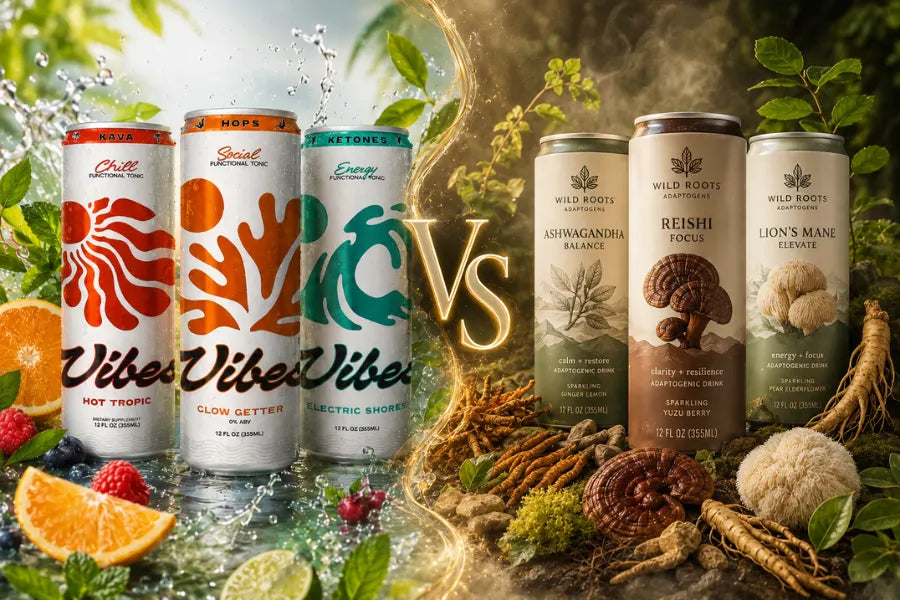
  • Adaptogen drinks
  • Nootropic drinks

Functional Drinks vs Coffee and Energy Drinks

This is where many get confused. Coffee, energy drinks, and functional drinks can all be used for energy, but they are not the same.

The table below makes the difference easier to compare.

Drink

Main ingredient

Helps with

Before you choose, check

Coffee

Caffeine

A familiar energy lift.

Caffeine amount, acidity, sugar, creamers.

Energy drinks

Caffeine, taurine, B vitamins, sugar, or sweeteners

Quick energy and alertness.

High caffeine, sugar, sweeteners, serving size.

Functional drinks

Purpose-based ingredients

Different goals, such as energy, focus, hydration, calmness, gut support, or recovery.

Main ingredients, caffeine level, sugar, ingredient amount, drink purpose.

Key Ingredients in Functional Drinks and What They Do

The table below lists common ingredients in functional beverages and the functions they usually support.

Ingredients for functional beverages

Reason for addition

Examples

Adaptogens

May help with stress and balance

ashwagandha, rhodiola

Nootropics

May help with focus

L-theanine, lion’s mane, Alpha GPC

Kava compounds

May help you feel calmer

Kava root extract, kavalactones

Ketones

May help with energy

BHB ketones

Electrolytes

Help add back minerals lost through sweat

magnesium, potassium, sodium

Botanicals

May add a calming, energizing, or mood-based purpose

hops, green tea extract

Amino acids

May help with calmness, focus, or recovery

L-theanine, BCAAs

Natural caffeine

May help you feel more alert

green tea caffeine, coffee extract, guarana, yerba mate

B vitamins

Help your body get energy from food

vitamin B6, vitamin B12, niacin

Probiotics

Add good bacteria to your gut

Lactobacillus, Bifidobacterium

Prebiotics

Feed the good bacteria already in your gut

inulin, chicory root fiber

Fiber

May support regular digestion

soluble fiber, plant fiber

Protein ingredients

May help after exercise or a tiring day

collagen, pea protein, whey protein

Vitamins and minerals

May support everyday nutrient needs

vitamin C, vitamin D, zinc

Antioxidants

May help your body deal with daily stress

pomegranate, turmeric, green tea extract

Calming ingredients

May help with relaxation or sleep support

chamomile, tart cherry, L-theanine

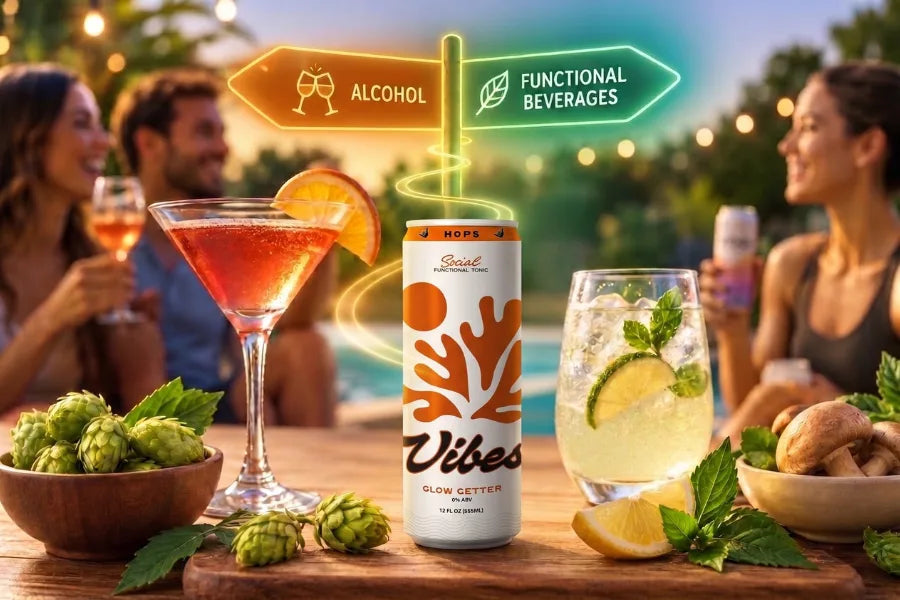
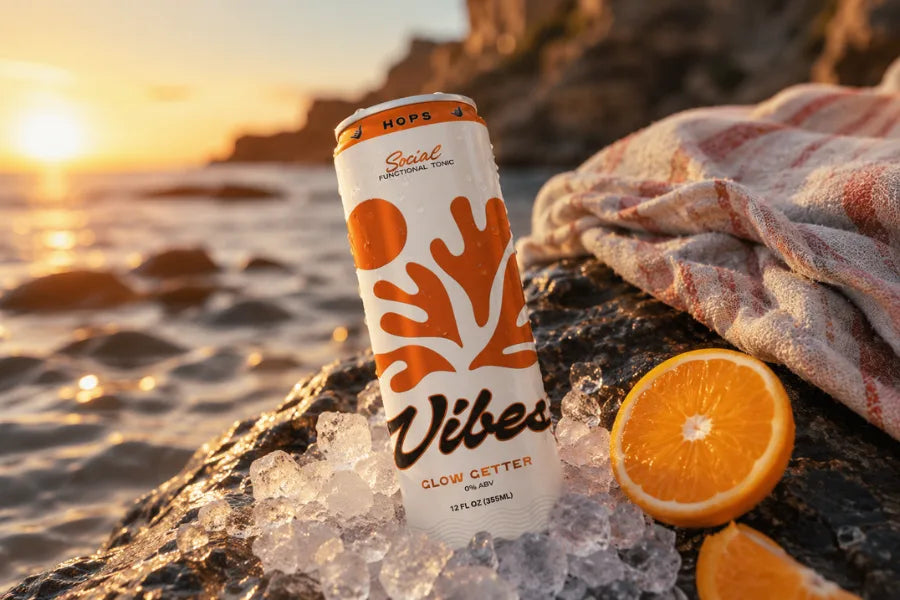
👉🏻 We make the ingredient-purpose connection easy to see in our formulas. Glow Getter Hops has hops extract, L-Theanine, Alpha GPC, and green tea caffeine for focus and social energy. Hot Tropic Kava has Kava root extract, L-Theanine, and green tea extract for calmness without alcohol.

How Do Functional Ingredients Work in Your Body?

To understand how functional drinks work, start with the ingredient. After you drink it, your body may absorb it, break it down, or use it to support a specific process.

That is the simple science behind functional beverages.

The role changes from ingredient to ingredient, so have a look:

Energy and alertness

Caffeine from green tea, coffee beans, guarana, or yerba mate can help you feel more awake. B vitamins help your body get energy from food.

Focus

Nootropics like L-theanine, Lion’s Mane, and Alpha-GPC are often added to drinks designed for attention and clear thinking.

Calmness

Kava, chamomile, hops, tart cherry, and L-theanine may be added when making the drink to help you feel relaxed.

Stress

Adaptogens such as ashwagandha, rhodiola, and ginseng are often added to drinks made to help the body deal with stress.

Digestion

Fiber can support regular digestion. Probiotics add good bacteria, while prebiotics feed the good bacteria already in your stomach.

Hydration

Electrolytes such as sodium, potassium, and magnesium help add back minerals you may lose through sweat.

After exercise or a long day

Protein ingredients, amino acids, collagen, or plant proteins may be added to drinks made for recovery.

Everyday nutrient support

Vitamins, minerals, and antioxidants such as vitamin C, vitamin D, zinc, turmeric, pomegranate, or green tea extract may be included for regular nutrient support.

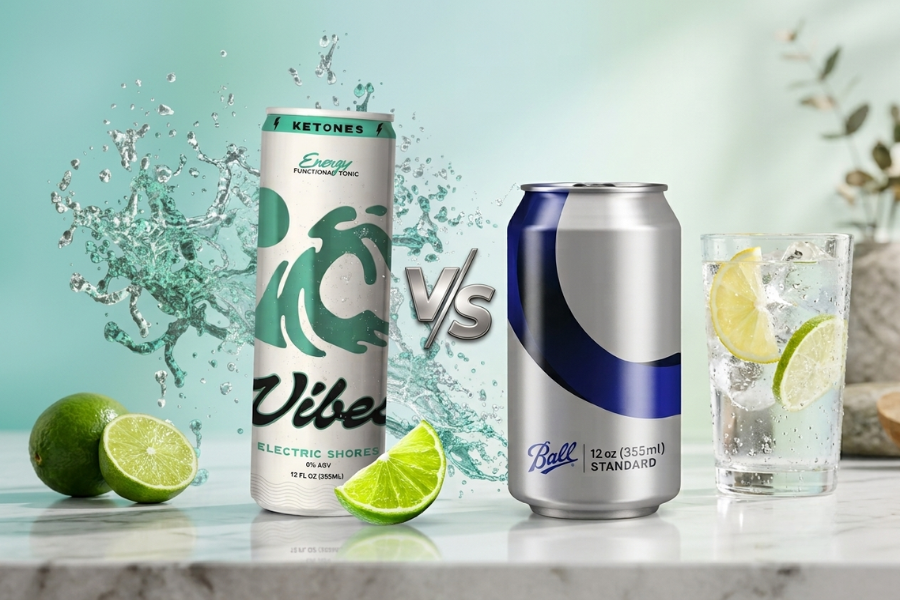
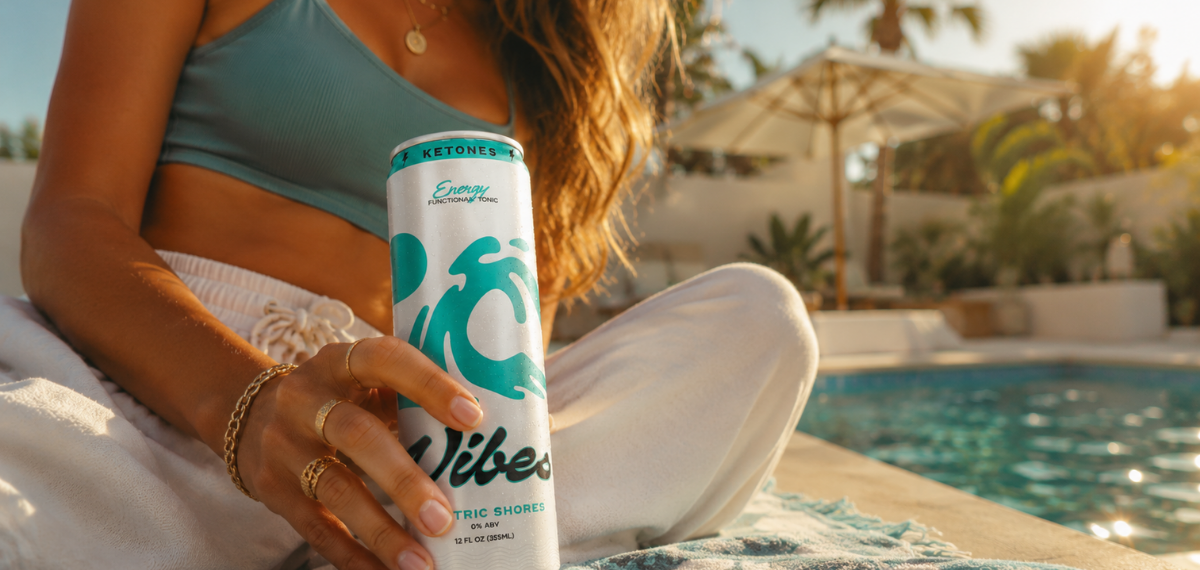
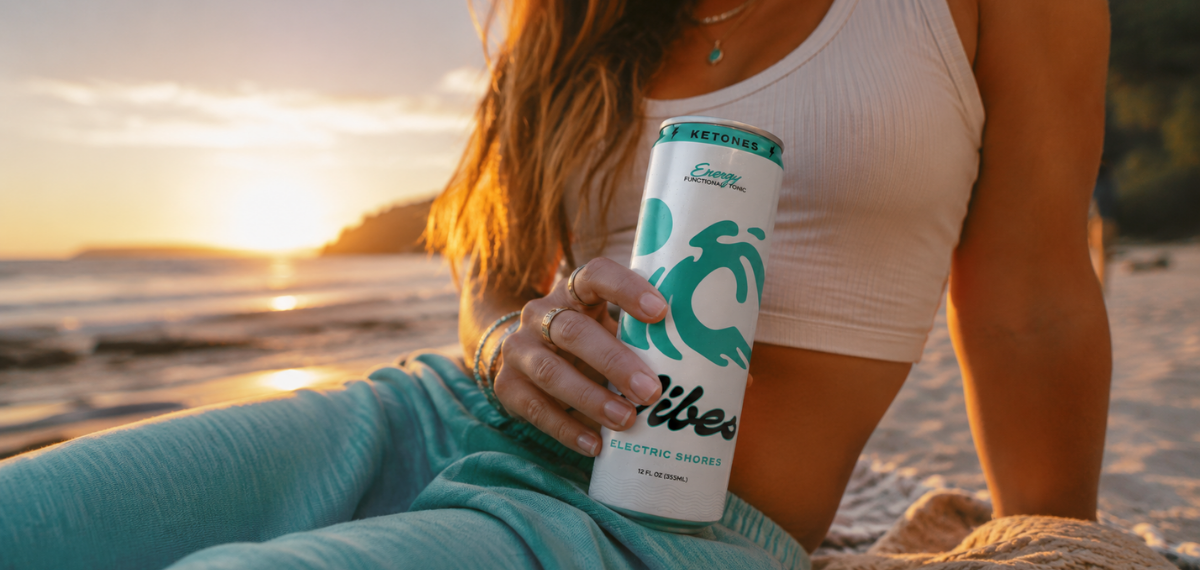
A drink may include one main ingredient or combine several, such as Electric Shores BHB. It is a functional beverage that combines BHB ketones, Alpha GPC, green tea extract, and hydration minerals in one formula.

The Evolution of Functional Drinks

The journey started with basic choices: water for refreshment, tea or coffee for a lift, and sports drinks for hydration. Then energy drinks became popular for quick energy, but many were criticized for high sugar, heavy caffeine, artificial ingredients, jitters, and crashes.

Now, functional beverages in the 21st century are no longer only about energy. They may be made for different purposes:

  • Hydration
  • Focus
  • Calmness
  • Gut support
  • Alcohol-free occasions
  • Energy with less sugar-heavy formulas
Evolution of Functional Drinks

How Long Do Functional Drinks Take to Work and Last?

There is no one answer because every formula is different.

Functional ingredients in beverages may feel noticeable faster. Caffeine and certain energy-focused formulas usually work more quickly. Hydration-focused drinks may depend on how hydrated you already are. Kava, adaptogens, and some nootropics may feel different based on your body, food intake, tolerance, and the full formula.

The timing may depend on:

✔️ Ingredient type
✔️ Amount per can or bottle
✔️ Caffeine level
✔️ Food intake
✔️ Body response
✔️ How often do you choose that type of drink?

So, how long do functional drinks take to work? It may be quick for some drinks and slower for others.

And how long do the effects of functional drinks last? That also depends on the formula. A caffeine-led drink may feel different from a Kava drink, while a hydration-focused drink may not feel like an “effect” at all.

How to Choose the Right Functional Drink?

Once you understand how functional drinks work, choosing one becomes much easier. Start with the reason you want the drink.

Use this quick checklist:

  • What is the main goal: energy, calm, focus, hydration, or social sipping?
  • Which active ingredients are included?
  • Are the ingredient amounts shared?
  • Does it contain caffeine?
  • How much sugar is in it?
  • Does the drink match the moment?

Do not choose a drink only because it mentions a trendy ingredient. Look at the full formula.

For alcohol-free functional drinks, you can start with what you want the drink to do. At Drink Vibes, our formulas are made around different moments. You can browse our functional drinks collection based on what fits your day.

FAQs

1. Are functional drinks safe to drink daily?

Many functional drinks can be taken daily, but it depends on what is inside. Check caffeine, sugar, calories, herbal extracts, and serving size. Too much caffeine may cause jitters, while sugar-heavy drinks can add extra calories. Strong herbal ingredients should also be checked carefully, especially if you take medication.

2. Are all functional drinks the same?

No. Functional drinks are made for different goals. Some are made for energy, some for focus, some for hydration, some for gut support, and some for calmness. That is why the ingredient list matters more than the drink category.

3. What makes functional drinks effective?

Functional drinks can be effective when they contain the right active ingredients in the right amount. Since they come in liquid form, your body may process them faster than some solid foods. For example, electrolytes are added for hydration, caffeine for alertness, and Kava for calmness.

4. Can functional drinks replace coffee or energy drinks?

Sometimes, yes. It depends on what you want from the drink. If you want alertness, check caffeine or green tea extract. If you want focus, look for ingredients like l-theanine, lion’s mane, or Alpha GPC. If you want energy without a regular energy drink, check formulas with BHB ketones or similar energy-focused ingredients.

5. Do functional drinks actually work?

Some functional drinks may work, but it depends on the ingredients, the amount, and the drink's goal. For example, an electrolyte drink makes more sense for hydration than a drink that lists a trendy ingredient in a tiny amount. Check the label, caffeine level, sugar content, and active ingredients.

6. Can functional drinks replace water?

No. Water should remain your main source of hydration. Functional drinks can add fluids, vitamins, or electrolytes, but many also contain sugar, calories, caffeine, or other strong ingredients. That makes them unsuitable as your main drink throughout the day.

Continue reading
Best functional beverages

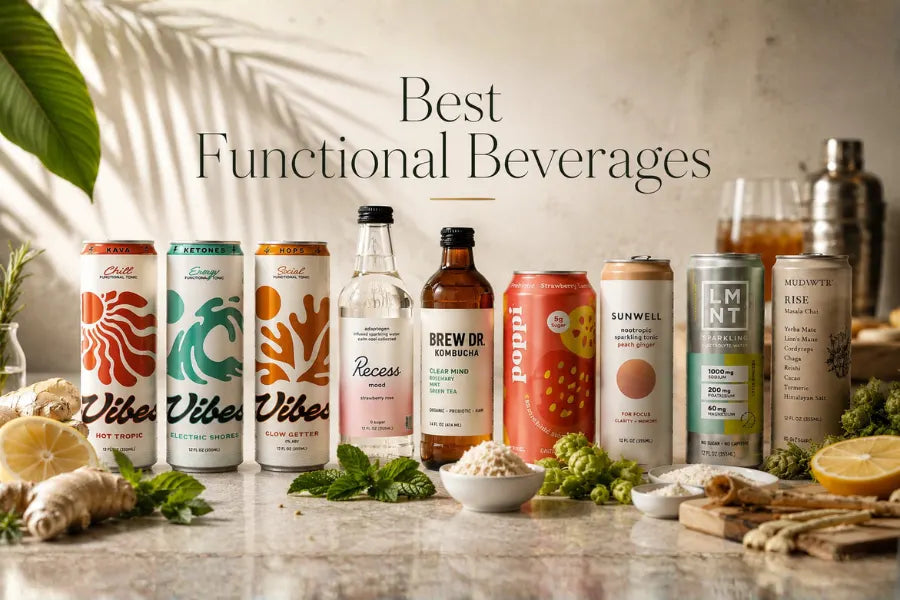
Best Functional Beverages You Should Try in 2026

The functional beverage market has become more interesting, but also more crowded. You’ll find prebiotic sodas, nootropic drinks, Kava cans, kombucha, hydration powders, coconut water, and non alcoholic drinks made for social plans, each promising something different. The best functional beverages are the ones whose ingredients support the purpose they claim to offer.

In this blog, you’ll find 10 top picks with quick details on function, ingredients, pros, and things to know before you choose your next drink.

Table of Contents:

Match Functional Beverages To Your Needs In Seconds

Functional beverages

Pick it for

Why this one?

Olipop Vintage Cola

Regular soda replacement

9g fiber, 5g sugar, cola taste

Drink Vibes Glow Getter Hops

Social plans without alcohol

Hops drink with light caffeine

Celsius Sparkling Strawberry Lemonade

Strong energy without sugar

200mg caffeine, 0 sugar, 7 vitamins

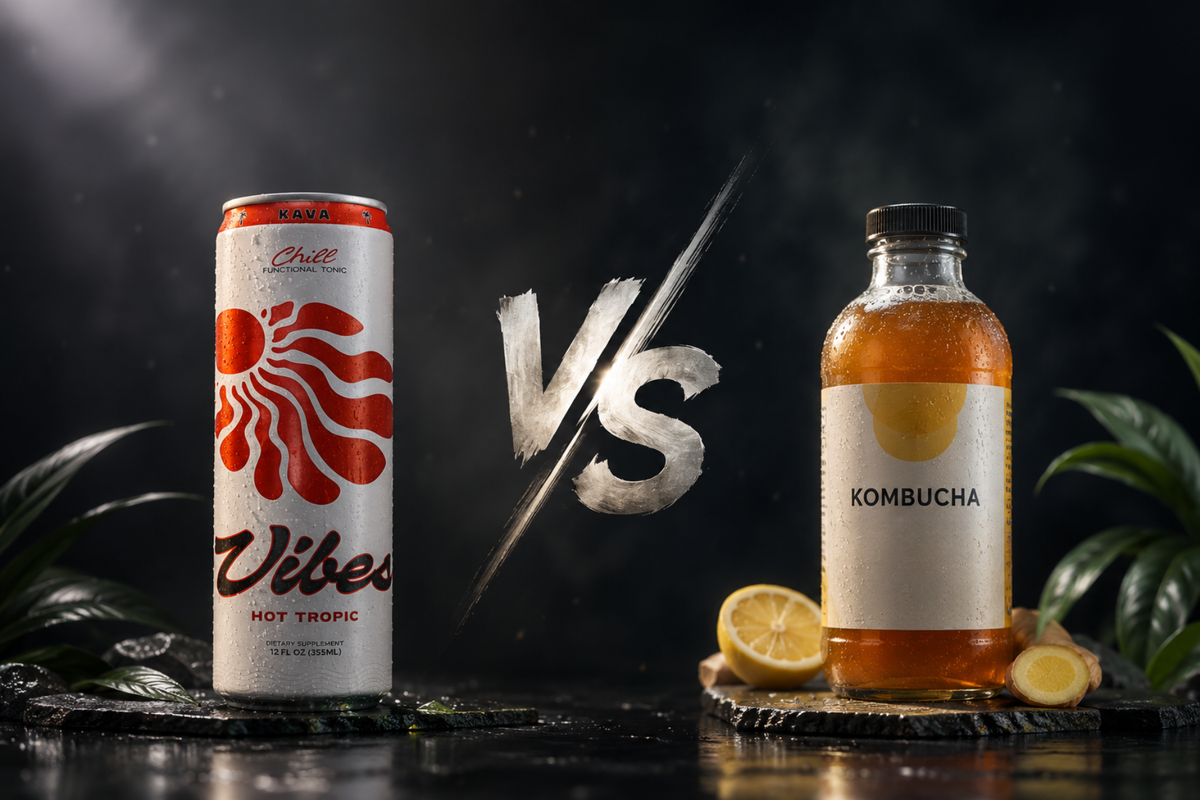
GT’s SYNERGY Trilogy Kombucha

Kombucha with probiotics

Tart raspberry, lemon, ginger taste

Drink Vibes Hot Tropic Kava

Alcohol-free evening drink

60mg kavalactones, light mango taste

Liquid I.V. Açaí Berry Hydration Multiplier

Electrolytes in water

500mg sodium, 380mg potassium

Odyssey Elixir Dragon Fruit Lemonade

Nootropic drink with moderate caffeine

85mg caffeine, 0g added sugar

Recess Mood Lime Citrus

Caffeine-free evening drink

Magnesium, L-theanine, lemon balm

Drink Vibes Electric Shores BHB

Energy drink with electrolytes

BHB ketones, Alpha GPC, minerals

Vita Coco Original Coconut Water

Simple coconut water

Non-carbonated, short ingredient list

Before You Add A Functional Beverage To Your Cart...

Use this quick checklist before picking one:

  1. One clear purpose, like energy, focus, hydration, gut support, calmness, or alcohol-free sipping.
  2. Ingredients that actually support that purpose, such as electrolytes for hydration or probiotics for gut support.
  3. Label details you can check easily, including sugar, caffeine, sodium, serving size, and ingredient amounts.
  4. Lower sugar, natural sweeteners, no high fructose corn syrup, and fewer artificial colors or preservatives.
  5. Bioavailability for better absorption, plus trust signs like third-party lab testing, quality checks, or research-backed ingredients.
functional beverages BUYING GUIDE

Best Drink Options That Work In 2026

1. Olipop Vintage Cola: A good regular soda replacement drink

Olipop Vintage Cola is a functional cola with 50 calories, 5g total sugar, 2g added sugar, 9g fiber, and 50mg green tea caffeine per can. The flavor has citrus, caramel, vanilla, and cinnamon notes, so expect a modern cola taste rather than a direct Coke or Pepsi copy. It is also vegan, gluten-free, and Non-GMO Project Verified.

Best for:

A lower-sugar cola with added fiber.

Primary function:

Gut support and digestive wellness.

Key ingredients:

  • OLISMART blend
  • Cassava root fiber
  • Chicory root inulin
  • Jerusalem artichoke inulin
  • Nopal cactus
  • Marshmallow root
  • Calendula flower
  • Kudzu root
  • Cassava root syrup
  • Apple juice concentrate
  • Lime juice concentrate
  • Stevia leaf
  • Green tea caffeine
  • Himalayan pink salt
  • Mushroom extract

Why did we pick it?

It brings fiber, lower sugar, and a familiar cola direction into one drink, making it a practical pick for anyone moving away from regular soda.

Pros:

  • Has 9g of fiber with only 5g of total sugar per can.
  • Carries helpful preference markers, such as vegan, gluten-free, and Non-GMO Project Verified.

Cons:

  • Some reviews say the flavor does not taste like regular cola and has a noticeable aftertaste.

GLOW GETTER

2. Drink Vibes Glow Getter Hops: A drink for social plans without alcohol

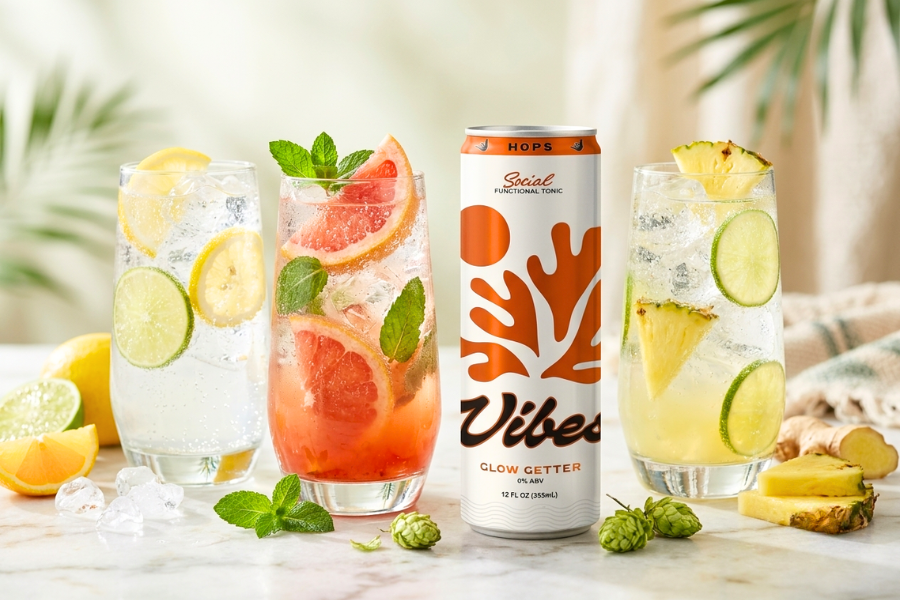
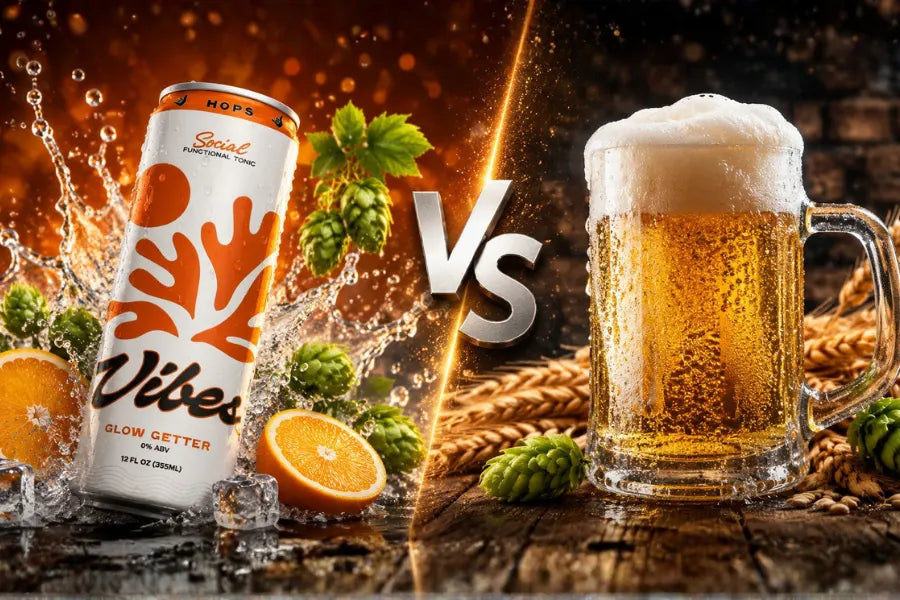
Glow Getter Hops is made for dinners, gatherings, and nights out when you want to skip alcohol but still have a proper drink in hand. It has grapefruit and tropical citrus notes with a crisp finish. The formula includes Hops extract, Alpha GPC, L-theanine, green tea extract, and natural caffeine from green tea.

Best for:

Dinners, gatherings, and nights out without alcohol.

Primary function:

Alcohol-free social drink with light focus support.

Key ingredients:

  • Hops extract
  • Alpha GPC
  • L-theanine
  • Green tea extract
  • Natural caffeine from green tea

Why did we pick it?

Because it is a hops-based drink, which makes it different from soda, kombucha, hydration powders, and standard energy drinks. It works well in the alcohol alternatives category because it has a crisp botanical taste, zero alcohol, and nootropics for a more clear-headed drinking experience.

Pros:

  • Customers mention using it at dinners, nights out, and social events without feeling heavy.
  • The grapefruit and tropical citrus profile make it easy to serve chilled.

Cons:

  • This isn't the best choice if you want a completely caffeine-free evening drink. The effects may also build slowly, so it suits planned social settings better than moments when you want something immediate.

3. Celsius Sparkling Strawberry Lemonade: A high caffeine pick for busy days

Celsius Sparkling Strawberry Lemonade is a carbonated energy drink made for days when you want stronger caffeine without sugar. Each 12 fl oz can has 200mg caffeine, 0 sugar, 7 vitamins, natural flavors, and no preservatives. It also has no high fructose corn syrup, no aspartame, and no artificial colors. The vitamin mix includes Vitamin C, B2, B3, B5, B6, B12, and Biotin, along with chromium.

Best for:

Workout days, long work hours, study sessions, and packed schedules.

Primary function:

Energy support.

Key ingredients:

  • Caffeine
  • Green tea extract
  • Guarana seed extract
  • Ginger root
  • Taurine
  • Glucuronolactone
  • Vitamin C
  • Vitamin B2
  • Vitamin B3
  • Vitamin B5
  • Vitamin B6
  • Vitamin B12
  • Biotin
  • Chromium
  • Sucralose

Why did we pick it?

Celsius gives you 200mg caffeine, 0 sugar, and 7 vitamins in one can. The strawberry lemonade taste feels familiar if you already like fruity energy drinks, but the caffeine amount makes it stronger than lighter functional drinks.

Pros:

  • 200mg caffeine makes it a strong option for workouts or busy days.
  • 0 sugar, 7 vitamins, no preservatives, and no artificial colors.

Cons:

  • This is not a mild energy drink. If 200mg caffeine feels too strong, affects your sleep, or makes you jittery, drink it earlier in the day or choose a lighter option.

4. GT’s Living Foods SYNERGY Trilogy Kombucha: A probiotic pick for Kombucha drinkers

GT’s SYNERGY Trilogy Kombucha is a raw, unpasteurized kombucha made with fermented black tea, green tea, raspberry juice, lemon juice, and cold-pressed ginger juice. A 16 fl oz bottle has 50 calories, 12g total sugar, 3g added sugar, and 9 billion probiotics at the time of bottling. It is organic, vegan, gluten-free, kosher, and Non-GMO Project Verified.

Best for:

A tart kombucha with fruit and ginger notes.

Primary function:

Digestive wellness and microbiome support.

Key ingredients:

  • GT’s kombucha
  • Raspberry juice
  • Lemon juice
  • Cold-pressed ginger juice
  • Kombucha culture
  • Black tea
  • Green tea
  • Kiwi juice
  • Cane sugar used for fermentation

Why did we pick it?

Trilogy has a simple reason to be here: it is a fermented tea with probiotics, fruit juice, and ginger. It gives you a functional drink option that is different from energy drinks, hydration powders, prebiotic sodas, and Kava drinks.

Pros:

  • Has 9 billion probiotics and a short ingredient list.
  • Organic, vegan, gluten-free, kosher, and Non-GMO Project Verified.

Cons:

  • The taste is tart, and kombucha may contain naturally occurring alcohol from fermentation. It may not be the right choice if you avoid alcohol because of pregnancy, allergies, sensitivities, or religious reasons.

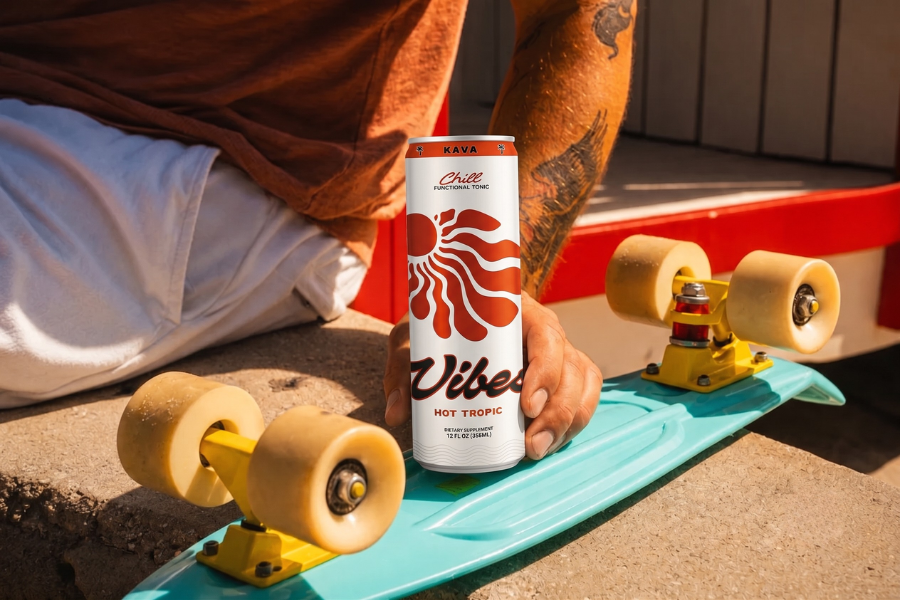
HOT TROPIC

5. Drink Vibes Hot Tropic Kava: A non-alcoholic Kava drink with buzz without the booze

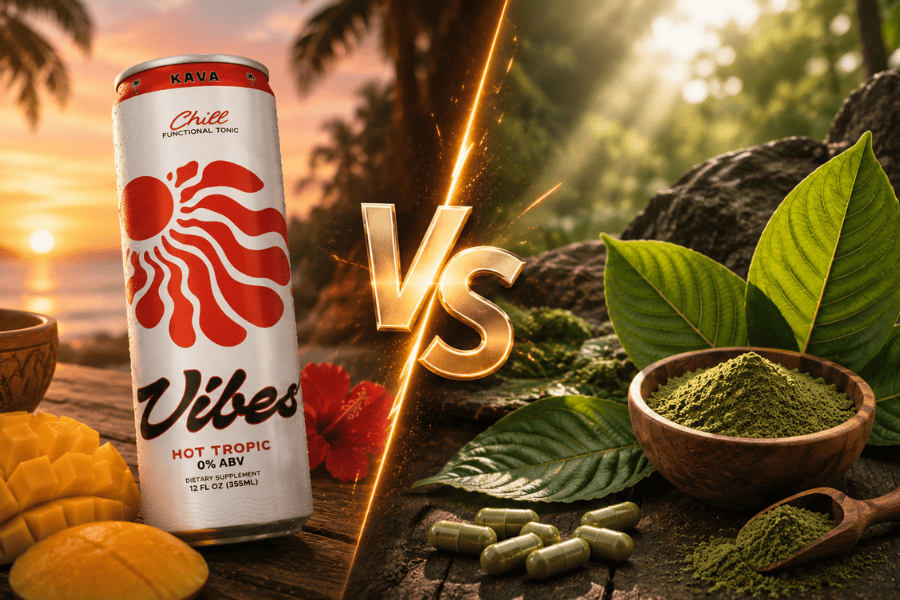
Our Hot Tropic Kava is made for after-work hours, small get-togethers, or evenings when you want to skip alcohol. It has a light mango taste with a botanical note from Kava. There are 60mg of Kavalactones in each can.

Best for:

After-work hours and small get-togethers without alcohol.

Key ingredients:

  • Noble Kava root extract
  • 60mg Kavalactones
  • L-theanine
  • Green tea extract
  • Alpha GPC

Why did we pick it?

Hot Tropic Kava is one of the stronger alcohol alternatives on this list because it uses Kava rather than just flavor, bubbles, or sugar to create a different drinking experience. The mango flavor also makes it easier to try if traditional Kava feels too earthy.

Pros:

  • It feels calming without making the drink feel too heavy.
  • The light mango taste helps balance Kava’s earthy side.

Cons:

  • Hot Tropic Kava may not be your pick if you want a sweet fruit soda, a simple coconut water, or a high-caffeine energy drink. Kava has an earthy taste, even when paired with mango.

6. Liquid I.V. Açaí Berry Hydration Multiplier: An açaí berry-flavored electrolyte drink mix with 8 vitamins

Liquid I.V. Açaí Berry Hydration Multiplier is an electrolyte powder that you mix into water. Each single-serving packet has 45 calories, 500mg of sodium, 380mg of potassium, 12g of carbs, 11g of total sugar, 11g of added sugar, Vitamin C, and B vitamins. The Açaí Berry flavor has a rich berry taste, close to blackberry. It is also vegan, dairy-free, gluten-free, and Non-GMO.

Best for:

Travel days, hot weather, workouts, and long hours when you want electrolytes with your water

Primary function:

Hydration support.

Key ingredients:

  • Cane sugar
  • Dextrose
  • Citric acid
  • Salt
  • Potassium citrate
  • Sodium citrate
  • Natural flavors
  • Dipotassium phosphate
  • Silicon dioxide
  • Stevia leaf extract
  • Vitamin C
  • Vitamin B3
  • Vitamin B5
  • Vitamin B6
  • Vitamin B12

Why did we pick it?

Liquid I.V. is useful because the format is flexible. You can keep a packet in your bag, mix it into water when needed, and get electrolytes without buying a ready-made bottle or can. That makes it practical for travel, gym bags, outdoor plans, and hot days.

Pros:

  • Easy to carry and prepare anywhere you have water.
  • Past customers often describe the Açaí Berry flavor as tasty without being too sweet.

Cons:

  • Each packet has 11g of added sugar and 500mg of sodium. If sugar is an important factor for you, compare it with Celsius Sparkling Strawberry Lemonade, which has 0 sugar, or Olipop Vintage Cola, which has 5g total sugar, before choosing.

7. Odyssey Elixir Dragon Fruit Lemonade: A lower-caffeine energy drink with mushrooms & no added sugar

Odyssey Elixir Dragon Fruit Lemonade is a sparkling functional energy drink with 85mg of green tea caffeine in a 12 fl oz can. It has 20 calories, 2g total sugar, and 0g added sugar. The taste combines dragon fruit and lemonade, so it leans toward a fruity, citrusy profile.

The drink has an interesting starting point. Odyssey began after founder Scott Frohman started adding mushroom blends to his morning coffee. That idea shows up here through Lion’s Mane, Cordyceps, L-theanine, ginseng, and green tea caffeine.

Best for:

Work hours, study time, creative tasks, and days when you want moderate caffeine.

Primary function:

Energy and focus.

Key ingredients:

  • Filtered carbonated water
  • Organic erythritol
  • Organic dragon fruit puree
  • Organic lemon juice concentrate
  • Natural flavor
  • Monk fruit juice concentrate
  • Organic Lion’s Mane mushroom extract
  • Organic Cordyceps mushroom extract
  • Panax ginseng root extract
  • L-theanine
  • Organic caffeine from green tea extract

Why did we pick it?

Odyssey works well if you are comparing nootropic drinks because it gives you 85mg caffeine, Lion’s Mane, Cordyceps, L-theanine, and ginseng in one can. It is a better choice if you want an energy drink that does not rely only on caffeine.

Pros:

  • 85mg caffeine is milder than Celsius, so it may feel easier for work or study time.
  • 20 calories, 2g total sugar, and 0g added sugar make it a lighter choice than many sweet energy drinks.

Cons:

  • It uses erythritol and monk fruit, so the sweetness may leave an aftertaste for some. Also, 85mg caffeine may still be too much later in the day if caffeine affects your sleep.

8. Recess Mood Lime Citrus: A caffeine-free sparkling drink

Recess Mood Lime Citrus is a sparkling water for evenings, after-work hours, or nights when you want a non-alcoholic drink without caffeine. Each 12 fl oz can has 20 calories, 4g of sugar, 0g of added sugar, 53mg of magnesium, 1mg of Vitamin B6, 50mg of potassium, and 11mg of sodium. It tastes like lime, lemon, and orange, with a mild citrus finish.

Best for:

Evenings, after-work hours, and alcohol-free nights.

Primary function:

Mood and relaxation support.

Key ingredients:

  • Filtered water
  • Lime tea infusion
  • Lime zest
  • Lemon zest
  • Pear juice concentrate
  • Lime juice concentrate
  • Magnesium L-threonate
  • Magnesium ascorbate
  • Vitamin B6
  • Lemon juice concentrate
  • Orange juice concentrate
  • Lemon balm powder
  • L-theanine powder

Why did we pick it?

Recess Mood Lime Citrus is worth including if you are comparing adaptogen drinks for evenings. It is not another high-caffeine energy drink or a Kava drink.

Pros:

  • 0g added sugar and no caffeine.
  • Past customers often say they felt calm after drinking it and liked the lime-citrus taste.

Cons:

  • Recess Mood Lime Citrus may not be the right pick if you want a sweeter citrus drink or a stronger relaxation effect. Hot Tropic Kava may be a better choice as a Kava-based drink for alcohol-free evenings.

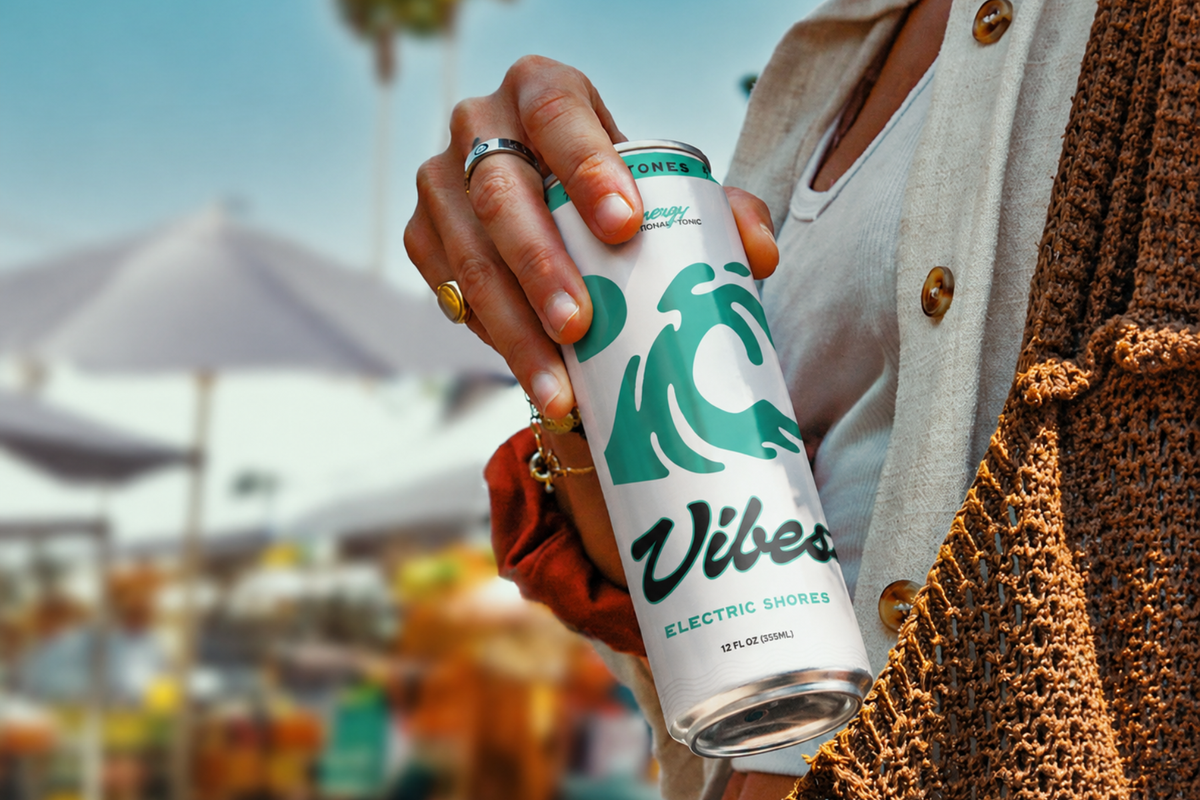
ELECTRIC SHORED

9. Drink Vibes Electric Shores BHB: An energy drink alternative for workouts, long hours, & energy

Electric Shores BHB is our proprietary drink made for days when you want more than a standard caffeine drink. It has a tropical citrus lime taste with light carbonation. The formula includes BHB ketones, Alpha GPC, green tea extract, magnesium glycinate, and potassium gluconate.

Best for:

Busy days, workouts, long work hours, and active plans.

Primary function:

Energy, focus, and hydration support.

Key ingredients:

  • BHB ketones
  • Alpha GPC
  • Green tea extract
  • Magnesium glycinate
  • Potassium gluconate

Why did we pick it?

Electric Shores BHB earns its place among the best functional beverages because it feels more complete than a standard caffeine drink due to the ingredients used. It also uses natural caffeine from green tea and has a tropical, citrusy-lime taste.

Pros:

  • Has energy, focus, and electrolyte ingredients in one drink.
  • Tropical citrus lime taste makes it easy to choose.

Cons:

  • It may not be the right choice if you want a caffeine-free drink or a simple hydration drink like coconut water. The effects may also build gradually, so this is better when you do not need an immediate hit like a high-caffeine energy drink.

10. Vita Coco Original Coconut Water: A simple coconut water with natural electrolytes

Vita Coco Original Coconut Water is a non-carbonated drink made with hand-picked coconuts packaged at the source, with less than 1% sugar and Vitamin C. It works well when you want coconut water instead of soda, caffeine, Kava, kombucha, or a drink mix.

The small amount of sugar helps maintain a consistent taste, as coconuts can naturally vary in flavor. It is gluten-free, kosher, pulp-free, and shelf-stable before opening

Best for:

Hot afternoons, before or after workouts, smoothies, and days when you want a tropical non-carbonated drink.

Primary function:

Hydration with natural electrolytes.

Key ingredients:

  • Coconut water
  • Less than 1% sugar
  • Vitamin C

Why did we pick it?

The coconuts are hand-picked and packaged at the source, and the ingredient list stays short: coconut water, less than 1% sugar, and Vitamin C. No caffeine, no mushrooms, no Kava, no probiotics, and no nootropics.

Pros:

  • Refreshing and hydrating.
  • No carbonation, and no heavy functional blend.

Cons:

  • Vita Coco is not the right pick if you want caffeine, probiotics, Kava, or nootropics.

FAQs

What are the best functional beverages right now?

There is no one best option for everyone. The best functional beverages depend on your goal, such as energy, hydration, focus, gut support, calmness, or alcohol-free drinking.

Which functional drink is best for my goal?

Choose Celsius for strong energy, Odyssey for focus, Liquid I.V. for electrolytes, Vita Coco for coconut water, Olipop or GT’s Kombucha for gut support, and Recess Mood Lime Citrus if you are comparing drinks with adaptogens.

Do functional beverages actually work?

Some can, but it depends on the drink and ingredients. Electrolytes, probiotics, caffeine, Kava, nootropics, and adaptogens all serve different purposes. Do not expect a magic result or the same effect from every drink.

What ingredients should I look for in a functional beverage?

Look for ingredients that match your goal: electrolytes for hydration, prebiotics or probiotics for gut support, nootropics for focus, adaptogens or calming botanicals for calmness, and caffeine for energy.

Are functional beverages better than energy drinks, soda, coffee, or sports drinks?

They can be, but not always. A functional drink is useful when it solves a specific need. Water, coffee, coconut water, or a sports drink may still be better depending on your day.

Are functional beverages safe to drink regularly?

Many can fit into your routine, but they do not replace sleep, water, meals, or balanced habits. Check caffeine, sugar, sodium, and active ingredients, especially with Kava, herbs, or high-caffeine drinks.

What are the best functional beverages for mocktails?

The best functional beverages for mocktails are Glow Getter Hops, Hot Tropic Kava, Recess Mood Lime Citrus, GT’s Kombucha, and Vita Coco. They work well because they offer hops, Kava, citrus, tart fizz, or coconut flavor without alcohol.

Related articles:


Disclaimer: This listicle is for educational and comparison purposes only. It does not claim that one functional beverage is right for everyone or that any drink can diagnose, treat, cure, or prevent any condition. Product details may change, so always check the latest label, ingredients, caffeine, sugar, sodium, and serving information before buying. The drinks listed here are reviewed based on their stated function, ingredients, and general suitability, not as medical advice or a guarantee of results.

Continue reading
functional beverages

The Rise Of Functional Beverages: How Alcohol Alternatives Are Changing The Way We Drink

Something has quietly shifted in how people drink, and it didn't happen overnight.  Gen Z consumes about 20% less alcohol than Millennials did at the same age, and 40% of Gen Z drinkers report consuming alcohol less than once a month, or not at all.  That's not a blip, that's a cultural reset. 

And into that space stepped something new: functional beverages that actually do something.

Not "do something" the way a Red Bull does something, jolt you awake and leave you hollow an hour later.  More like drinks engineered around specific feelings like calm, focus, social ease, and recovery. 
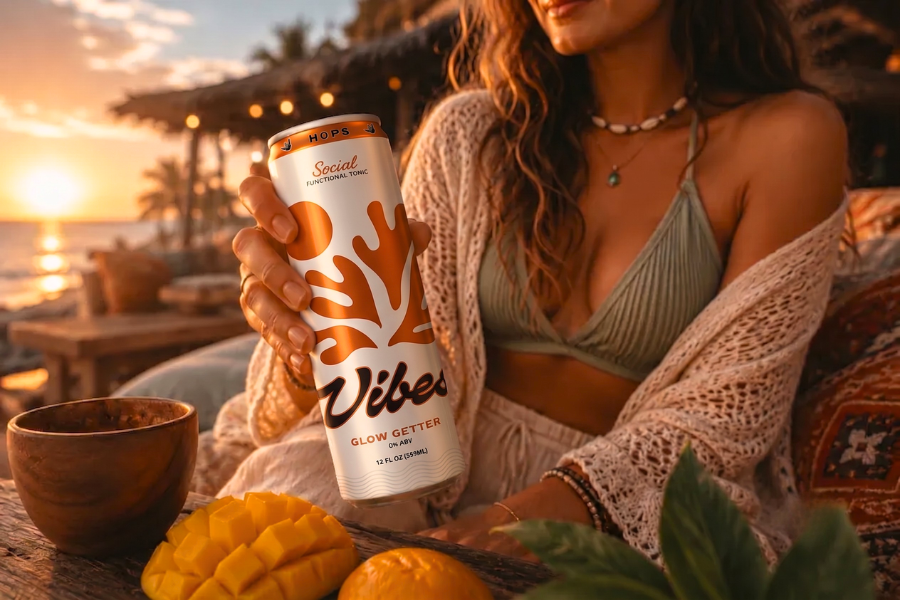
According to Good Culture Ingredients, Millennials and Gen Z now make up almost 80% of global functional beverage consumers.  That demand is showing up in the numbers, too. Fortune Business Insights reports that the global functional beverages market was valued at USD 166.05 billion in 2025 and is projected to reach USD 372.43 billion by 2034, growing at a 9.39% CAGR

What’s driving this rise is not just health consciousness, though that is part of it. Around 54% of Millennials say their beverage choices should actively contribute to their health and wellness. Here are some insights into current trends in functional beverages and what’s driving them.

Key Takeaways

  • People are choosing functional beverages because they want drinks that do more than refresh.
  • The biggest shift is happening around alcohol alternatives, as more drinkers look for social options without alcohol.
  • Gut-friendly drinks, adaptogens, nootropics, and recovery-focused ingredients are becoming easier to find in everyday beverages.
  • The category is growing because people want drinks that fit the moment, whether that means calm, focus, energy, or recovery.

Current Trends In Functional Beverages 

Today’s drinkers want more than refreshment, and these trends show exactly where the category is headed.

Alcohol Alternatives 

According to Gallup, alcohol usage in the USA is experiencing a significant, record-breaking decline. The percentage of American adults who consume alcohol has fallen to roughly 54%, an 86-year low. That shift says a lot about where drinking culture is headed.

According to Leger's 2025 Beyond the Buzz study, a quarter of Gen Z and Millennials who currently drink alcohol plan to cut back this year, and after learning about the sober-curious movement, 52% say they're likely to participate. This isn't a Dry January phenomenon that fades by February. Nearly half of Americans (49%) planned to drink less alcohol in 2025, up from 44% in 2023. 

Charles Spence, Professor of Experimental Psychology at the University of Oxford, says, "These studies show how quickly attitudes shift. Alcohol has been central to social life for generations, but the data now prove moderation is for everyone." 

In 2026, it's not enough for a drink to simply not have alcohol. Consumers want their non-alcoholic drinks to do something. For example, focus from L-theanine, relaxation from ashwagandha, and a buzz from kava. 

Gut-healthy ingredients

According to Innova Market Insights, 59% of global consumers now say gut health is very important for the entire body, and shoppers are increasingly turning to functional ingredients like probiotics and prebiotics to support both body and mind.

Globally, 23% of consumers are now actively seeking prebiotics in their functional food and drinks. This is a trend Innova named its top insight for 2025: "Gut Health: Flourish from Within." 

This shift has moved gut-friendly ingredients out of the supplement aisle and into the drinks people already reach for, from kombucha and kefir to prebiotic sodas and sparkling functional beverages. This is not just about digestion anymore. It is about people wanting drinks that feel lighter, smarter, and more intentional with every sip.

The gut health wave isn't slowing down. PepsiCo acquired Poppi — the prebiotic soda brand — for $1.95 billion in March 2025, which is less a business story and more a signal. The biggest players in beverages now believe the gut health category is here for good.

Adaptogens

There is a lot of Eastern medicine, like adaptogens, coming full circle and rising in popularity,” says Dana Ellis Hunnes, PhD, MPH, RD, senior dietitian at UCLA Health.

Stress isn't new. But the idea that your drink could help manage it is.

Adaptogens: herbs and mushrooms like ashwagandha, ginseng, reishi, rhodiola, and lion's mane have been used in Ayurvedic and traditional Chinese medicine for centuries. What's new is their place in the beverage aisle.

Modern drinkers are not only asking what a drink tastes like. They are asking what kind of moment it supports. Adaptogen drinks fit neatly into that mindset because they help maintain balance, calm, focus, and everyday stress without leaning on alcohol.

Athletic performance and recovery

Athletic performance and recovery have become a major part of the functional beverage conversation. Harvard’s Nutrition Source notes that sports drinks are designed to replenish glucose, fluids, and electrolytes lost during strenuous exercise and may support endurance during longer, harder activity. 

Johns Hopkins sports dietitian Gabrielle Judd puts it simply: “Make sure to include plenty of water or hydrating solutions to replenish your losses from exercise.”

People who train, run, lift, play sports, or stay active through long days now want drinks that do more than quench thirst. Electrolytes, carbohydrates, protein, B vitamins, amino acids, and hydration minerals are becoming part of everyday functional drinks because recovery is no longer treated as an afterthought.

Nootropics for cognitive focus 

Focus has become one of the biggest selling points in the functional beverage space. People are no longer reaching for drinks only to feel awake; they want something that fits work, study, gaming, creative tasks, and long screen-heavy days. 

That shift has pushed nootropics into the spotlight. These ingredients are often associated with memory, alertness, learning, and mental performance, which is why they now appear in mushroom coffees, sparkling focus drinks, energy alternatives, and alcohol-free social beverages.

More Than Trend, It’s A Change In Drinking Habits

Functional beverages are not popular because people suddenly want fancy drinks with long ingredient lists. They are growing because drinking habits are changing. Some people want a night out without alcohol. Some want a gut-friendly soda with lunch. Some want electrolytes after a workout or a focus drink that doesn't feel like another overloaded energy drink.

That is the real shift. People are paying closer attention to how a drink fits into their day and how they want to feel after it. Refreshment still matters, but it is no longer the only thing people are looking for. As more shoppers choose drinks with a purpose, functional beverages are likely to keep showing up in more coolers, menus, and social moments.
Frequently Asked Questions About Functional Beverages

What is a functional beverage?

A functional beverage is any non alcoholic drink formulated with ingredients like vitamins, minerals, electrolytes, prebiotics, probiotics, adaptogens, nootropics, caffeine, protein, amino acids, etc. 

Functional beverage vs energy drinks: what’s the difference?

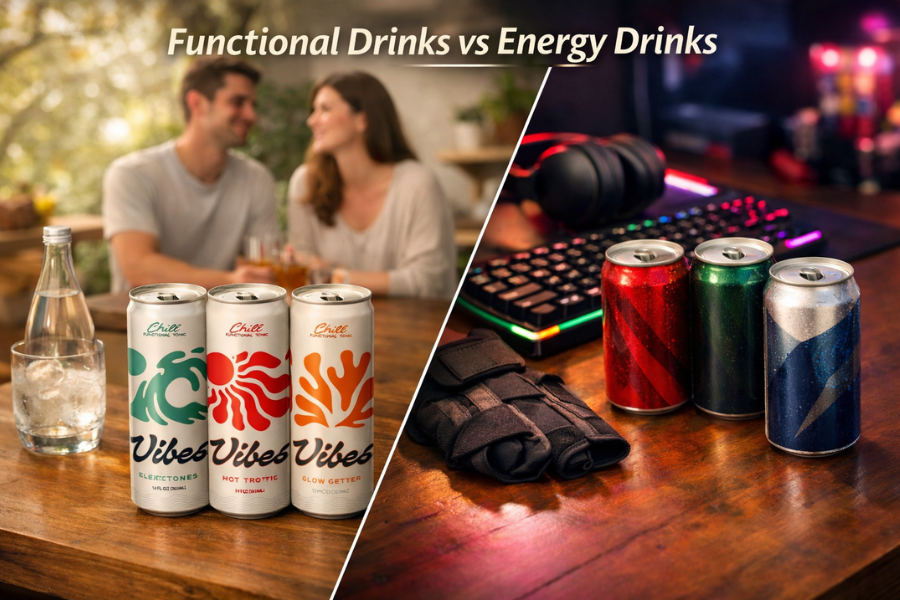
Functional beverages aim to improve your health by offering specific heal benefits, such as better gut health, hydration, or calmness. In contrast, energy drinks provide a quick, temporary spike in physical and mental alertness using high doses of caffeine, taurine, and sugar. 

Read our detailed blog on: Functional drinks vs Energy Drinks: What’s the difference?

What are the different types of functional beverages?

The different types of functional beverages include energy drinks, adaptogen drinks, Hops drinks, Ketone drinks, Mushroom drinks, sports and hydration beverages, Cognitive and nootropic beverages, Gut health drinks, Collagen drinks, and Relaxation drinks. 

What are hop drinks?

Hop drinks are often referred to as hop water. It is carbonated or sparkling water infused with the essential oils and aromatic compounds of the Humulus lupulus (hop) plant—the same flower used to give craft beer its distinct flavor. They are completely non-alcoholic. 

What are BHB Ketones?

BHB (Beta-hydroxybutyrate) ketone drinks are a type of exogenous ketone supplement. While your body naturally produces its own ketones (endogenous ketones) during fasting or a strict ketogenic diet, these drinks provide a concentrated source of BHB from outside sources to rapidly elevate your blood ketone levels. 

What is Kava?

Kava (scientifically known as Piper methysticum) is a plant native to the South Pacific. Its roots and stumps are used to produce a beverage and herbal extract prized for centuries for its natural calming and mildly euphoric effects

What are the best functional beverages in 2026?

The best fucntional beverages in 2026 include Kin Euphorics, Hot Tropic Kava drink, Hiyo Peach, Prebiotic sodas, Probiotic Kombuchas, Glow Getter Hops drinks and Vibes Energy Electric Shores BHB

What are the key ingredients in functional beverages?

The key ingredients in functional beverages typically include vitamins, minerals, L-Theanine, Lion’s Mane, Rhodiola, Vitamin-C, B complex, Whey protein, etc.

Continue reading
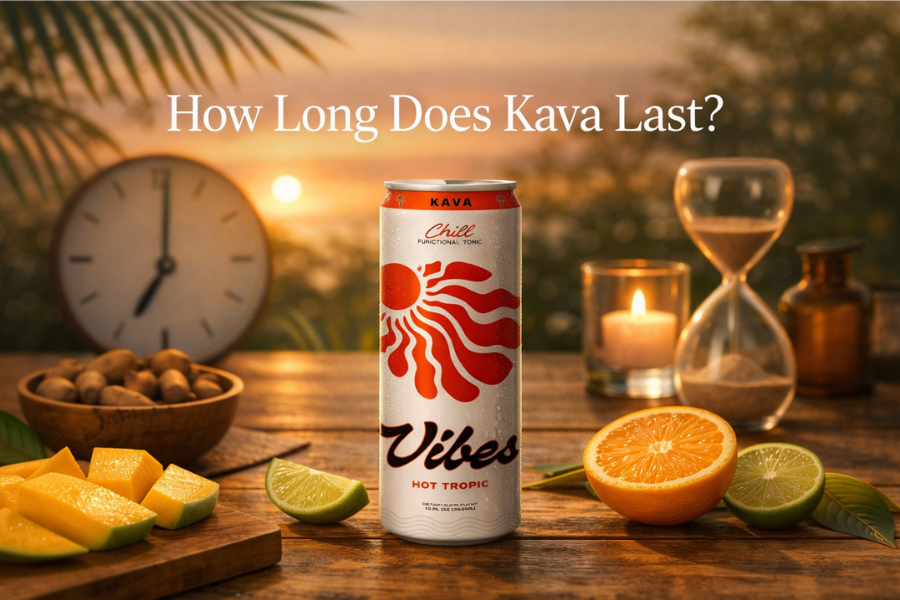
How Long Does Kava Last? Duration, and What to Expect

How Long Does Kava Last? Duration, and What to Expect

Kava does not follow the same timeline for everyone. You may feel the strongest effects for a shorter time, then notice a more relaxed feeling for longer. The answer to 'how long does Kava last' is usually around 2 to 6 hours, but the most noticeable effects may not last that long. This guide explains the duration, effects, and what you can expect in a simple, practical way.

Table of Contents:

How Long Does Kava Last?

Kava does not last the same amount of time for everyone. Duration can vary across individuals, and there is no fixed timeline.

In a Reddit discussion about Kava duration, several comments pointed to a shorter window for the strongest effects.

Some mentioned around 45 minutes, some said a little over an hour, and others described around 30 to 90 minutes, depending on the amount, spacing, and personal response.

A few also mentioned that a calmer feeling can stay for a few more hours after the stronger effects fade.

The table below organizes those shared experiences.

Part of the Kava experience

Commonly shared duration

Stronger mood shift

30 to 60 minutes

Relaxed body feeling

1 to 2 hours

Calmer feeling after stronger effects fade

A few more hours

Longer session with spaced small servings

Around 2 hours or more


Spacing can affect duration
, the discussion mentioned. If you drink Kava slowly over a session instead of taking it all at once, the full experience may last longer. Several comments mentioned spacing small servings every 15 to 30 minutes, which may extend the session even if the strongest effects still feel shorter.

So, when you ask 'how long Kava effects last', it helps to separate two things: the strongest effects and the calmer feeling that may stay afterward.

How Long Does Kava Last By Stage?

Kava duration becomes easier to follow when the timing is broken into stages. The points below show how the experience may move from the first signs to the later after-effects.

  • First signs: Kava may start feeling noticeable within 10 to 40 minutes.

  • Peak effects: The effects may feel strongest around 1 to 2 hours.

  • Main effects: The main effects may last around 2 to 6 hours.

  • Calmer after-effect: A calmer feeling may continue for a few extra hours.

  • Back to your usual state: Many may feel fully back to normal within 8 to 12 hours.

  • Body processing: Kava compounds may stay in the body longer than the effects you notice.

The effects you notice and the time Kava compounds remain in your body are not the same. The stronger effects may fade while kavalactones are still being processed. Kavalactones are the main compounds linked with Kava’s effects. 

Why Kava Duration Varies From Person To Person?

The timeline can vary from one body to another, so a single duration should not be treated as a guarantee.

A few things can affect how long does Kava last:

✔️ Kavalactones: Different Kava products may have different kavalactone profiles.

✔️ Serving amount: Larger or repeated small servings may extend the session.

✔️ Pacing: Spaced servings may last longer than one quick drink.

✔️ Food timing: Drinking Kava on an empty stomach may make the effects feel faster for some.

✔️ Body response: Metabolism and sensitivity can affect timing.

✔️ Kava reverse tolerance: Some may notice Kava more after a few separate tries.

👉🏻 The strongest effects may fade first.

👉🏻 The more relaxed feeling may continue after that.

(this is why the full duration can feel longer than the most noticeable part.)

How Long Does Kava Stay In Your System?

This question is different from how long the effects last.

  • Effects duration: how long you notice the effects.
  • System duration: how long Kava compounds may remain in your body.

Kava may feel milder after a few hours, but that does not mean that all the compounds have left your system. This is where the Kava half life can matter, although the exact timing can vary by compound, product format, and personal response.

Half-life is the time it takes for your body to reduce the amount of a compound by half.

⚠️ Be careful with alcohol, medications, and other substances. Kava may interact with drugs or alcohol and increase the chance of harmful effects.

How Long Does Ready-To-Drink Kava Last?

With ready-to-drink Kava, effects can still vary by serving size, kavalactone content, timing of food, and how your body responds. The format saves preparation time, but it does not create one fixed duration for everyone.

If you want Kava in a prepared format, Vibes Chill: Hot Tropic Kava is one of those functional beverages made with Kava root extract. It is a ready-to-drink option when you do not want to prepare Kava from scratch.

Safety Consideration: Kava can affect alertness, so avoid alcohol, driving, or any task that needs full attention after drinking it. Speak with a healthcare professional first if you take prescription medicines, have liver concerns, are pregnant, or have an existing medical condition. Also, avoid heavy or frequent intake, and follow the product’s serving directions instead of guessing.

FAQs

How long does Kava take to kick in?

Kava may start to feel noticeable within 10 to 40 minutes. Some formats may feel faster, while others need more time. Give it time before deciding whether it is working.

How long does Kava effects last?

Kava effects may last around 2 to 6 hours for many, but the strongest effects may feel shorter. Some notice the main effects for 30 minutes to 2 hours, followed by a calmer feeling that can stay for a few more hours. The duration, however, varies from person to person.

What does Kava feel like?

Kava may make you feel calmer, more relaxed, and less mentally rushed. Some notice a lighter mood or easier social feeling, while others feel more body relaxation first. You may also feel mild drowsiness later, along with brief mouth or tongue tingling. The effects can feel mild at first, especially if you are trying Kava for the first time.

Why isn’t Kava working for me?

Your first response may be mild. Product type, food timing, pacing, and Kava reverse tolerance can all play a role. One attempt may not show how every Kava experience will feel.

Should I drink Kava on an empty stomach?

Drinking Kava on empty stomach may feel faster or stronger for some. That does not make it the right choice for everyone. If your stomach feels uneasy, a small snack may be more comfortable. The best time to drink Kava depends on your comfort, plans, and body response.

Does Kava show up on a drug test?

Kava is not usually checked in standard drug tests because those tests are not designed to look for kavalactones. However, some screening tests may occasionally yield false positives, so it is worth checking the exact test panel if this matters for work, travel, or sports.

What does Kava taste like?

Earthy, peppery, and slightly bitter. You may also notice brief mouth tingling. Ready-to-drink Kava may soften that profile with fruit-forward flavors.

Conclusion

Kava duration is not the same for everyone. The stronger effects may last for a shorter window, while the calmer feeling can stay longer. For many, the overall experience may last 2 to 6 hours, with some feeling like themselves again within 8 to 12 hours. Your serving size, product format, food timing, kavalactones, and body response all matter. Start slow, observe how you feel, and have a word with your healthcare consultant.

Continue reading
Types of Functional Beverages

What Are The Different Types Of Functional Beverages?

The drink aisle used to be easy to understand. Coffee woke you up, sports drinks followed workouts, soda was for cravings, and alcohol handled the social part. Now those lines are getting blurry. A can might look like sparkling water but contain Kava for calm, nootropics for focus, electrolytes for hydration, or hops for an alcohol-free night out. That shift is why people are searching for the types of functional beverages before choosing what to buy. These drinks are not just about flavor anymore; they are much more than that. This guide breaks down the main kinds of functional drinks for you so you can make the best choices.

Key Takeaways

  • Functional beverages are drinks made for more than refreshment.

  • Popular types include energy drinks, kava, hops, ketones, nootropics, hydration blends, gut drinks, collagen drinks, and RTM powders.

  • Each category has a different purpose, from focus and energy to calm, social sipping, recovery, and digestion.

  • The ingredient list matters more than the front-label claim.

  • Check caffeine, sugar, active ingredients, serving size, and label clarity before buying.

  • The best functional drink is the one that fits the moment you are choosing it for.

Table of Contents

  1. Key Takeaways
  2. Types Of Functional Beverages You’ll See Everywhere
  3. Energy Drinks
  4. Adaptogen Drinks
  5. Hops Drinks
  6. Ketone Drinks
  7. Mushroom Drinks
  8. Sports and Hydration Beverages
  9. Kava Drinks
  10. Protein & Recovery Shakes
  11. Cognitive & Nootropic Beverages
  12. Digestive & Gut Health Beverages
  13. Relaxation & Sleep Beverages
  14. Beauty & Collagen Beverages
  15. Immunity-Boosting Beverages
  16. CBD & Hemp-Based Beverages
  17. RTM Ready-To-Mix Powders
  18. Conclusion

Types Of Functional Beverages You’ll See Everywhere

Here is a list of the 15 different kinds of Functional drinks, exploring what they are, the reasons behind their popularity, and the best examples.

Energy Drinks

An energy drink is a type of functional beverage designed to boost mental alertness and physical stamina. It primarily achieves this through a combination of high-dose caffeine, sugar, and other stimulant supplements, such as taurine, B vitamins, and herbal extracts (e.g., guarana or ginseng).

The category initially gained popularity in Asia with Japan's Lipovitan in the 1960s, followed by Red Bull in Europe during the late 1980s. This event signaled the start of a worldwide energy drink trend that has since diversified into clean-label and natural options, catering to a health-aware generation.

  • Common ingredients: Caffeine, taurine, B vitamins, guarana, ginseng, green tea extract, and sometimes sugar or zero-sugar sweeteners.
  • Best for: Busy workdays, early starts, workouts, gaming sessions, or moments when people want a quick pick-me-up.
  • Check before buying: Caffeine amount, sugar level, serving size, and whether the drink feels too stimulant-heavy for your needs.

Popular energy drink brands:

  • Red Bull
  • Monster Energy
  • Celsius
  • Ghost

Source:https://www.marketdataforecast.com/market-reports/united-states-functional-drinks-market 

Adaptogen drinks

Adaptogen drinks are non-alcoholic beverages infused with natural herbs and mushrooms (such as Ashwagandha, Lion's Mane, and Reishi). They are designed to help your body manage stress, combat fatigue, and promote mental clarity. 

UCLA Health explains adaptogens as herbs, roots, and plant substances, including mushrooms, that are commonly used to help the body manage stress

  • Common ingredients: Ashwagandha, reishi, lion’s mane, rhodiola, holy basil, cordyceps, and botanical extracts.
  • Best for: People looking for drinks centered around calm, balance, focus, or a less intense alternative to standard energy drinks.
  • Check before buying: The specific adaptogen blend, ingredient transparency, caffeine content, and whether the formula clearly explains its purpose.

Top-rated adaptogen drink brands dominating the market include:

  • Brez
  • De Soi
  • Kin Euphorics
  • Magic Mind

Hops drinks

Hops drinks are a non-alcoholic type of functional beverages that use the flowers of the Humulus lupulus plant. These kinds of functional drinks offer the crisp, aromatic, and botanical profiles of craft beer or herbal tea, featuring pine, citrus, and floral notes without the alcohol or hangover, making them a refreshing alternative for relaxation and wellness. These often include: hop water, hops kombucha, and herbal hop tea.

  • Common ingredients: Hops, sparkling water, tea, citrus extracts, botanicals, and natural flavors.
  • Best for: Social plans, alcohol-free evenings, or anyone who wants a crisp drink without alcohol.
  • Check before buying: Whether it is hop water, hop tea, or a hop-based sparkling drink, plus the bitterness level and added sweeteners.

Top hop drink brands include:

Ketone drinks

Ketone drinks are beverages that include exogenous ketones, which are artificial forms of the energy-producing molecules that your body typically generates during periods of fasting or when following a ketogenic diet. They aim to supply a "super fuel" for your brain and muscles without the need for carbohydrate restriction or fasting.

  • Common ingredients: BHB ketones, electrolytes, minerals, natural flavors, and sometimes caffeine or amino acids.
  • Best for: Long workdays, fitness-focused buyers, low-carb shoppers, or people curious about ketone-based drinks.
  • Check before buying: Type of ketone included, carb content, sweetness level, and whether the drink is ready-to-drink or a mix-in format.

Popular Ketone drink brands include:

Mushroom drinks

Mushroom drinks are a type of functional beverage that has mushroom extracts (like Lion's Mane, Reishi, or Cordyceps) with coffee, tea, or sparkling water to provide you energy, immune support, and mental clarity. They offer a smoother experience without the jitters or crashes of traditional caffeine. A mushroom drink is a specific type of adaptogen drink.

  • Common ingredients: BHB ketones, electrolytes, minerals, natural flavors, and sometimes caffeine or amino acids.
  • Best for: Long workdays, fitness-focused buyers, low-carb shoppers, or people curious about ketone-based drinks.
  • Check before buying: Type of ketone included, carb content, sweetness level, and whether the drink is ready-to-drink or a mix-in format.

Top mushroom drinks include:

  • Four Sigmatic
  • RYZE
  • MUD\WTR
  • Nuvedo
  • Little Saints
  • Everyday Dose

Sports and Hydration Beverages

Sports and hydration beverages help in replenishing fluids, carbohydrates, and essential electrolytes (like sodium, potassium, and magnesium) lost through sweat. They are ideal for high-intensity exercise exceeding 60 minutes. These are staples for sportspersons and fitness enthusiasts. 

These often include isotonic, hypotonic, and hypertonic drinks and electrolyte tablets or powders.

  • Common ingredients: Sodium, potassium, magnesium, calcium, carbohydrates, coconut water, and electrolyte blends.
  • Best for: Workouts, outdoor activities, long travel days, hot weather, or times when plain water does not feel enough. The International Society of Sports Nutrition notes that protein needs are higher for exercising individuals, which supports the role of protein drinks in workout and recovery routines.
  • Check before buying: Electrolyte balance, sugar content, calorie count, and whether the drink is made for casual hydration or intense activity.

Market-leading brands include:

  • Gatorade
  • Powerade
  • LMNT
  • Liquid IV
  • Harmless Harvest

Kava drinks

Kava drinks are traditional beverages made from the crushed or powdered roots of the Piper methysticum plant, a shrub native to the South Pacific. They are widely consumed for their natural wellness properties, which promote deep relaxation, sociability, and stress relief without causing cognitive impairment. The Kavalactones are the active compounds present in the root responsible for the benefits.

  • Common ingredients: Kava root extract, kavalactones, fruit flavors, botanicals, sparkling water, and sometimes herbal blends.
  • Best for: Alcohol-free social plans, evening sipping, relaxing gatherings, or people who want a calmer drink option.
  • Check before buying: Kava content, serving size, flavor style, whether it is sparkling or still, and label clarity around ingredients.

Top Kava drink brands include:

Protein & Recovery Shakes

Protein and recovery shakes are types of nutritional beverages that help your body refuel, repair, and rebuild after physical exertion. While protein shakes focus primarily on muscle repair, recovery shakes include a vital blend of carbohydrates to replenish the energy you burned during your workout quickly. 

  • Common ingredients: Whey protein, plant protein, collagen protein, amino acids, carbs, electrolytes, and vitamins.
  • Best for: Post-workout routines, quick protein intake, busy schedules, or people looking for a filling ready-to-drink option.
  • Check before buying: Protein source, grams of protein, sugar content, texture, allergens, and whether it fits dairy-free or plant-based preferences.

Some of the best types of functional drinks in this category include:

  • Optimum Nutrition
  • Transparent Labs
  • Fairlife Core Power
  • OWYN (Only What You Need)

Cognitive & Nootropic Beverages

These are the types of functional beverages that contain caffeine, L-theanine, adaptogenic mushrooms, herbal extracts, and nootropic compounds. Nootropic beverages help enhance mental performance, including focus, memory, and motivation. 

  • Common ingredients: L-theanine, caffeine, lion’s mane, bacopa, alpha-GPC, B vitamins, ginseng, and green tea extract.
  • Best for: Work sessions, studying, creative tasks, meetings, or moments when people want focus without a heavy energy-drink feel.
  • Check before buying: Stimulant level, nootropic blend, caffeine amount, and whether the brand explains what each ingredient is included for.

Some of the best brands often include:

  • Nerd Focus
  • Neutonic
  • Onnit Alpha Brain

Digestive & Gut Health Beverages

Beverages aimed at promoting digestive and gut health incorporate probiotics, prebiotics, and ingredients with anti-inflammatory properties to promote a balanced microbiome, enhance digestion, and help with bloating. The most effective choices include fermented dairy products, tea, and functional sparkling sodas.

  • Common ingredients: Probiotics, prebiotics, fiber, apple cider vinegar, fermented tea, kefir, ginger, and botanical extracts.
  • Best for: People who want a fizzy soda alternative, fermented drinks, or beverages centered around gut-friendly ingredients.
  • Check before buying: Fiber amount, added sugar, probiotic strain details, carbonation level, and whether the drink may feel too heavy for daily sipping.

Some of the best kinds of functional drinks in this category include:

  • Olipop
  • Poppi
  • Culture Pop

Relaxation & Sleep Beverages

Relaxation and sleep drinks incorporate natural ingredients such as melatonin, magnesium, and adaptogens to soothe your mind and promote deep sleep. Consuming these beverages 30 to 45 minutes before sleep can be very effective for helping you relax without causing morning drowsiness.

  • Common ingredients: Magnesium, melatonin, L-theanine, chamomile, lemon balm, lavender, ashwagandha, and other calming botanicals.
  • Best for: Evening routines, screen-free wind-down time, travel nights, or anyone looking for a non-alcoholic drink to help you slow down.
  • Check before buying: Whether it contains melatonin, it is caffeine-free, the sugar level, and how clearly the label explains the calming ingredients.

Top relaxation and sleep beverages include:

  • Hiyo
  • Recess
  • Brez
  • Som Sleep

Beauty & Collagen Beverages

Beauty and collagen beverages are trending skincare supplements that boost skin hydration, elasticity, and overall radiance. They combine hydrolyzed collagen peptides with complementary ingredients such as hyaluronic acid, vitamin C, and biotin to promote firmer skin, stronger nails, and healthier hair.

Moreover, a 2023 PubMed review found that hydrolyzed collagen supplementation may have positive effects on skin hydration and elasticity, though larger studies are still needed.

  • Common ingredients: Hydrolyzed collagen peptides, vitamin C, biotin, hyaluronic acid, antioxidants, and fruit extracts.
  • Best for: Shoppers interested in beauty-from-within drinks, collagen blends, or a ready-to-drink alternative to powders.
  • Check before buying: Collagen source, grams of collagen, added sugar, vitamin blend, and whether the product matches dietary preferences.

The best types of functional beverages in this category include:

  • Vital Proteins
  • Revive Collagen
  • Skinade

Immunity-Boosting Beverages

Immunity-boosting beverages are drinks packed with vitamins, antioxidants, and minerals like Vitamin C, Vitamin D, zinc, and probiotics that help support your body's natural defenses. While no single drink prevents illness, consistent hydration and nutrient intake can strengthen your immune response.

  • Common ingredients: Vitamin C, vitamin D, zinc, elderberry, ginger, turmeric, probiotics, antioxidants, and citrus extracts.
  • Best for: Seasonal routines, travel days, morning drink choices, or people who want nutrient-focused beverages.
  • Check before buying: Vitamin levels, sugar content, ingredient source, and whether the drink makes realistic claims instead of sounding too extreme.

Some of the top-rated immunity-boosting beverages include:

  • Vive Organic
  • Suja Organic
  • Sol-ti

CBD & hemp-based beverages

CBD and hemp-based beverages are non-alcoholic drinks infused with extracts from the hemp plant, specifically cannabinoids like CBD or low-dose THC. It is considered a wellness and a social alternative to alcohol, and is most commonly sold as ready-to-drink sparkling waters, sodas, teas, and mocktails. 

  • Common ingredients: CBD, hemp extract, low-dose THC where permitted, terpenes, botanicals, sparkling water, tea, or fruit flavors.
  • Best for: Alcohol-free social sipping, calm-focused drinks, hemp-curious buyers, or people looking for a different kind of functional beverage.
  • Check before buying: CBD or THC amount, hemp source, testing information, local rules, and whether the drink is clearly labeled.

The best CBD and hemp-based brands include:

  • Recess
  • Vybes
  • Lagunitas Hi-Fi Sessions

Note: FDA says there are still unanswered questions about the science, quality, and safety of many CBD products, so labels and local rules matter.

RTM (ready to mix powders)

Ready-to-Mix (RTM) powders are dry, shelf-stable supplement or food blends that can be dissolved in water or other liquids before consumption. They are widely used for protein shakes, hydration/electrolyte drinks, meal replacements, and nootropics because they offer immense portability, cost-effectiveness, and customized functional benefits. 

  • Common ingredients: Protein, electrolytes, greens blends, nootropics, vitamins, minerals, fiber, amino acids, or functional mushroom extracts.
  • Best for: People who want portable drink mixes, customizable servings, travel-friendly options, or a lower-cost alternative to canned drinks.
  • Check before buying: Scoop size, ingredient blend, sweetness level, mixing quality, and whether the powder is made for hydration, protein, focus, or general wellness.

Conclusion

Functional beverages are no longer limited to one small corner of the drink market. They now include everything from energy drinks and hydration blends to kava, hops, ketones, adaptogens, nootropics, collagen drinks, gut-friendly sodas, and ready-to-mix powders. As these choices become part of modern drinking habits, Drink Vibes brings function into everyday sipping with alcohol-free beverages made with Kava, hops, ketones, and other refreshing functional blends.

Continue reading
kava vs alcohol

Kava vs Alcohol: Is Kava a Safe Substitute for Alcohol?

The Kava vs alcohol conversation usually starts with one real question: can you enjoy a relaxed, social drink without reaching for alcohol?

That is why Kava keeps appearing in searches for 'alternatives to alcohol', 'drinks instead of alcohol', and the 'best substitute for alcohol'. People want the ritual, the unwind, and the social ease, but without the usual alcohol baggage.

Kava may work as an alcohol replacement for some adults, but it is not risk-free. Think of it as a thoughtful alcohol-free option, not a harmless swap for everyone.

Is Kava Safer Than Alcohol?

For anyone comparing Kava vs alcohol, this is usually the biggest concern. Kava may be a better direction for someone trying to move away from frequent drinking. But if the comparison is Kava vs water, tea, or plain sparkling water, Kava is not the lowest-risk choice.

That practical view matches what Jarratt Pytell, MD, MHS, an internal medicine and addiction medicine physician, explains. His point is nuanced: if someone drinks alcohol every day and wants to stop by trying Kava, that can be a reasonable conversation because alcohol carries serious risks. Still, Kava is “not a zero-risk substance.”

Real user experiences say the same thing in everyday language. In one Reddit discussion, a user called Kava a “fairly good alcohol replacement”, but immediately added, “with some caveats”. Another said Kava helped them get home “without stopping at the liquor store”, while still admitting it was “not the same as getting drunk”.

So, is Kava safer than alcohol? For some adults, it may be a useful herbal alcohol substitute. But is Kava a safe alcohol substitute for everyone? No. Anyone with liver concerns, pregnancy, breastfeeding, medication use, or alcohol dependence should be careful and seek qualified guidance.

What Is Kava, And Why Do People Use It Instead Of Alcohol?

Kava comes from the root of Piper methysticum, a plant traditionally used across Pacific Island communities. Today, it appears in Kava bars, teas, powders, extracts, and ready-to-drink beverages.

People consider Kava instead of alcohol because both fit into social and unwinding moments. The difference is the experience. Alcohol intoxicates. Kava is usually chosen for a calmer, more grounded feeling.

Alcohol still has a huge hold on U.S. drinking culture. The U.S. alcoholic beverages market was valued at USD 543.13 billion in 2024 and is projected to reach USD 806.44 billion by 2033. Kava is much smaller, but it is gaining attention as well. The global Kava root extract market was valued at USD 1.87 billion in 2025 and is projected to reach USD 7.40 billion by 2034, while the U.S. market is projected to reach USD 30.28 million by 2032.

Still, the rise of Kava is not only about market size. People are comparing it to alcohol for more practical reasons, like the ones shared in the table below.

Kava’s appeal

What does it offer instead of alcohol?

Drink-in-hand ritual

A social sip without alcohol.

Mellow experience

A calmer feeling instead of intoxication.

Reverse tolerance

Some users feel little at first, then notice more with repeated sessions.

Social setting fit

A more intentional choice than soda or basic mocktails.

Functional beverage interest

A reason people are looking beyond traditional alcohol.

Kava vs Alcohol: A Quick Comparison

Before choosing Kava as an alcohol-free option, it helps to understand the everyday difference between the two. 

The table below keeps the comparison simple, so you can quickly see what changes when someone chooses Kava instead of alcohol. 

Everyday Difference

Kava

Alcohol

How it feels

May feel calm and relaxed

Can make you feel drunk

Social use

Many people use it as an alcohol-free social drink

Common at parties, bars, and dinners

Buzz

Some people feel a mild buzz

Usually gives a stronger buzz or intoxicated feeling

Hangover

No alcohol hangover, but some people may feel groggy

Can cause hangovers

Judgment

You should still be careful

Can affect judgment, coordination, and reaction time

Mixing both

Kava should not be mixed with alcohol

Mixing alcohol with Kava can increase risk


What Does Kava Feel Like Compared To Alcohol?

Most people describe it as mellow, calm, and socially easing rather than drunk or out of control.

The Alcohol and Drug Foundation’s Kava guide notes that Kava can affect people differently and may lead to relaxed feelings, mild sleepiness, and mouth or throat numbness.

User experiences also point in the same direction. One Reddit commenter said Kava gave them a “nice buzz” while they were still “in control”. That makes the expectation clearer: Kava may feel noticeable for some people, but it should not be confused with being drunk.

What Does Kava Taste Like?

If you are wondering what Kava tastes like, traditional Kava is usually earthy, bitter, peppery, and herbal. Some people like that bold profile. Others find it hard to enjoy.

That is where modern Kava beverages can feel more approachable. They often use fruit, botanicals, or light sweetness to make Kava easier to sip.

At Drink Vibes, this is the idea behind Vibes Chill - Hot Tropic Kava. It brings together Kava root extract, L-Theanine, green tea extract, and allulose in a Mango Habanero flavor profile. Instead of trying to copy alcohol, it feels enjoyable enough to choose again.

Can You Mix Kava And Alcohol?

While you can, it is advised that you not. Do not mix Kava and alcohol.

Dr. Pytell notes that Kava can increase alcohol’s effects, which may lead to more impairment when both are used together. A human study on Kava and alcohol’s combined effects supports that caution.

Kava alone showed little effect on reported condition and cognitive performance, but when paired with alcohol, it appeared to increase both perceived and measured impairment.

The Alcohol and Drug Foundation also says Kava and alcohol together can make someone feel more drunk and may raise liver-related risk.

Even Reddit users often draw that line clearly. One commenter warned that using both close together is something “you definitely shouldn’t do”.

Put simply, if the goal is choosing Kava instead of alcohol, keep it as “instead of,” not “along with.”

Who Should Avoid Kava?

Kava may work as an alcohol-free option for some adults, but it is not the right fit for everyone. Since it may affect alertness and may not pair well with certain conditions, medications, or drinking concerns, some people should be extra careful before trying it.

  • People with liver concerns
  • Pregnant or breastfeeding women
  • People taking medications
  • Anyone planning to drive
  • People dealing with heavy drinking
  • Anyone mixing substances

Can Kava Help You Stop Drinking Alcohol?

Kava may help some adults move away from alcohol when the habit is connected to social sipping, evening unwinding, or wanting something enjoyable in hand. It can work as a mindful swap in certain moments, but it should not be treated as a cure for alcohol dependence, withdrawal, or heavy drinking concerns.

It replaces the drink-in-hand habit

Kava gives people something to sip during relaxed evenings, dinners, or social plans without choosing beer, wine, or cocktails.

It may help avoid alcohol hangovers

Since Kava does not contain alcohol, it does not cause the usual alcohol hangover. However, some people may still feel groggy or sleepy after Kava.

It keeps social moments alcohol-free

Kava can fit into hangouts where someone wants a calmer drink option without feeling left out of the ritual.

It may reduce regrettable drinking moments

Alcohol can affect judgment and behavior, while Kava is usually chosen for a more grounded experience. Still, it may affect alertness, so it should be approached carefully.

It can support evening unwinding

Some adults use Kava when they want to relax without reaching for an alcoholic drink.

It works better as a swap, not a treatment

Kava may help with the habit of drinking occasionally, but it is not a solution for alcohol dependence, cravings, or withdrawal symptoms.

Anyone who drinks daily, feels unable to stop, or experiences withdrawal symptoms should speak with a qualified healthcare or addiction professional instead of relying on Kava alone.

Does Kava Cause Hangovers?

Not in the classic alcohol sense, because Kava does not contain alcohol. That is one reason people explore natural alcohol alternatives in the first place.

But Kava does not feel perfect for everyone. One Reddit user said repeated use affected their sleep and left them feeling “hungover-like”. Another said Kava helped them avoid alcohol but could cause insomnia if taken too close to bedtime.

All in all, Kava may avoid the usual alcohol hangover, but poor sleep, grogginess, or discomfort can still happen for some users.

Final Words

After comparing Kava vs alcohol, the answer is simple: Kava can be a helpful alcohol-free option for some adults, but it is not risk-free.

It may feel calming, may take a few tries to notice, and should never be mixed with alcohol. If you choose Kava instead of alcohol, treat it as its own drink with its own cautions, not as a cure for drinking-related concerns.

FAQs

Is Kava a good alternative to alcohol?

Kava can be a good alcohol-free option for some adults who want a calmer social drink. It may help replace the ritual of drinking, but it should not be treated as a cure for alcohol dependence, withdrawal, or heavy drinking concerns.

Does Kava give you a buzz like alcohol?

Kava may give some people a mild, mellow buzz, but it does not feel the same as being drunk. Many users describe it as calmer and more grounded than alcohol. The effect can also vary depending on the person, the product, the amount, and the setting.

Can you drink Kava every day?

Some people consume Kava daily, especially in traditional South Pacific settings, but daily long-term use is generally not recommended for everyone. NCCIH notes that prolonged or large-amount Kava use may increase liver-related risk, so regular use should be approached carefully, especially if you have liver concerns, take medications, are pregnant, or are breastfeeding.

Will I fail a drug test from drinking Kava?

In most cases, no. Regular drug tests usually do not look for Kava. Rarely, an initial test may give a false alarm for amphetamines, but a more accurate follow-up test can usually clear it up. In one PubMed-indexed case report, the first test was positive, but the detailed lab test did not confirm amphetamine use. 

How long should you wait between alcohol and Kava?

A cautious rule is to wait at least 24 hours between alcohol and Kava. Both can place demands on the liver, and combining them may increase the risk of excessive impairment or liver-related stress. Do not use Kava and alcohol on the same day, especially if you have liver concerns or take medications.

Can you drive after drinking Kava?

No, it is better not to drive after drinking Kava. Even though Kava is alcohol-free, it may still make some people feel sleepy, lightheaded, slower, or less alert. Since everyone reacts differently, choose Kava when you do not need to drive or handle anything that requires full attention.

Does Kava have alcohol?

No, Kava doesn’t have alcohol. 

References 

  1. National Center for Complementary and Integrative Health. Kava: Usefulness and Safety
  2. Alcohol and Drug Foundation. Kava
  3. UNSW National Drug and Alcohol Research Centre. Kava Fact Sheet 2025
  4. CU Anschutz Department of Medicine. Is Kava a Good Alcohol Substitute for Dry January?
  5. Foo, H., & Lemon, J. Acute Effects of Kava, Alone or in Combination with Alcohol, on Subjective Measures of Impairment and Intoxication and on Cognitive Performance
  6. Madhavaram, H., et al. Kavain Interference with Amphetamine Immunoassay
  7. Research and Markets. United States Alcoholic Beverages Market
  8. Fortune Business Insights. Kava Root Extract Market Size, Share & Industry Analysis
Continue reading
Functional Drinks vs Energy Drinks

Functional Drinks vs Energy Drinks: What Is The Difference?

There was a time when grabbing an energy drink meant choosing between Red Bull, Monster, or Rockstar. Today, the beverage aisle looks completely different—lined with brightly colored cans promising focus, hydration, balance, and sustained energy. Drinks are no longer just refreshments; they have become part of modern lifestyle and wellness routines.

At the center of this shift is the growing conversation around functional drinks vs energy drinks. While the two are often grouped together on store shelves, they are designed with very different goals in mind. Traditional energy drinks are typically associated with fast-acting stimulation, while functional beverages are formulated to support broader wellness needs, including hydration, cognition, mood, and recovery. 

As consumers become more mindful about what goes into their bodies, understanding the difference between the two has become more important than ever.

What Are Functional Beverages?

Functional beverages are drinks that do a little more than give you something cold to drink. Sure, hydration and energy are still part of the conversation, but this category has moved way beyond the standard caffeine rush. These drinks are now showing up in all kinds of moments, be it busy workdays, workout sessions, casual nights out, low-key evenings, and pretty much everywhere in between.

Consumers are no longer just asking, “How much caffeine does this have?” They are asking:

  • What ingredients are inside it?
  • How will it fit into my routine?
  • Does it match the kind of experience I want?

That shift has completely changed the beverage space.

So, What’s Actually Inside Them?

Today, functional beverages may include ingredients like:

Each brings a different angle to the experience.

You’ll Find A Functional Drink For Pretty Much Every Vibe

  • Hops beverages are sliding into social plans, house parties, and nights where people want the vibe without going overboard
  • Kava drinks feel right at home during slow evenings, movie nights, and those “I’m done for the day” moments
  • Ketone beverages are showing up in gym bags, busy morning routines, and packed schedules that do not leave much room to slow down
  • Adaptogen drinks are becoming the pick for people trying to keep up with nonstop routines without feeling completely fried by 4 PM
  • Botanical blends are finding fans among consumers who want their drinks to feel a little cleaner, lighter, and less artificial
  • Nootropic beverages are turning into desk-side staples for workdays packed with meetings, deadlines, and way too many tabs open at once

Functional Drinks Are Everywhere Right Now!

What started as a niche wellness category has now become one of the fastest-moving spaces in the beverage industry. In fact, the global functional drinks market was valued at nearly $164.68 billion in 2025 and is projected to cross $315.89 billion by 2033.


And honestly, you can already see that shift happening in real life. Functional drinks are no longer tucked away in specialty wellness stores — they are showing up in grocery aisles, fitness studios, cafés, music festivals, and even nightlife scenes.


What Are Energy Drinks?

Energy drinks were basically the original “I need to survive today” beverage.

Long before functional beverages started taking over wellness aisles and social feeds, energy drinks had already established an empire around one thing: fast, noticeable energy. Whether it was all-nighters, early gym sessions, road trips, gaming marathons, or brutally long workdays, these drinks became the go-to for people trying to push through exhaustion and keep moving. And, honestly, they still are.

Inside The Typical Energy Drink Formula

Most traditional energy drinks revolve around ingredients like:

  • Caffeine
  • Taurine
  • Guarana
  • B vitamins
  • Sugar or artificial sweeteners

The formula is pretty simple — hit fast, wake you up quickly, and keep the momentum going for a few hours.

The Crash That Often Follows

The same ingredients behind the “boost” can also bring jitters, crashes, disrupted sleep, and that overstimulated feeling when you overdo it — like your brain is moving three steps ahead of the rest of your body.


And that is exactly why more consumers are starting to question the whole “more caffeine = more energy” mindset and explore beverages that feel a little more balanced.


In response, the market has also expanded to include healthy energy drinks, with sugar-free and low-calorie options now positioned as lighter alternatives that still aim to deliver a quick boost.


Functional Drinks vs Energy Drinks: Key Differences

At first glance, functional beverages and energy drinks can look pretty similar. They come in sleek cans, promise some kind of “boost,” and often sit right next to each other on store shelves.

But the mindset behind them? Completely different.

Energy drinks are usually about intensity—more energy, more stimulation, more hours squeezed into the day. Functional beverages are entering the conversation from a different angle altogether, leaning more into mood, lifestyle, routine, and overall experience.

Purpose

Energy drinks are often tied to urgency: “I need to wake up. Right now.”

Functional beverages feel more lifestyle-driven: “I want something that matches the way I want to feel.”

One is usually about pushing through exhaustion. The other is more about finding a drink that fits the moment — whether that is a social night out, a productive workday, or a slower evening at home.

Ingredients

Traditional energy drinks usually stick to a familiar formula: high caffeine, taurine, guarana, sugar, or artificial sweeteners.

Functional beverages draw from a much wider mix: Hops, Kava, Kectons, adaptogens, Botanicals, and nootropics.

And honestly, the ingredient lists tell you a lot about the personality of each category. Energy drinks are usually trying to hit fast and feel intense. Functional beverages are experimenting with experiences and are often explored as caffeine alternatives for people who want something beyond the usual high-stimulation formulas.

Sugar Content

Many classic energy drinks became famous for pairing massive caffeine levels with equally massive amounts of sugar.

Functional beverages are moving in a different direction. Consumers are reading labels more carefully now, so brands are leaning harder into cleaner ingredients, lighter formulations, and transparency around what is actually inside the can.

Why Are People Shifting From Energy Drinks To Functional Beverages?

The old “sleep later, hustle harder” mindset is starting to lose its appeal, and beverage choices are reflecting that shift.

Consumers still want energy, focus, and something to help them get through the day — they are just becoming pickier about the experience that comes with it. Drinks that leave people shaky, overstimulated, or crashing halfway through the afternoon are not hitting the same way anymore, and that is exactly why more lifestyle-friendly alternatives are getting so much attention right now.

And honestly, that says a lot about where modern wellness culture is headed: less intensity, more feeling good while doing it.

Are Functional Beverages Healthier Than Energy Drinks?

There is no simple winner to questions like “Are functional drinks better than energy drinks?” or “Are functional drinks safer than energy drinks?”

Not every functional beverage is automatically better, and not every best energy drink deserves the negative label it often gets.

What actually matters is what is inside the can — caffeine levels, sugar content, ingredient quality, and how it sits with your own routine and tolerance. Some drinks feel fine in moderation, others don’t. And that difference is often more important than the category name on the label.

At the end of the day, it is less about choosing sides and more about choosing what works without throwing your system off balance.

Functional Drinks vs Energy Drinks: What To Choose?

Different lifestyles call for different drinks. Some moments need quick energy, while others suit smoother, more experience-led beverages.

Here’s how different groups typically lean today:

Customer Segment

What They Choose

Urban Millennials & Gen Z

Functional (Hops Glow Getter) for social settings, Energy drinks for occasional boosts

Fitness Enthusiasts

Functional (Ketones Electric Shores) as a primary choice, sugar-free energy drinks, pre-workout occasionally

Working Professionals

Functional for daily routines, Energy drinks during high-pressure deadlines

Health-Conscious Consumers

Functional (clean-label options preferred)

Young Adults

Energy drinks for quick energy, Functional (Hops Glow Getter / Kava Hot Tropic) for lifestyle moments

Athletes

Energy drinks pre-training, Functional (Ketones Electric Shores) for routine support

FAQs

What is the difference between energy drinks and functional beverages?

Energy drinks focus on quick, caffeine-driven stimulation, while functional drinks lean more toward specific moments and experiences, such as social settings, focus, or relaxation. One is about quick energy; the other is about fitting into different parts of the day.

Are functional drinks healthy?

Not automatically. It depends on the ingredients, sugar levels, and caffeine content. Many functional drinks tend to be lighter or more transparent, but balance and moderation still matter.

Is a functional drink an energy drink?

Not exactly. Functional drinks are often seen as the best alternative to energy drinks because they go beyond just caffeine and focus more on different lifestyle moments and experiences.

Do functional drinks give you energy?

Some do, but usually in a smoother, more balanced way compared to traditional energy drinks. Others focus more on mood or experience rather than stimulation.

Do functional drinks contain caffeine?

It varies. Some include caffeine from natural sources, while others are completely caffeine-free, depending on the intended function.

Can functional drinks replace coffee?

For some people, yes. They can act as a lighter alternative depending on the formulation, but coffee still tends to win when a strong caffeine hit is the goal.

Are energy drinks bad for you?

Not necessarily. It depends on ingredients, caffeine levels, and how often they’re consumed. That said, many energy drinks can lead to a noticeable crash afterward, leaving you feeling drained once the initial boost wears off. For some people, that spike-and-drop effect is what makes them feel too intense for regular use.


Continue reading
Kava Drink Recipes

Kava Drink Recipes: 5 Easy Ways to Enjoy Kava at Home

Finding good Kava drink recipes can turn a basic Kava bowl into something much more enjoyable. Kava is known for its bold, earthy bitterness, but that does not mean every homemade Kava drink has to taste plain or heavy. With fruit, herbs, creamy bases, spices, and fizzy mixers, you can create Kava mocktails, smoothies, tea, and alcohol-free cocktails that feel fresh and easy to make. This guide brings together five beginner-friendly recipes for anyone who wants to learn how to make Kava drinks at home.

5 Easy Kava Recipes You Can Try At Home

Kava’s earthy taste can be an acquired one, but that is exactly where creative mixing helps. A splash of citrus, a handful of mint, a creamy base, or a little cocoa can bring balance while keeping Kava as the star of the drink. Whether you are making alcohol-free cocktails for a get-together or trying a quiet cup of Kava tea at home, these five Kava drink recipes give you simple, flavorful ways to enjoy it beyond the basic brew.

1. Mint Kava Cooler

Fresh mint, lime, and ice help soften Kava’s earthy bitterness, making this one of the most refreshing, easy Kava recipes for warm afternoons or alcohol-free hangouts.

Ingredients

  • 1 serving of Vibes Chill Hot Tropic Kava
  •  ¼ cup of Cold water or coconut water
  • 1 tablespoon fresh lime juice 
  • 6-8 fresh mint leaves
  • 1 teaspoon honey or agave (optional)
  • 1 cup ice cube
  • Lime wedge for garnish

Method

  1. Add mint leaves and lime juice to a glass or shaker.
  2. Gently muddle the mint to release its fresh aroma.
  3. Pour in the prepared Kava, cold water or coconut water, and sweetener if using.
  4. Add ice and shake for about 10 to 15 seconds.
  5. Strain into a chilled glass or pour everything directly over ice.
  6. Garnish with a lime wedge and a few mint leaves.

Quick tip: Coconut water gives this cooler a smoother finish, while plain cold water keeps it light and crisp.

2. Kava Citrus Fizz

This fizzy Kava drink is one of the best Kava drink recipe for people looking for Kava mocktails and simple alcohol-free cocktails. Orange juice brings sweetness, lemon adds brightness, and sparkling water gives it that bubbly mocktail feel.

Ingredients

  • 1 serving of Vibes Chill Hot Tropic Kava
  • ½ cup orange juice
  • ½ cup sparkling water
  • 1 tablespoon lemon juice
  • 1 teaspoon honey or simple syrup
  • 1 cup ice cube
  • Orange slice or lemon wheel for garnish

Method

  1. Fill a tall glass with ice.
  2. Add prepared Kava, orange juice, lemon juice, and sweetener if using.
  3. Stir gently until everything is mixed.
  4. Top with sparkling water.
  5. Give it one final light stir so the fizz stays intact.
  6. Garnish with an orange slice or lemon wheel.

Quick tip: For a stronger citrus profile, use half orange juice and half grapefruit juice.

3. Protein Banana Peanut Butter Kava Smoothie

This recipe is creamy, filling, and perfect for anyone searching for Kava drink recipes that are more flavorful than plain prepared Kava.

Ingredients

  • ½ cup Kava root powder
  • 1 medium frozen banana
  • 2 tablespoons peanut butter
  • ¾ cup coconut or almond milk
  • 1 scoop vanilla or chocolate protein powder
  • 1 teaspoon honey or maple syrup (optional)
  • ½ cup ice cubes

Method 

  1. Add the frozen banana to a blender.
  2. Add the Kava root powder and coconut milk or almond milk.
  3. Add peanut butter, protein powder, sweetener if using, and ice.
  4. Blend until smooth and creamy.
  5. Pour into a tall glass and serve right away.

Quick tip: If the smoothie is too thick, add a splash of coconut water or milk and blend again.

4. Kava-Infused Coconut Hot Chocolate

Kava-infused coconut hot chocolate is a soothing, rich, and creamy drink, perfect for mellow evenings.

Ingredients

  • ½ cup Kava powder
  • ¾ cup coconut milk
  • ¼ cup coconut water or regular water
  • 1 tablespoon cocoa powder
  • 1 tablespoon maple syrup or honey
  • ⅛ teaspoon cinnamon powder
  • ¼ teaspoon vanilla extract (optional)

Method 

  • Add coconut milk, coconut water, cocoa powder, maple syrup, cinnamon, and vanilla to a small saucepan.
  • Warm over low to medium heat while whisking.
  • Once the mixture is smooth and warm, turn the heat to low.
  • Add Kava powder and stir gently.
  • Do not boil after adding Kava. Keep it warm and smooth.
  • Pour into a mug and serve.

Quick tip: Add a pinch of nutmeg for a spiced hot chocolate style drink.

5. Kava Tea

The traditional Kava tea recipe includes straining ground root powder and is one of the best Kava drink recipes for people who want the authentic taste of Kava.

Ingredients

  • ½ cup of Kava root powder
  • 1 cup water
  • 1 tablespoon honey
  • ¼ teaspoon ground ginger or fresh ginger
  • ⅛ teaspoon cinnamon
  • 1 teaspoon lemon juice (optional)

Method 

  1. Add water, ginger, and cinnamon to a small saucepan.
  2. Warm the mixture over low to medium heat for 3 to 5 minutes.
  3. Turn off the heat and stir in honey.
  4. Add Kava powder and mix gently.
  5. Add lemon juice if you want a brighter finish.
  6. Pour into a mug and enjoy warm.

Quick tip: Keep the heat gentle once Kava is added. This helps maintain a smoother finish and avoids making the drink too bitter.

More Ways to Drink Kava: Quick Kava Recipes For You

Love experimenting? Here are a few more Kava drink recipes worth trying once you've got the basics down.

  • Spiced Kava Chai: Brew a strong chai tea, let it cool, then blend 1:1 with Kava powder. Add oat milk and a drizzle of honey. The spices (cardamom, ginger, cinnamon) are natural, earthy-flavor companions.
  • Kava Colada: Blend Vibes chill Hot tropic Kava with coconut cream, pineapple juice, and ice.
  • Kava Cola: The simplest of all: 1 part Kava to 2 parts cola over ice. A squeeze of lime and you're done. Surprisingly good and very easy to make.
  • Kava Tea: Brew chamomile or passionflower tea (both mildly calming), cool it down, then mix 50/50 with prepared Kava. It is a great bedtime drink.
  • Basic Kava Spritz: 1 part Kava + 2 parts sparkling water + citrus juice + sweetener of choice. Swap the citrus and sweetener endlessly: lemon-lavender syrup, yuzu-agave, blood orange-honey. The formula never fails.

Simple Tips To Make Kava Drinks Taste Better

Once you know how to make Kava at home, you can use simple add-ins to turn it into smoother Kava drink recipes, refreshing Kava mocktails, cozy teas, or fun alcohol-free cocktails for mindful drinking moments.

  • Use citrus: Lemon, lime, orange, or grapefruit can brighten the earthy taste.
  • Add coconut: Coconut milk or coconut water gives Kava drinks a smoother finish.
  • Sweeten lightly: Honey, agave, maple syrup, or simple syrup can balance bitterness.
  • Try fresh herbs: Mint works great in coolers, spritzers, and Kava mocktails.
  • Make it fizzy: Sparkling water or ginger beer turns Kava into fun alcohol-free cocktails.
  • Blend into smoothies: Banana, berries, peanut butter, or cocoa can make easy Kava recipes creamier.
  • Use warm spices: Ginger, cinnamon, nutmeg, or chai spice work well in Kava tea and hot chocolate.
  • Serve it cold: Ice helps fruit-based Kava drinks taste lighter and more refreshing.

FAQs

Can you blend Kava into smoothies?

Yes, you can blend Kava into smoothies. For the best texture, prepare and strain the Kava first, then blend it with banana, berries, peanut butter, cocoa, coconut milk, or protein powder. Smoothies are one of the easiest Kava drink recipes because creamy ingredients help balance Kava’s earthy bitterness.

Can I mix Kava and ginger beer?

Yes, Kava and ginger beer can work well together in Kava mocktails. Ginger beer adds fizz, sweetness, and a spicy kick that pairs nicely with Kava’s bold taste. Add lime juice, ice, and mint to make it feel more like an alcohol-free mule-style drink.

How long do homemade Kava drinks last?

Homemade Kava drinks are best enjoyed fresh. If you have leftovers, store them in a sealed container in the refrigerator and use them within 24 hours. Smoothies and creamy Kava drinks may separate, so shake or stir them well before serving.

What are the easiest Kava recipes for beginners?

The easiest Kava recipes for beginners are Kava tea, mint Kava cooler, Kava citrus fizz, and basic Kava smoothies. These drinks use simple ingredients and help soften Kava’s natural bitterness with citrus, herbs, fruit, coconut, or sweeteners.

Is Kava a good alcohol alternative?

Kava can be a good alcohol-free option for people exploring mindful drinking, mocktails, or alcohol-free cocktails. It gives you something different to sip in social settings without using alcohol. However, it should be used responsibly, and anyone pregnant, nursing, taking medication, or dealing with liver concerns should take guidance from the National Center for Complementary and Integrative Health and speak with a healthcare professional before trying Kava.

What does Kava taste like?

The taste of Kava can be described as earthy, peppery, and slightly bitter. Some people also notice a woody or root-like flavor. That is why many Kava drink recipes use citrus, coconut, mint, ginger, pineapple, chocolate, or banana to make the flavor smoother and more enjoyable.

Choose Drink Vibes Hot Tropic Kava: A Ready-To-Sip Option

These Kava drink recipes are perfect when you want to shake, blend, stir, and find your favorite flavor match. Some readers may love a citrus fizz, while others may prefer a creamy smoothie or warm Kava tea.

But there is also room for convenience in the same alcohol-free drink routine. VIBES Hot Tropic Kava brings Kava into a ready-to-sip tropical tonic, so you can enjoy a Kava-based drink without starting from scratch every time. Think of homemade recipes as your creative option and VIBES as your easy option when you want the same mindful drinking idea with less preparation.

The drink is only half the vibe. The rest is the moment around it, the people, the plans, the photos, and the fresh drops. Follow Drink Vibes on Instagram and share your unique Kava concoctions with us!

Continue reading
Is Kava Legal? Understanding Kava’s Legal Status In The USA

Is Kava Legal? Understanding Kava’s Legal Status In The USA

A quick search for “is Kava legal” can send you in three different directions at once. Some articles say Kava is allowed, some talk about bans from years ago, and others make it sound like the rules change the moment you cross a city line. 

The simple answer is yes, Kava is generally legal in the U.S. It is not federally banned, and it is not treated as a controlled substance. Still, there are details worth knowing, especially if you plan to buy Kava online, sell it, import it, fly with it, or drink it at a Kava bar. This guide breaks down the legal side without making it feel like a law textbook.

New to the plant itself? Start with our guide on what Kava is before getting into the legal details.

Is Kava Legal In The USA?

Yes, Kava is legal in the USA. It is not banned at the federal level, and the DEA states that Kava is not controlled under the Controlled Substances Act. That means buying, possessing, or drinking Kava is not federally illegal. 

However, Kava legality can still depend on how it is sold, labeled, imported, or served in a public setting, especially when local food-service rules or supplement regulations apply. 

Is Kava Federally Legal?

Yes, Kava is federally legal in the United States. It is not listed as a controlled substance under the Controlled Substances Act, so federal law does not ban people from buying, possessing, or drinking Kava. 

Kava Laws In The U.S.: Federal Rules Vs State And Local Rules

Kava is generally legal across the United States, but that does not mean every Kava product is treated the same way in every place. Buying packaged Kava powder, capsules, or supplements is one thing. Serving prepared Kava drinks in a café, adding it to conventional food, or selling Kava beverages under local food service rules is another. That is where state and city-level Kava regulations can make the picture look more complicated.

Where Kava Is Legal In The U.S.

State

General Kava Legal Status

What To Note

Alabama

Legal

No confirmed statewide ban found for buying or possessing Kava.

Alaska

Legal

Local rules may still apply to retail or beverage service.

Arizona

Legal

Packaged Kava products are generally available.

Arkansas

Legal

No confirmed statewide ban found.

California

Legal

Food service rules matter, especially for drinks or food products containing Kava.

Colorado

Legal

No confirmed statewide ban found.

Connecticut

Legal

Local retail or café rules may still apply.

Delaware

Legal

No confirmed statewide ban found.

Florida

Legal

Kava bars operate in many areas, but local business rules may apply.

Georgia

Legal

No confirmed statewide ban found.

Hawai‘i

Legal

Traditional noble ‘awa has specific state recognition when prepared in a customary way.

Idaho

Legal

No confirmed statewide ban found.

Illinois

Legal

Local food and beverage rules may still apply.

Indiana

Legal

No confirmed statewide ban found.

Iowa

Legal at the time reviewed

A 2026 bill was introduced to classify Kava as Schedule I, but introduced legislation is not the same as enacted law.

Kansas

Legal

No confirmed statewide ban found.

Kentucky

Legal

Local retail or prepared beverage rules may apply.

Louisiana

Legal

No confirmed statewide ban found.

Maine

Legal

No confirmed statewide ban found.

Maryland

Legal

Local serving rules may still matter.

Massachusetts

Legal

No confirmed statewide ban found.

Michigan

Legal

Michigan has discussed acceptable uses for noble Kava prepared with water in retail food settings.

Minnesota

Legal

No confirmed statewide ban found.

Mississippi

Legal

No confirmed statewide ban found.

Missouri

Legal

Local business rules may still apply.

Montana

Legal

No confirmed statewide ban found.

Nebraska

Legal

No confirmed statewide ban found.

Nevada

Legal

Southern Nevada food service guidance treats Kava differently as a dietary supplement versus food.

New Hampshire

Legal

No confirmed statewide ban found.

New Jersey

Legal

Local food service rules may still apply.

New Mexico

Legal

No confirmed statewide ban found.

New York

Legal for possession, restricted in some serving contexts

New York has had strict enforcement around traditional Kava drinks in food establishments.

North Carolina

Legal

No confirmed statewide ban found.

North Dakota

Legal

No confirmed statewide ban found.

Ohio

Legal

No confirmed statewide ban found.

Oklahoma

Legal

No confirmed statewide ban found.

Oregon

Legal

No confirmed statewide ban found.

Pennsylvania

Legal

Local café or retail rules may still apply.

Rhode Island

Legal

No confirmed statewide ban found.

South Carolina

Legal

No confirmed statewide ban found.

South Dakota

Legal

No confirmed statewide ban found.

Tennessee

Legal

Local business rules may still apply.

Texas

Legal

No confirmed statewide ban found.

Utah

Legal

No confirmed statewide ban found.

Vermont

Legal

No confirmed statewide ban found.

Virginia

Legal

Local retail and food service rules may apply.

Washington

Legal

No confirmed statewide ban found.

West Virginia

Legal

No confirmed statewide ban found.

Wisconsin

Legal

No confirmed statewide ban found.

Wyoming

Legal

No confirmed statewide ban found.


Quick Takeaway: For personal purchase and possession, Kava appears to be legal in all 50 states. The real legal differences usually show up when it is sold commercially, served as a prepared drink, added to food or beverages, imported, or offered in cafés and Kava bars. So, if you are buying packaged Kava for personal interest, the answer is fairly simple. If you are selling, serving, or distributing Kava, it is better to check your state, city, and county rules before moving forward.

Where Kava Might Face Legal Restrictions

State, City, Or County

Status

What Is Restricted

New York City

Restricted for prepared Kava beverages in food establishments

A 2025 legal update reported that the Southern District of New York upheld New York City’s prohibition on steeped Kava beverages in cafés, treating the issue as a food additive and local health regulation matter. (Venable)

New York State

Restricted in some food service settings

Cornell Daily Sun reported that the New York State Department of Health regulation affected Kava bars by not approving Kava as a food additive, forcing some businesses to stop selling traditional Kava drinks. (The Cornell Daily Sun)

Los Angeles County, California

Restricted for certain conventional food uses

Los Angeles County Public Health guidance says the FDA has deemed Kava an unapproved food additive and prohibits its addition to conventional food, with an exception noted for Kava steeped only in water. (Los Angeles County Public Health)

California

Legal, with food category limits

California’s public health guidance says there are currently no regulatory limitations on Kava as a single ingredient conventional food or dietary supplement, but mixed food or beverage formats may still need careful review. (California Department of Public Health)

Hawai‘i

Legal, with specific traditional preparation recognized

Hawai‘i DOH determined that noble ‘awa root mixed with water or coconut water through aqueous extraction is GRAS under specific traditional circumstances, while other preparations may still be treated differently.

Michigan

Legal, with specific retail food guidance

Hawai‘i’s memo cites Michigan guidance stating that noble Kava root mixed with water to make tea is considered low risk and GRAS, while Kava used as a supplement mixed into food or beverages can be treated as adulterated.

Southern Nevada Health District, Nevada

Restricted for food service use

SNHD guidance lists Kava as allowed as a dietary supplement but not approved as food, and says unapproved additives mixed with consumable products must not be sold or served to the public.

Iowa

Watch list, not illegal based on the introduced bill alone

Iowa House File 2159 was introduced in 2026 to designate Kava as a Schedule I controlled substance, but the bill status shows it was introduced and referred to committee, not enacted in the source reviewed.


What’s The History Of Kava Bans & Restrictions?

Kava’s legal story has had a few messy chapters. While it is generally legal in the U.S. today, past concerns about liver-related risks led some countries and regulators to review, restrict, or temporarily limit Kava products. That history is one of the main reasons people still ask whether Kava is illegal.

  • Traditional roots came first: Kava has long been used in Pacific Island cultures before becoming popular in Western markets.
  • Early 2000s concerns changed the conversation: Reports linking some Kava products to liver injury led regulators to take a closer look.
  • The FDA issued a warning in 2002: The FDA warned consumers about a potential risk of severe liver injury linked to Kava-containing products.
  • Some countries restricted it: Several regions, especially in Europe, moved to ban or restrict certain Kava products amid safety concerns.
  • The U.S. did not create a federal ban: Even after the 2002 advisory, Kava was not made a federally controlled substance in the United States. (deadiversion.usdoj.gov)

Is Kava FDA Approved?

Kava is not FDA-approved as a drug to treat any medical condition, nor is it considered a generally recognized safe (GRAS) food additive for conventional food manufacturing. However, Kava may be sold in the U.S. as a dietary supplement, but dietary supplements are not FDA-approved for safety and effectiveness before they reach the market. Companies are responsible for proper labeling and compliance.

Because Kava is marketed as a supplement, the FDA does not evaluate its safety or effectiveness before it reaches the market. The regulatory breakdown includes:

  • Medical Use: The FDA has not approved Kava products for treating anxiety, insomnia, or other medical conditions.
  • Dietary Supplements: Kava can be sold as a dietary supplement, but manufacturers cannot make unproven health claims.
  • Food Additive Concerns: The FDA has warned about severe liver damage linked to Kava, so it cannot be added indiscriminately to foods and beverages.
  • Traditional Tea Exception: Traditional water-steeped Kava may be treated differently from Kava added as an ingredient in conventional foods or mixed beverages, depending on state or local guidance.

Kava Legal Status Outside The USA

Kava’s legal status outside the U.S. is not the same everywhere. Some countries allow it with permits or product rules, while others restrict certain Kava products because of past regulatory concerns. So, before traveling with Kava or buying it internationally, it is better to check the latest rules for that country.

Countries Where Kava Is Banned

  • United Kingdom: Sales and distribution of Kava-containing products are prohibited.
  • Canada: Kava is regulated in Canada. Kava products may be sold when they meet Health Canada’s natural health product requirements and have the proper authorization. Unlicensed or stop-sale products cannot be legally sold.
  • Singapore: The Health Sciences Authority banned the sale of Kava and its extracts.
  • Poland & South Africa: Both countries maintain strict prohibitions, sometimes classifying Kava in the same categories as controlled substances

Countries That Have Regulated Or Restricted Kava

  • Australia: Commercial import and sale of Kava are permitted for travelers aged 18+ to bring in up to 4 kg for personal use.  
  • Germany: Banned in 2002 but overturned in 2014; now legally available with monitoring and warning labels.  
  • New Zealand: Strictly regulated as food or dietary supplement under the Food Standards Code.  
  • France & Switzerland: Sales of medicinal products are suspended, but homeopathic preparations remain legal.

⭐ In the native Pacific Island regions such as Vanuatu, Fiji, and Tonga, Kava is considered a traditional food and social beverage. It is legal, culturally significant, and actively exported, though countries like Vanuatu have passed specific laws to heavily regulate quality control for export.

FAQs About Kava Legality

1) Is Kava a controlled substance?

No. Kava is not controlled under the Controlled Substances Act, according to the DEA. That means it is not federally scheduled like controlled drugs in the U.S.

2) Is Kava legal in Canada?

Kava is regulated in Canada. Natural health products, including Kava, must be reviewed and approved by Health Canada’s Natural and Non-Prescription Health Products Directorate before they can be sold.

3) Is Kava legal in Australia?

Yes, but it is tightly regulated. Australia allows travelers aged 18 or older to bring up to 4 kg of Kava powder in accompanied baggage, except in the Northern Territory. Commercial food imports require an Office of Drug Control permit.

4) Is Kava legal in Europe?

There is no single Europe-wide answer. The European Medicines Agency concluded that an EU herbal monograph for Kava could not be established due to safety concerns, and that rules may differ by country.

5) Is it legal to import Kava?

In the U.S., importing Kava may be legal if the product follows FDA import requirements. FDA says importers are responsible for making sure food products meet U.S. rules, including facility registration and prior notice.

6) Can I legally drink Kava in public?

Usually, public drinking is not banned because Kava is not a controlled substance. However, public drinking can depend on venue and city rules, as well as whether a business is serving it as a prepared beverage. New York City, for example, restricts the sale of Kava beverages in food establishments, not the Kava plant itself.

7) Is Kava legal in all 50 states?

For personal buying and possession, Kava appears generally legal across the U.S., and there is no federal controlled-substance ban. However, state, city, or county rules may affect Kava bars, prepared drinks, food products, and commercial sales.

8) Is Kava FDA-approved?

No. Kava is not FDA-approved as a drug or treatment. Also, the FDA does not approve dietary supplements before they are marketed, so a Kava supplement being sold does not mean it is FDA-approved.

9) Are Kava bars legal in the USA?

Yes, Kava bars are legal in many U.S. areas, but they must comply with local food-service and business regulations. Some places restrict prepared Kava beverages, including New York City, where the sale of steeped Kava beverages in cafés has been prohibited.

Kava bars are also where many first-time drinkers get introduced to its earthy, botanical profile. If you are curious before visiting one, here’s a quick guide on what Kava tastes like.

10) Why do people ask if Kava is illegal?

People usually ask if Kava is illegal because it has a history of warnings, international restrictions, and FDA food additive concerns. In the U.S., the confusion is less about personal possession and more about supplements, prepared beverages, local serving rules, and product claims.

11) Can I fly with Kava in the U.S.?

Generally, yes for domestic U.S. travel, since Kava is not federally controlled. If carrying Kava powder, TSA says powder-like substances over 12 oz or 350 mL in carry-on bags may require extra screening.

12) Is it legal to buy Kava online?

Yes, buying Kava online is generally legal in the U.S. The DEA notes that Kava is widely available on the internet and in retail shops, but buyers should still check state and local rules for specific product types.

13) How to check Kava laws?

Start with the product type and location. Check the DEA status for federal control, the FDA rules for supplements or imports, and your state or county food-service department for Kava drinks, cafés, or commercial sales. FDA notes that imported food products must meet U.S. requirements, while local departments may have separate rules for prepared beverages.

Note: For product-specific questions about Kava Hot Tropic, alcohol content, and when to enjoy it, check the Drink Vibes FAQs.

Final Words: Is Kava Legal?

So, is Kava legal? Yes, Kava is generally legal in the United States. It is not federally controlled, and there is no nationwide ban on buying, possessing, or drinking it. The part that needs attention is how Kava is sold, served, imported, or added to beverages and food products. That is where FDA rules, state guidance, and local health departments can shape the details. For personal buyers, the answer is fairly simple. For businesses, Kava bars, and importers, checking current rules is the smarter move.

At Vibes Beverages, Kava is more than a trending botanical. It is a plant with deep cultural roots and a growing place in modern beverage choices. The goal is to bring Kava forward in a thoughtful, responsible, and easy-to-enjoy format while respecting its origins. For readers interested in ready-to-drink Kava options, Vibes Beverages can be your next stop.

Note: Kava laws and food-service rules can change. This guide is for general information only and should not be taken as legal advice. Always check current federal, state, city, and county rules before selling, serving, importing, or traveling with Kava.


Continue reading
What Are BHB Ketones?

What Are BHB Ketones?

BHB Ketones are becoming increasingly popular in the world of functional beverages, performance nutrition, and clean energy products. If you’ve seen Ketone drinks or supplements and wondered what are BHB Ketones or what Ketones actually do, this guide breaks it all down in simple terms.

We’ll explore what Ketones are, how Beta-Hydroxybutyrate (BHB) works in the body, and why BHB Ketones are commonly used in modern energy and hydration drinks. 

What Are Ketones?

Ketones are molecules produced by the body when it breaks down fat for energy. This typically happens when carbohydrate intake is low or when the body needs an alternative fuel source.

The three main Ketone bodies are:

  • Acetoacetate
  • Acetone
  • Beta-Hydroxybutyrate (BHB)

Among these, BHB Ketones are the most abundant and efficient source of energy for the body and brain. Learn more about Ketones here.
https://my.clevelandclinic.org/health/body/25177-Ketones
https://diabetes.org/blog/five-things-know-about-Ketones

What Are BHB Ketones?

BHB (Beta-Hydroxybutyrate) is one specific type of Ketone body. It is the primary Ketone used by the body during ketosis and is responsible for most of the energy-related benefits associated with Ketones.

In functional beverages and supplements, BHB is often included to provide clean, fast-acting energy without relying on sugar. Learn more about BHB ketones and its ingredients by healthline. 

Beta-Hydroxybutyrate (BHB) Explained

What makes BHB different?

Unlike glucose, BHB:

  • Does not cause rapid blood sugar spikes
  • Provides steady energy
  • Can be used efficiently by the brain and muscles

Because of this, BHB Ketones are commonly used in:

  • Ketone drinks
  • Functional energy beverages
  • Performance and focus formulas

How Do BHB Ketones Work in the Body?

When BHB Ketones are present, the body can use them as an alternative fuel source.

How BHB works:

  • Enters the bloodstream quickly
  • Is converted into usable cellular energy
  • Supports mental clarity and physical stamina

This is why Ketones are often described as clean energy rather than stimulant energy. 

What Do Ketones Do to Your Body?

One of the most common questions is: what do Ketones do to your body?

Ketones may help support:

  • Sustained energy levels
  • Mental focus and clarity
  • Reduced reliance on sugar-based fuel
  • Metabolic flexibility

Ketones are not stimulants and do not act like caffeine. Instead, they offer a smoother, more balanced energy experience. Learn more about the effects of BHB. 

How Many Ketones Are in a BHB Supplement?

A common formulation question is how many Ketones in the BHB supplement?

Most BHB-based drinks or supplements contain:

  • Only one Ketone type: Beta-Hydroxybutyrate
  • BHB bound to minerals (such as sodium, magnesium, or potassium)

This form allows for better stability and absorption.

BHB Ketones in Functional Beverages

In modern functional beverages, BHB Ketones are used to support energy without overstimulation.

Why brands use BHB in drinks:

  • No sugar spikes
  • No heavy crash
  • Compatible with active lifestyles
  • Pairs well with hydration and nootropics

This makes BHB ideal for energy drinks designed for long days, workouts, or social clarity.

Ketones and Safety Considerations

Ketones are a natural part of human metabolism. However, people with certain medical conditions, especially diabetes, should understand how Ketones affect the body.

For medical guidance, read here at the given source.

FAQs

What are BHB Ketones?

BHB Ketones are a type of Ketone body known as Beta-Hydroxybutyrate. They are used by the body as an efficient alternative energy source, especially when glucose is limited.

What do Ketones do to your body?

Ketones provide fuel for the brain and muscles, supporting sustained energy and mental clarity without the blood sugar spikes associated with sugar-based energy.

Final Thoughts on BHB Ketones

BHB Ketones represent a shift in how people think about energy. Instead of relying on sugar or excessive caffeine, BHB offers a cleaner, more balanced fuel source that works with the body rather than against it.

As functional beverages continue to evolve, BHB Ketones are becoming a cornerstone ingredient for people who want energy, focus, and hydration—without the crash.

Continue reading
What Are Hops?

What Are Hops?

Hops are a flowering plant best known for their role in beer, but their use goes far beyond brewing. Today, hops are widely used in functional beverages, especially alcohol-free hops drinks designed to support calm, balance, and social clarity.

In this guide, we’ll cover what hops are, where they come from, how hops extract works, what hops taste like, and why hops are becoming a key ingredient in modern beverage innovation. 

What Are Hops?

Hops come from the cone-shaped flowers of the hops plant, scientifically known as humulus lupulus. These flowers—often called hop flowers—contain natural compounds that influence flavor, aroma, and functional effects.

Historically, hops were used primarily in brewing. Today, mature hops extract is also used in non-alcoholic and functional drinks. Learn more about hops through Wikipedia. 

The Hops Plant Explained

Get to know more about the Hops plants here -

What is the hops plant?

The hops plant is a fast-growing climbing vine native to Europe, Asia, and North America. It produces cone-like flowers that are harvested once fully mature.

These hop flowers contain:

  • Alpha acids
  • Essential oils
  • Plant-based compounds that define hops effects

Only the flowers are used—never the leaves or stems. Want to know about the production of Hops? Learn here. 

What Are Hops Used For?

Hops in brewing

Hops are traditionally used in beer to:

  • Add bitterness
  • Balance sweetness from malt
  • Contribute aroma and flavor

Know more on brewing with hops.  

Hops beyond beer

Outside of brewing, hops are now used in:

  • Hops drinks
  • Alcohol-free social beverages
  • Functional beverages designed for relaxation

Using hops extract allows brands to deliver benefits without fermentation or alcohol, read more. 

What Is Hops Extract?

Hops extract is a concentrated form made from mature hop flowers. It captures the plant’s active compounds in a consistent, controlled way.

Benefits of mature hops extract:

  • Cleaner flavor profile
  • Reliable potency
  • Easier use in beverages

This makes hops extract ideal for modern drinks focused on calm, clarity, and balance. Read about the composition of Hops. 

Understanding Alpha Acids

What are alpha acids?

Alpha acids are natural compounds found in hop flowers. They are responsible for hops’ bitterness and play a role in their functional effects.

Why alpha acids matter:

  • Shape flavor intensity
  • Influence hops effects
  • Help define different types of hops

Hops Effects in Functional Beverages

Hops effects are often described as calm, smooth, and grounding.

Common hops effects:

  • Relaxed body feel
  • Reduced tension
  • Calm social energy
  • Clear-headed presence

This makes hops especially popular in alcohol-free social drinks.

What Do Hops Taste Like?

A common question is what do hops taste like.

Typical hops flavor notes:

  • Light bitterness
  • Herbal or floral tones
  • Citrus or pine undertones (varies by type)

Flavor depends on:

  • Type of hops used
  • Extraction method
  • Beverage formulation

Types of Hops

There are many types of hops, each offering a different flavor and effect profile.

Common hop varieties include:

  • Citrus-forward hops
  • Floral hops
  • Herbal or earthy hops
  • Mildly bitter hops

Different varieties are chosen based on desired taste and experience.

Hops Benefits in Modern Drinks

Hops benefits extend beyond taste.

Why hops are used in functional beverages:

  • Support alcohol-free social experiences
  • Offer relaxation without intoxication
  • Provide botanical complexity without sugar

This has helped hops drinks become a fast-growing beverage category.

FAQs About Hops

Are hops gluten free?

Yes. Hops are naturally gluten free. They do not contain gluten and are safe for gluten-sensitive individuals.

Are hops a type of wheat?

No. Hops are a flowering plant and are not related to wheat, barley, or other grains.

What are hops in beer?

In beer, hops are used to add bitterness, aroma, and balance. They counter sweetness from malt and help preserve freshness.

Do hops lower cortisol?

Hops are commonly associated with relaxation and stress support. While not a medical treatment, hops are often used in beverages designed to promote calm.

Final Thoughts on Hops

Hops are no longer limited to beer. With their calming effects, distinct flavor, and versatility, hops have become a cornerstone ingredient in modern functional beverages.

Whether enjoyed in traditional brewing or alcohol-free hops drinks, hops continue to shape the future of mindful, balanced beverage experiences.

Continue reading
what does kava taste like

What Does Kava Taste Like?

If you’re wondering what Kava tastes like, most people describe it as earthy, peppery, slightly bitter, with a mild numbing sensation on the tongue. Often compared to strong matcha, muddy herbal tea, or unsweetened black coffee, its taste comes directly from the ground root of the Piper methysticum plant — not from added sugar or flavoring. It's bold, natural, and an acquired taste that many people grow to enjoy.

If you're curious about Kava, taste is usually the first thing you'll wonder about. Unlike most functional beverages, Kava has a very distinct flavor profile that surprises many people on their first sip. Learn more about what Kava is and how it’s traditionally used.

In this guide, we'll break down exactly what Kava tastes like, why it tastes that way, how flavor varies by strain, and how to make Kava more enjoyable — especially in modern, ready-to-drink formats.

What Does Kava Taste Like?

Most people describe Kava's taste as:

  1. Earthy — like soil, roots, and raw plant material
  2. Peppery — a mild, spicy tingle
  3. Bitter — especially when prepared strong
  4. Numbing — a slight tingling on the lips and tongue

The taste can be surprising at first, especially if you're used to sweet or flavored drinks. Traditional Kava is unfiltered and bold, which makes the natural root flavor very noticeable.

Think of your first sip the way you remember your first taste of black coffee or matcha — slightly bitter and unfamiliar, but full of character once you understand it.

Why Does Kava Taste the Way It Does?

Kava's flavor comes from naturally occurring compounds called kavalactones, which are associated with Kava’s traditional relaxing experience and its distinctive taste. According to the National Center for Complementary and Integrative Health (NCCIH), these are the active constituents that make Kava unique.

Kava tastes earthy and bitter because:

  • It's made from the raw root, not fruit or leaves
  • It contains no natural sugars
  • It's traditionally mixed with water only
  • The numbing sensation comes from active kavalactones

The strength and balance of these compounds — and therefore the flavor — depend on the Kava variety, where it's grown, how fresh it is, and how it's prepared. This is exactly why Kava is so often called an "acquired taste."

How Kava Taste Varies by Strain & Origin

Just like coffee beans or tea leaves, where Kava is grown has a major effect on how it tastes.

Origin

Taste Profile

Intensity

Fijian Kava

Smooth, mellow, less bitter

Mild

Vanuatu Kava

Strong, earthy, peppery (highest kavalactone content)

Bold

Tongan Kava

Lighter with a touch of sweetness, historically more bitter

Moderate

Hawaiian 'Awa

Smooth, traditional, balanced

Mild–Moderate

Even within a single island, factors like soil, rainfall, and harvesting methods can subtly shift the flavor — making each batch a little unique. For most Kava drinkers, the quality and strain matter more than the taste itself.

Noble vs Tudei Kava: Taste & Quality

Not all Kava is created equal — and the type you drink directly affects both taste and quality.

  1. Noble Kava — The smooth, daily-use variety. It's the only type Vanuatu allows for export, and it produces a cleaner, more balanced flavor.

  2. Tudei ("Two-Day") Kava — Harsher-tasting and not used recreationally, as it can cause heavy, lingering effects.

When you drink quality noble Kava, you'll notice a cleaner, less acrid taste than lower-grade or oxidized products.

Traditional Kava vs Ready-To-Drink Kava Taste

Not all Kava drinks taste the same. Traditional Kava and modern ready-to-drink (RTD) Kava beverages can feel very different in terms of flavor, texture, and overall drinking experience.

Traditional Kava

Ready-To-Drink (RTD) Kava

Strong earthy root flavor

Smoother and more balanced

Often bitter and peppery

Flavor-enhanced with fruit or botanical notes

Thick or slightly gritty texture

Cleaner and lighter mouthfeel

Minimal flavor masking

More beginner-friendly

Traditionally mixed with water only

May include carbonation or natural flavor blends

Strong herbal aroma

Softer aroma with tropical or citrus notes

Modern ready-to-drink options like VIBES Hot Tropic Kava are designed to make Kava more approachable for beginners by combining tropical flavor notes with a convenient ready-to-sip format.

Does Kava Taste Bad?

For many first-time drinkers, Kava’s flavor can feel unfamiliar at first — but "bad" isn't quite the right word. Different is more accurate.

Like black coffee, dark chocolate, or unsweetened matcha, Kava has a flavor that reflects its natural roots. It's not hiding behind sugar or fruit flavors. Once you understand what you're drinking and why, the taste often becomes part of a ritual you look forward to.

Many long-time Kava drinkers say they actually grow to enjoy the flavor, associating that first earthy sip with the calm, centered feeling that follows.

How to Make Kava Taste Better

You don't have to suffer through the taste to enjoy Kava's experience. Here are proven ways to make it smoother:

  1. Add natural flavor boosters — Coconut milk, cocoa, vanilla, or honey balance the bitterness
  2. Mix with fruit juice — Pineapple, mango, citrus, and orange pair beautifully with Kava's earthy base
  3. Chill it — Cold Kava is far more palatable than warm or room-temperature
  4. Use a chaser — Sip fruit juice or eat a piece of fruit between sips
  5. Try flavored or ready-to-drink Kava — Modern blends are smoother and beginner-friendly

Best Flavor Pairings for Kava Drinks

Kava's earthy, peppery flavor pairs naturally with ingredients that complement rather than mask it.

  1.  Tropical Fruit Notes — Pineapple, mango, passionfruit, and citrus add juicy brightness that balances Kava's earthy base. Great for social or warm-weather settings.
  2. Light Herbal Accents — Mint, lemongrass, or basil add aromatic freshness and complexity without heaviness.
  3. Sparkling Water or Light Soda Base — Fizziness softens Kava's texture and makes it more refreshing — ideal for first-time drinkers.
  4. Light Sweeteners (Allulose, Agave, Coconut Sugar) — A touch of natural sweetness smooths the initial bitterness while keeping the profile clean and functional.

Tip: Sip slowly to let your palate adjust, start with flavored or ready-to-drink Kava, and choose mixers that complement — rather than mask — the plant's natural character.

Frequently Asked Questions:

What does Kava taste like?

Kava tastes earthy, peppery, and slightly bitter, with a mild numbing sensation on the tongue. It's often compared to strong matcha or muddy herbal tea.

Does Kava taste like dirt or mud?

Many people describe Kava as "muddy" or earthy, especially traditional preparations. Quality noble Kava and flavored blends taste cleaner and smoother.

Why Is Kava So Bitter?

Kava tastes bitter because it contains natural compounds called kavalactones found in the root of the Piper methysticum plant. Many people compare the flavor to strong matcha, black coffee, or herbal tea.

Why does Kava numb your mouth?

The numbing comes from kavalactones — Kava's active compounds. A tingling sensation on your lips and tongue is completely normal.

Which Kava tastes the best?

Fijian Kava is generally the smoothest and mildest, while Vanuatu Kava is bolder and earthier. Taste preference is personal.

Does Kava taste like green tea or matcha?

Kava is often compared to strong matcha or herbal tea, but it's earthier, more peppery, and not sweet.

Can you make Kava taste good?

Yes. Mixing Kava with citrus, coconut, fruit juice, or chilling it can significantly improve the taste. Flavored ready-to-drink blends are also smoother.

Why does Kava taste better over time?

Your brain links Kava's earthy flavor to its calming effects, so the taste becomes a comforting cue for relaxation over time.

Is bitter Kava stronger?

Not necessarily. Bitterness depends on the strain, preparation, and freshness — not strictly on potency.

Does Kava give you a buzz?

Kava creates relaxation and a grounded feeling, but not a stimulant high or intoxicating buzz. The experience is subtle and smooth.

Does Flavored Kava Taste Better?

For many beginners, yes. Tropical fruit flavors, citrus, and carbonation can help balance Kava’s earthy and bitter taste.

What should I expect when trying Kava for the first time?

Most first-time Kava drinkers notice an earthy, root-like taste and a mild numbing sensation on the tongue or lips. The experience usually builds gradually, with many people describing it as calm and relaxing rather than intense or overwhelming.

Final Thoughts: Is Kava Worth Trying?

Kava doesn't taste like a typical beverage — and that's part of what makes it unique. Its earthy, bitter flavor reflects its roots as a traditional Pacific Island plant and social drink. With modern formulations, the taste has become far more approachable, while the calming, clear-headed effects remain.

If you're exploring functional beverages or alcohol-free alternatives, Kava is worth experiencing at least once — taste and all. Start small, experiment with flavors, and approach it with an open mind. You may find that earthy first sip becomes a comforting ritual.

Disclaimer: This content is for informational purposes only and is not medical advice. Kava is not FDA-approved to diagnose, treat, cure, or prevent any disease. Kava is intended for adults only. If you are pregnant, nursing, taking medication, or have liver concerns, consult a healthcare professional and review guidance from the NCCIH before use.

Readers can also review guidance from the NIH Office of Dietary Supplements and the FDA Consumer Information portal for additional information about dietary supplements and Kava-related advisories.

Continue reading
Kava

Kava

Kava, also called kava kava, is a plant native to the South Pacific and belongs to the pepper family. Its scientific name is Piper methysticum. The word “Kava” may refer to the plant itself, its root, or the traditional beverage made by preparing the root with water.

Key Takeaways

  • Kava comes from the root/rootstock of Piper methysticum, a South Pacific plant in the pepper family
  • Its main active compounds are kavalactones
  • Kava may produce calming, sedating, or mildly psychoactive effects
  • Research is strongest for anxiety, but findings remain mixed
  • Kava has been linked to rare but sometimes serious liver injury
  • Kava should not be mixed with alcohol or sedative medicines

Kava At A Glance

Common names

Kava, kava kava, awa, ava, kawa, sakau, yaqona/yagona, Sakau, Seka, and Malok or Malogu

Scientific name

Piper methysticum

Plant family

Pepper family

Main plant part

Root/rootstock

Main compounds

Kavalactones

Traditional form

Non-fermented water-based beverage

Modern forms

Powder, capsules, tablets, extracts, teas, prepared drinks, gummies

Biggest concern

Liver injury, sedative interactions, and product inconsistency

U.S. status

Not controlled under the Controlled Substances Act, but not FDA-approved for any medical indication

Common NamesKava, Kava Kava, awa, ava pepper, Kawa ava root, Yaqona or Yagona, Sakau, Seka, and Malok or Malogu

Origin & History

  • Kava is native to the South Pacific: Kava comes from the Pacific Islands and belongs to the pepper family. Its scientific name is Piper methysticum.
  • It has been used for thousands of years: Pacific Island communities have prepared Kava beverages for ceremonial, social, and traditional purposes for a very long time.
  • The word “Kava” has Pacific linguistic roots: According to Lynch (2002), the reconstructed Proto-Polynesian term for the plant, Kava, comes from the Proto-Oceanic term kawaR, understood as a “bitter root” or a “potent root,” including one associated with fish-poison use.
  • Kava is closely tied to Oceania: Its traditional use is especially associated with island communities across Polynesia, Micronesia, and Melanesia.
  • Vanuatu is often linked to Kava’s early history: Kava is widely discussed as having important historical roots in Vanuatu, with its spread later extending across other Pacific Island regions.
  • Traditional Kava is root-based: Historically, kava was prepared by grinding, crushing, or pounding fresh or dried kava root, mixing it with water, and straining the liquid before serving.
  • Kava carried cultural importance beyond the drink itself: In many Pacific communities, kava became part of ceremonies, gatherings, hospitality practices, and shared social customs.
  • Its use has expanded outside the Pacific Islands: Kava beverages have become more common in other parts of the world, including kava bars in many locations across the United States.
  • Modern kava appears in many forms: Along with traditional beverages, kava is now sold as dietary supplements, powders, extracts, teas, prepared drinks, and other commercial products.

Cultural Background

  • Ceremonial value: Kava has long been used by Pacific Islanders for ceremonial purposes, with NCCIH noting that kava beverages have been used for thousands of years. (NCCIH)
  • Social role: Kava is also a traditional recreational drink in Polynesia, Micronesia, and Melanesia, often shared in community and social settings. (Wikipedia)
  • Regional customs: Kava traditions vary across Western Oceania; different islands and communities have their own cultural practices around kava. (Wikipedia)
  • Cultural meaning: Kava rituals have been associated with strengthening group ties, reaffirming status, and supporting spiritual or ceremonial communication. (Alcohol and Drug Foundation)
  • Modern presence: Kava culture now extends beyond the South Pacific through diaspora communities and kava bars, including many locations in the United States. (NCCIH)

Forms of Kava

  • Traditional kava beverage: Kava is commonly prepared as a non-fermented drink made from the plant’s rootstock. Traditional preparation may involve chewing or pounding the rootstock, soaking it in water, and filtering the liquid before drinking. (Drug Enforcement Administration)
  • Kava root and powdered root: Dried kava root that has been ground into powder. It is different from an extract because it contains ground root material rather than a concentrated kavalactone preparation.
  • Kava capsules and tablets: Oral supplements typically filled with powdered kava root or kava extract. In the United States, kava is sold as a dietary supplement, including capsule and tablet forms. However, these products are often promoted for anxiety and other health-related purposes, although they are not FDA-approved medicines.
  • Kava extracts: Concentrated preparations made to contain kavalactones, the main active compounds in kava. Extracts may appear as powders, pastes, or liquids. Some liver-injury reports have involved products extracted with alcohol or acetone, although cases have also involved water-prepared beverages. 
  • Kava teas and drink mixes: Commercial kava may appear as tea bags, instant powdered drink mixes, and other prepared beverage formats. 
  • Ready-to-drink kava beverages: Kava beverages are now sold outside the Pacific Islands, including at kava bars in many U.S. locations. 
  • Kava gummies and other products: Chewable products that contain kava powder or kava extract.

Pharmacology: How Does Kava Work?

Kava contains a group of compounds known as kavalactones or kavapyrones. About 18 kavalactones have been identified, and at least 15 are considered active. However, most of kava’s pharmacological activity is linked to six major kavalactones: “kavain,” “dihydrokavain,” “methysticin,” “dihydromethysticin,” “yangonin,” and “desmethoxyyangonin.” These six are often described as responsible for about 96% of the plant’s pharmacological activity.

Kava also contains minor constituents such as the chalcones “flavokavain A,” “flavokavain B,” and “flavokavain C.” A toxic alkaloid called “pipermethystine” has also been identified, although that is not present in the consumable parts of the plant.

Kava mainly affects the central nervous system: Pharmacologically, kava is linked with central nervous system activity, which helps explain why it is associated with relaxation, calmness, drowsiness, and mild psychoactive effects. Its compounds do not appear to act through a single pathway only.

GABA activity is one major pathway: Kavalactones are often discussed for their effect on GABA-A receptor activity, a pathway involved in slowing nerve signaling in the brain. Reported actions include potentiation of GABA-A receptor activity by “kavain,” “dihydrokavain,” “methysticin,” “dihydromethysticin,” and “yangonin.”

Kava may also influence other signaling systems: Reported pharmacological actions include effects on dopamine and norepinephrine reuptake, CB1 receptor binding, voltage-gated sodium and calcium channels, and reversible monoamine oxidase-B inhibition. These combined actions may contribute to kava’s relaxing, mood-related, and sedating profile.

The exact mechanism is still not fully established: Although kavalactones are known to be central to kava’s effects, researchers continue to study exactly how these compounds act in the brain and body. Evidence suggests multiple pathways may be involved rather than one simple mechanism.

Kava Effects On The Body

A PubMed-indexed review suggests several body effects: A PubMed-indexed review by Singh states that kava’s biological effects are linked to kavalactones and may include sedative, anxiolytic, antistress, analgesic, local anesthetic, and neuroprotective effects.

Common effects may feel relaxing or calming: ADF reports that people may experience feeling happy and relaxed, mild sleepiness, numbness in the mouth and throat, and a reduced or loss of appetite.

Smaller amounts may affect muscles and alertness: The Better Health Channel report suggests that smaller amounts of kava may cause relaxed muscles, sleepiness, feelings of well-being and relaxation, mild loss of feeling in the throat and mouth, and appetite loss. 

A PubMed-indexed review titled Kava as a Clinical Nutrient: Promises and Challenges suggests that kava’s potential benefits are mainly linked to neurological effects, especially stress and anxiety, while newer research is also examining its anti-inflammatory and anticancer properties.

Kava is a central nervous system depressant and can produce alcohol-like symptoms such as balance issues and slurred speech.

Effects depend on body size, general condition, previous experience, strength, amount, and other substances taken around the same time. 

Larger amounts may cause drowsiness, nausea, loss of muscle control, mild fever, pupil dilation, and red eyes.

Kava effects on anxiety

Research suggests kava may have short-term anxiety-related effects, especially in some placebo-controlled studies and reviews. However, the evidence is not consistent enough to present kava as a confirmed treatment for generalized anxiety disorder. 

A Cochrane review found that kava extract showed a small but significant benefit over placebo for symptomatic anxiety, while NCCIH states that kava may help anxiety after several weeks but does not appear helpful for generalized anxiety disorder. (PMC, NCCIH)

A 2003 review of 11 randomized controlled trials covering 645 patients found that ten of the eleven studies showed a decrease in anxiety compared to placebo, with benefits appearing comparable to the effect of tranquilizers such as benzodiazepines and the anxiety drug buspirone. Side effects included nausea, stomach aches, drowsiness, and headaches.

Kava and sleep or insomnia

Kava is sometimes discussed for sleep because of its calming and sedating effects, but the evidence is limited. One PubMed-indexed clinical study on kava extract WS 1490 suggested that it may help sleep disturbances linked with non-psychotic anxiety disorders. However, this does not prove that kava is effective for general insomnia. (PubMed)

Another randomized placebo-controlled trial found that kava did not improve insomnia more than placebo, and that there is not enough evidence to show whether kava helps conditions other than anxiety.

Kava and PTSD

A Frontiers in Psychology review explores kava-talanoa, a culturally grounded approach that combines kava with talanoa, a Pacific form of open group discussion. The authors describe it as a possible culturally aligned medico-behavioral approach for reducing PTSD symptoms, but they also note that planned clinical trials are still needed.

Kava Side Effects

  • Headache
  • Dizziness
  • Sleepiness
  • Digestive upset
  • Nausea or vomiting
  • Numbness or tingling in the mouth/throat
  • Reduced appetite
  • Slowed coordination
  • Skin changes with heavy long-term intake
  • Possible liver injury in rare cases

Kava Effects On The Liver

Kava has been associated with potential liver toxicity (hepatotoxicity), but the evidence remains debated. Some kava extracts have shown hepatotoxic effects, and these concerns led health authorities in the United States, Australia, and Canada to issue warnings.

Possible factors include toxic alkaloids from leaves and stems, contamination, commercial extraction methods, drug interactions, and genetic differences in metabolism.

Is Kava Legal?

Yes, kava is legal in the USA.

  • In the United States, kava is not controlled under the Controlled Substances Act.
  • It is sold as a dietary supplement, but the FDA has not approved kava products for any medical indication.
  • Rules differ by country, and some regions have restricted or previously banned kava products because of liver-related concerns.

Is Kava An Alcohol Alternative?

Kava is often marketed as an alcohol alternative because it may create calming, relaxing, or mildly psychoactive effects. However, experts do not consider it a simple or risk-free replacement for alcohol. 

According to Dr. Jarratt Pytell, MD, MHS, an internal medicine and addiction medicine physician and assistant professor in the University of Colorado Department of Medicine, kava may be a potentially less harmful option for some people trying to reduce alcohol intake, but it still carries risks and should not be mixed with alcohol. 

He also notes that kava is not regulated like alcohol or prescription medicines; its effects can vary by product, and concerns remain around liver toxicity, sedation, and unknown long-term impact.

What’s unknown about kava?

Many questions about kava remain unanswered. Researchers do not yet know whether kava can help reduce alcohol-related harm, how widespread kava access would affect public health, or whether people would replace alcohol with kava instead of using both. 

How much kava one must consume to start feeling its effects?

There is no fixed amount of kava that works the same for everyone. Effects depend on the product form, kavalactone content, preparation method, amount consumed, individual response, and whether alcohol or other substances are involved. 

“I think it’s almost impossible to say how much has to be consumed to feel the effects, and that’s the problem with unregulated substances.” As Dr. Jarratt Pytell quotes. It is generally better to start with a low amount if you are a beginner. 

Are kava drinks a good substitute for alcohol for Dry January?

Kava drinks may work as an alcohol alternative for some people trying to reduce or stop drinking, but they are not the safest or lowest-risk substitute. Compared with water, non-alcoholic beer, or other alcohol-free beverages, kava carries more uncertainty because it is not a zero-risk substance. 

Kava may be reasonable for someone replacing daily alcohol intake, but its potential risks, unregulated nature, liver concerns, and unknown long-term effects should still be considered. It should not be presented as a broadly endorsed public health solution for Dry January.

What to consider before consuming kava?

Before consuming kava, consider why you want to try it, where you are getting it from, and whether the setting is appropriate. If you are trying kava for anxiety, sleep, or alcohol replacement, it is especially important to understand that kava is not risk-free and may not be suitable for everyone. Choose a trusted source, avoid mixing it with alcohol or sedative substances, and do not plan to drive afterward. For first-time users, starting with a low amount rather than finishing a whole drink at once is better.

Who should avoid kava?

Kava is not suitable for everyone. People with liver conditions, pregnant or breastfeeding women, children, people taking sedatives or certain prescription medicines, people drinking alcohol, and anyone who needs to drive or stay alert should avoid kava or consult a healthcare professional first.

Does kava help with generalized anxiety disorder (GAD)?

Kava does not appear to be helpful for symptoms of generalized anxiety disorder. While some evidence supports short-term anxiety symptom relief in general, clinical trials specifically targeting GAD have not shown kava to be more effective than placebo.

Can you mix Kava and alcohol?

No. Combining kava with alcohol can increase how intoxicated you feel and raises the risk of liver damage. The combination is considered unsafe by health authorities and addiction medicine physicians.

Is Kava FDA-approved?

No. Kava products sold in the United States are generally marketed as dietary supplements, not FDA-approved medicines. This means they should not be presented as approved treatments for anxiety, insomnia, PTSD, or any other medical condition.

References

  1. National Center for Complementary and Integrative Health. “Kava: Usefulness and Safety.” National Institutes of Health. Last updated April 2025. (NCCIH)
  2. Wikipedia contributors. “Kava.” Wikipedia, The Free Encyclopedia. (Wikipedia)
  3. Better Health Channel. “Kava.” State Government of Victoria, Australia. (Better Health Channel)
  4. U.S. Drug Enforcement Administration, Diversion Control Division. “Kava.” Drug & Chemical Evaluation Section. (DEA Diversion Control Division)
  5. UCLA Health. “Ask the Doctors: What Are the Risks and Benefits of Kava?” UCLA Health. (UCLA Health)
  6. Alcohol and Drug Foundation. “Kava.” Alcohol and Drug Foundation. (Alcohol and Drug Foundation)
  7. Bian, T., Corral, P., Wang, Y., et al. “Kava as a Clinical Nutrient: Promises and Challenges.” Nutrients, 2020. (PMC)
  8. Health.mil. “Kava for Generalized Anxiety Disorder.” Military Health System. (Military Health System)
  9. University of Colorado Anschutz Medical Campus. “Is Kava a Good Alcohol Substitute for Dry January?” Department of Medicine. (CU Anschutz News)
  10. GoodRx Health. “What Is Kava? Uses, Benefits, Side Effects, and More.” GoodRx. (GoodRx)
  11. Pittler, M. H., and Ernst, E. “Kava Extract Versus Placebo for Treating Anxiety.” Cochrane Database of Systematic Reviews, 2003. (PMC)
  12. Sarris, J., Stough, C., Bousman, C. A., et al. “Kava in the Treatment of Generalized Anxiety Disorder: A Double-Blind, Randomized, Placebo-Controlled Study.” 2013. (PubMed)
  13. Lehrl, S. “Clinical Efficacy of Kava Extract WS 1490 in Sleep Disturbances Associated With Anxiety Disorders.” 2004. (PubMed)
  14. Jacobs, B. P., Bent, S., Tice, J. A., Blackwell, T., and Cummings, S. R. “An Internet-Based Randomized, Placebo-Controlled Trial of Kava and Valerian for Anxiety and Insomnia.” Medicine, 2005. (PubMed)
  15. LiverTox. “Kava Kava.” Clinical and Research Information on Drug-Induced Liver Injury, National Institute of Diabetes and Digestive and Kidney Diseases. Last updated April 10, 2018. (NCBI)
  16. Aporosa, S. A., et al. “Innovating Through Tradition: Kava-Talanoa as a Culturally Aligned Medico-Behavioral Therapeutic Approach to Amelioration of PTSD Symptoms.” 2025. (PMC)
Continue reading