The Rise Of Functional Beverages: How Alcohol Alternatives Are Changing The Way We Drink
In this article

Something has quietly shifted in how people drink, and it didn't happen overnight. Gen Z consumes about 20% less alcohol than Millennials did at the same age, and 40% of Gen Z drinkers report consuming alcohol less than once a month, or not at all. That's not a blip, that's a cultural reset.
And into that space stepped something new: functional beverages that actually do something.
Not "do something" the way a Red Bull does something, jolt you awake and leave you hollow an hour later. More like drinks engineered around specific feelings like calm, focus, social ease, and recovery.
According to Good Culture Ingredients, Millennials and Gen Z now make up almost 80% of global functional beverage consumers. That demand is showing up in the numbers, too. Fortune Business Insights reports that the global functional beverages market was valued at USD 166.05 billion in 2025 and is projected to reach USD 372.43 billion by 2034, growing at a 9.39% CAGR.
What’s driving this rise is not just health consciousness, though that is part of it. Around 54% of Millennials say their beverage choices should actively contribute to their health and wellness. Here are some insights into current trends in functional beverages and what’s driving them.
Key Takeaways
- People are choosing functional beverages because they want drinks that do more than refresh.
- The biggest shift is happening around alcohol alternatives, as more drinkers look for social options without alcohol.
- Gut-friendly drinks, adaptogens, nootropics, and recovery-focused ingredients are becoming easier to find in everyday beverages.
- The category is growing because people want drinks that fit the moment, whether that means calm, focus, energy, or recovery.
Current Trends In Functional Beverages
Today’s drinkers want more than refreshment, and these trends show exactly where the category is headed.
Alcohol Alternatives
According to Gallup, alcohol usage in the USA is experiencing a significant, record-breaking decline. The percentage of American adults who consume alcohol has fallen to roughly 54%, an 86-year low. That shift says a lot about where drinking culture is headed.
According to Leger's 2025 Beyond the Buzz study, a quarter of Gen Z and Millennials who currently drink alcohol plan to cut back this year, and after learning about the sober-curious movement, 52% say they're likely to participate. This isn't a Dry January phenomenon that fades by February. Nearly half of Americans (49%) planned to drink less alcohol in 2025, up from 44% in 2023.
Charles Spence, Professor of Experimental Psychology at the University of Oxford, says, "These studies show how quickly attitudes shift. Alcohol has been central to social life for generations, but the data now prove moderation is for everyone."
In 2026, it's not enough for a drink to simply not have alcohol. Consumers want their non-alcoholic drinks to do something. For example, focus from L-theanine, relaxation from ashwagandha, and a buzz from kava.
Read a detailed blog on: Functional Beverages vs Alcohol: What Are People Choosing in 2026?
Gut-healthy ingredients
According to Innova Market Insights, 59% of global consumers now say gut health is very important for the entire body, and shoppers are increasingly turning to functional ingredients like probiotics and prebiotics to support both body and mind.
Globally, 23% of consumers are now actively seeking prebiotics in their functional food and drinks. This is a trend Innova named its top insight for 2025: "Gut Health: Flourish from Within."
This shift has moved gut-friendly ingredients out of the supplement aisle and into the drinks people already reach for, from kombucha and kefir to prebiotic sodas and sparkling functional beverages. This is not just about digestion anymore. It is about people wanting drinks that feel lighter, smarter, and more intentional with every sip.
|
The gut health wave isn't slowing down. PepsiCo acquired Poppi — the prebiotic soda brand — for $1.95 billion in March 2025, which is less a business story and more a signal. The biggest players in beverages now believe the gut health category is here for good. |
Adaptogens
There is a lot of Eastern medicine, like adaptogens, coming full circle and rising in popularity,” says Dana Ellis Hunnes, PhD, MPH, RD, senior dietitian at UCLA Health.
Stress isn't new. But the idea that your drink could help manage it is.
Adaptogens: herbs and mushrooms like ashwagandha, ginseng, reishi, rhodiola, and lion's mane have been used in Ayurvedic and traditional Chinese medicine for centuries. What's new is their place in the beverage aisle.
Modern drinkers are not only asking what a drink tastes like. They are asking what kind of moment it supports. Adaptogen drinks fit neatly into that mindset because they help maintain balance, calm, focus, and everyday stress without leaning on alcohol.
Athletic performance and recovery
Athletic performance and recovery have become a major part of the functional beverage conversation. Harvard’s Nutrition Source notes that sports drinks are designed to replenish glucose, fluids, and electrolytes lost during strenuous exercise and may support endurance during longer, harder activity.
Johns Hopkins sports dietitian Gabrielle Judd puts it simply: “Make sure to include plenty of water or hydrating solutions to replenish your losses from exercise.”
People who train, run, lift, play sports, or stay active through long days now want drinks that do more than quench thirst. Electrolytes, carbohydrates, protein, B vitamins, amino acids, and hydration minerals are becoming part of everyday functional drinks because recovery is no longer treated as an afterthought.
Nootropics for cognitive focus
Focus has become one of the biggest selling points in the functional beverage space. People are no longer reaching for drinks only to feel awake; they want something that fits work, study, gaming, creative tasks, and long screen-heavy days.
That shift has pushed nootropics into the spotlight. These ingredients are often associated with memory, alertness, learning, and mental performance, which is why they now appear in mushroom coffees, sparkling focus drinks, energy alternatives, and alcohol-free social beverages.
More Than Trend, It’s A Change In Drinking Habits
Functional beverages are not popular because people suddenly want fancy drinks with long ingredient lists. They are growing because drinking habits are changing. Some people want a night out without alcohol. Some want a gut-friendly soda with lunch. Some want electrolytes after a workout or a focus drink that doesn't feel like another overloaded energy drink.
That is the real shift. People are paying closer attention to how a drink fits into their day and how they want to feel after it. Refreshment still matters, but it is no longer the only thing people are looking for. As more shoppers choose drinks with a purpose, functional beverages are likely to keep showing up in more coolers, menus, and social moments.
Frequently Asked Questions About Functional Beverages
What is a functional beverage?
A functional beverage is any non alcoholic drink formulated with ingredients like vitamins, minerals, electrolytes, prebiotics, probiotics, adaptogens, nootropics, caffeine, protein, amino acids, etc.
Functional beverage vs energy drinks: what’s the difference?
Functional beverages aim to improve your health by offering specific heal benefits, such as better gut health, hydration, or calmness. In contrast, energy drinks provide a quick, temporary spike in physical and mental alertness using high doses of caffeine, taurine, and sugar.
Read our detailed blog on: Functional drinks vs Energy Drinks: What’s the difference?
What are the different types of functional beverages?
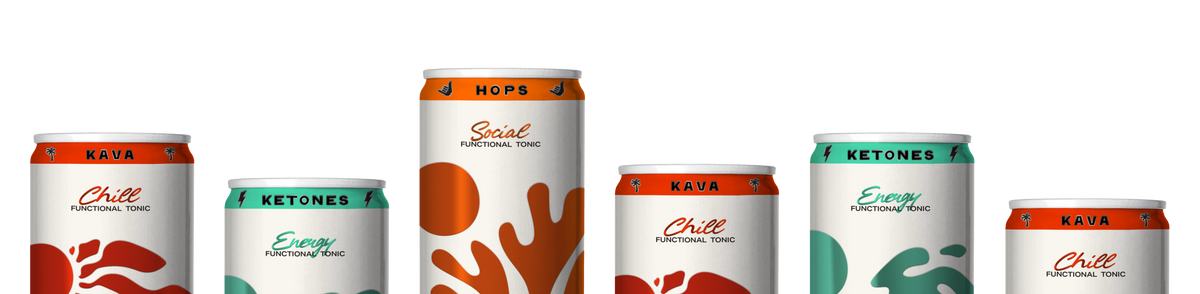
The different types of functional beverages include energy drinks, adaptogen drinks, Hops drinks, Ketone drinks, Mushroom drinks, sports and hydration beverages, Cognitive and nootropic beverages, Gut health drinks, Collagen drinks, and Relaxation drinks.
What are hop drinks?
Hop drinks are often referred to as hop water. It is carbonated or sparkling water infused with the essential oils and aromatic compounds of the Humulus lupulus (hop) plant—the same flower used to give craft beer its distinct flavor. They are completely non-alcoholic.
What are BHB Ketones?
BHB (Beta-hydroxybutyrate) ketone drinks are a type of exogenous ketone supplement. While your body naturally produces its own ketones (endogenous ketones) during fasting or a strict ketogenic diet, these drinks provide a concentrated source of BHB from outside sources to rapidly elevate your blood ketone levels.
What is Kava?
Kava (scientifically known as Piper methysticum) is a plant native to the South Pacific. Its roots and stumps are used to produce a beverage and herbal extract prized for centuries for its natural calming and mildly euphoric effects
What are the best functional beverages in 2026?
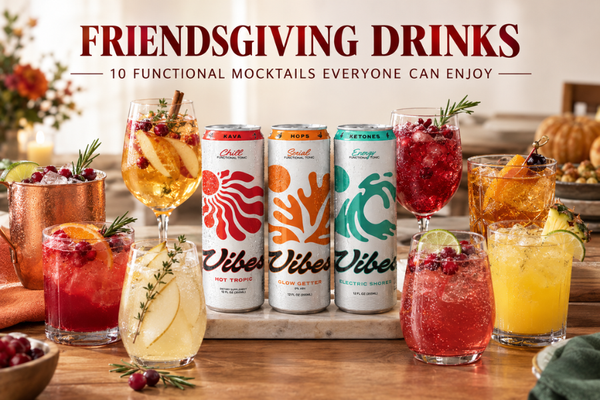
The best fucntional beverages in 2026 include Kin Euphorics, Hot Tropic Kava drink, Hiyo Peach, Prebiotic sodas, Probiotic Kombuchas, Glow Getter Hops drinks and Vibes Energy Electric Shores BHB.
Read more about the 10 Best Functional Beverages You Should Try in 2026
What are the key ingredients in functional beverages?
The key ingredients in functional beverages typically include vitamins, minerals, L-Theanine, Lion’s Mane, Rhodiola, Vitamin-C, B complex, Whey protein, etc.
Read a detailed blog on: How Functional Drinks Work: Key Ingredients and What They Do