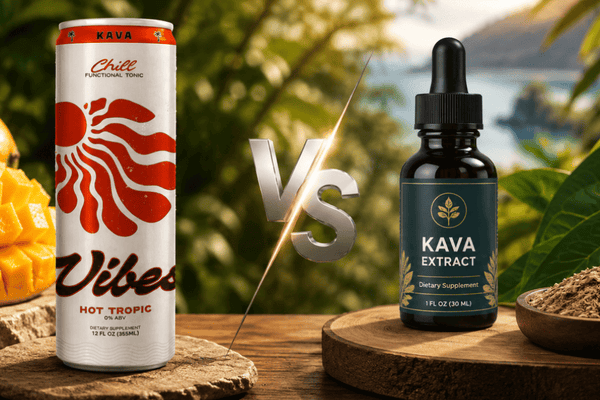
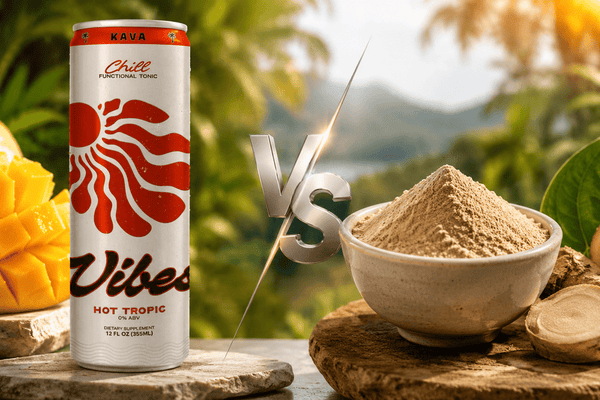
Kava Benefits: What the Research Actually Says
In this article

Research suggests that the strongest kava benefits are linked to anxiety-related outcomes, while its potential role in relaxation, sleep, and mood support continues to be studied. Kava (Piper methysticum) is a traditional South Pacific botanical containing naturally occurring compounds called kavalactones, which are the focus of much of its modern research.
Although kava has been used for centuries in cultural practices, current scientific evidence shows that not all commonly discussed benefits have the same level of support. This guide examines what clinical trials, systematic reviews, and research studies say about kava benefits, including where evidence is strongest, where findings remain limited, and the safety considerations to understand.
Table Of Contents:
- What Are the Research-Supported Benefits of Kava?
- What Do Studies Say About Kava's Risks?
- Is Kava as Effective as Anti-Anxiety Medication?
- Conclusion
- Frequently Asked Questions (FAQs)
What Are the Research-Supported Benefits of Kava?
Not every claimed benefit of kava is supported by strong scientific evidence. While research has identified several promising effects, the quality of evidence varies. Here's what current clinical studies support.
1. Anxiety Relief
Among all kava benefits, anxiety relief has the strongest scientific backing. A 2013 Cochrane Review found that standardized kava extracts significantly reduced anxiety symptoms compared with a placebo.
Similarly, a clinical trial by Sarris et al. (2013) reported improvements in people with generalized anxiety disorder using a water-based kava extract.
Research highlights:
- Strongest evidence is for mild to moderate anxiety.
- Several clinical studies reported statistically significant improvements.
- Standardized extracts showed the most consistent results.
- More long-term research is still needed.
2. Relaxation and Stress Reduction
Kava has traditionally been consumed in the South Pacific to promote relaxation, and modern research generally supports this use. Several studies suggest it may reduce nervous tension and increase feelings of calm without causing heavy sedation.
Research suggests kava may:
- Promote relaxation and calmness.
- Help reduce stress and nervous tension.
- Support relaxation without excessive drowsiness.
- Require further research for stronger conclusions.

3. Improved Sleep
Current evidence suggests kava may improve sleep by reducing anxiety rather than acting as a direct sleep aid. People with anxiety-related sleep problems appear more likely to benefit.
Current findings include:
- May improve sleep quality by easing anxiety.
- Evidence is stronger for anxiety-related sleep issues.
- Not considered a proven treatment for insomnia.
- More sleep-focused studies are needed.
4. Mood and Emotional Wellbeing
Some early studies suggest kava may improve mood and emotional well-being, mainly by reducing anxiety. However, the evidence remains limited, and researchers cannot yet confirm a direct mood-enhancing effect.
Current evidence suggests:
- Mood may improve as anxiety decreases.
- Early findings are promising but limited.
- Larger clinical trials are still needed.
- Mood benefits are not yet considered well established.
These findings highlight that kava is neither a miracle remedy nor an ineffective supplement—it has evidence-backed uses, but its benefits depend on the quality of the product and the strength of the available research.
What Do Studies Say About Kava's Risks?
While research supports some kava benefits, studies also highlight important safety considerations. Most concerns focus on liver health, product quality, and potential interactions with certain medications. Understanding these risks is essential before using kava regularly.
1. Liver Safety
In the early 2000s, several reports linked kava supplements to rare cases of liver injury, leading some countries to temporarily restrict or ban certain kava products. However, the issue remains controversial because researchers believe multiple factors may have contributed to these cases.
Current evidence suggests that safety may depend on:
- Whether the product uses the peeled root (traditionally used) or includes leaves and stems, which may contain undesirable compounds.
- The extraction method, with traditional water-based preparations appearing to differ from some solvent-based extracts that were previously associated with safety concerns.
- Product quality, dosage, and individual health conditions.
While newer research indicates that traditional preparations may have a better safety profile, experts agree that more long-term studies are needed.
2. Other Possible Side Effects
Clinical studies report that kava is generally well tolerated when used appropriately, but some people may experience mild side effects, including:
- Dizziness
- Headache
- Drowsiness
- Digestive discomfort
These effects are usually temporary and may vary depending on the dose and the product used.
3. Drug Interactions and Precautions
Kava can interact with certain substances and medications, so it should be used with caution.
Avoid or consult a healthcare professional before using kava if you:
- Consume alcohol regularly.
- Take sedatives or sleeping medications.
- Use anti-anxiety medications or other drugs that affect the central nervous system.
- Have liver disease or a history of liver problems.
Overall, what do studies say about kava's risks? Current research suggests that kava can be used safely by many healthy adults when high-quality, traditionally prepared products are consumed responsibly. However, product quality, preparation methods, existing medical conditions, and medication use all play a significant role in its safety, making informed use and medical guidance especially important.
Is Kava as Effective as Anti-Anxiety Medication?
One of the most common questions is, "Is kava clinically proven to work?" Current research suggests that kava may help reduce mild to moderate anxiety, and some clinical studies have found improvements comparable to those seen with certain anti-anxiety medications. However, these findings are based on a relatively small number of trials, and the evidence is not as extensive as it is for prescription treatments.
Prescription anti-anxiety medications have been evaluated in large-scale clinical trials over many years and are supported by well-established treatment guidelines. In comparison, research on kava is still evolving, particularly regarding its long-term effectiveness and safety.

Here's how they compare:
|
Factor |
Kava |
Prescription Anti-Anxiety Medications |
|
Scientific evidence |
Supported by several clinical studies for mild to moderate anxiety |
Backed by decades of large-scale clinical research |
|
Effectiveness |
Promising results in some people, but evidence is still limited |
Well-established effectiveness for various anxiety disorders |
|
Side effects |
May cause dizziness, drowsiness, headache, or digestive discomfort |
Side effects vary by medication and may require monitoring |
|
Product consistency |
Quality and kavalactone content vary between products |
Standardized formulation and dosage |
|
Medical supervision |
Recommended, especially for people with medical conditions or taking other medications |
Required for safe and effective treatment |
Key takeaways:
- Some studies have reported comparable improvements in mild anxiety.
- Prescription medications have substantially more clinical evidence.
- Kava and prescription drugs have different side-effect profiles.
- Long-term safety data for kava is still limited.
- Kava should not automatically replace prescribed treatment without medical supervision.
So, does science support kava for anxiety? Yes, current evidence is encouraging, especially for mild anxiety. However, kava should be viewed as a complementary option rather than a substitute for prescribed medication, and any decision to use it should be made with guidance from a qualified healthcare professional.
Conclusion
Research on kava shows a more balanced picture than many online claims suggest. While anxiety-related outcomes have the strongest scientific support, evidence for areas such as sleep and mood is still developing.
Kava is not a replacement for medical treatment, and its quality, preparation method, and safety considerations all influence how research findings should be interpreted. Understanding the difference between traditional use, user experiences, and clinical evidence is key to making informed decisions about kava.
As research continues, future studies may provide a clearer understanding of where kava fits among botanical supplements.
Frequently Asked Questions (FAQs)
1. What does research say about the benefits of kava?
Research shows that the strongest kava benefits are anxiety relief and relaxation. Evidence for sleep and mood is promising but less conclusive, and more long-term studies are needed.
2. What does clinical research say about kava benefits and anxiety relief?
Clinical studies suggest that standardized kava extracts can reduce symptoms of mild to moderate anxiety. Among all reported benefits, anxiety relief has the strongest scientific support.
3. Is kava scientifically proven to reduce anxiety?
Yes, several clinical trials and systematic reviews have found that standardized kava extracts can significantly reduce anxiety symptoms. However, additional long-term research is still needed.
4. What other benefits does research support for kava?
Besides anxiety relief, research suggests kava may promote relaxation, reduce stress, and indirectly improve sleep. Evidence for mood enhancement remains limited.
5. Are there risks associated with kava use?
Yes. Potential risks include liver safety concerns, dizziness, headache, drowsiness, digestive discomfort, and interactions with alcohol and certain medications. Choosing a high-quality product is important.
6. Is kava as effective as anti-anxiety medication?
Some studies found comparable benefits for mild anxiety, but prescription medications have much stronger clinical evidence. Kava should not replace prescribed treatment without medical advice.
References:
-
Healthline. (2024). Kava Kava: Benefits, Risks, and How It Works. Healthline.
https://www.healthline.com/nutrition/kava-kava -
Volz, H. P., Kieser, M. (1997). Kava-kava extract WS 1490 versus placebo in patients with non-psychotic anxiety disorders—A randomized controlled trial. Phytotherapy Research.
https://pubmed.ncbi.nlm.nih.gov/11687196/ -
Sarris, J., Stough, C., Bousman, C. A., Wahid, Z. T., Murray, G., Teschke, R., Savage, K. M., Dowell, A., Ng, C., & Schweitzer, I. (2013). Kava in the treatment of generalized anxiety disorder: A double-blind, randomized, placebo-controlled study. Journal of Clinical Psychopharmacology, 33(5), 643–648.
https://pubmed.ncbi.nlm.nih.gov/23635869/ -
Sarris, J., Byrne, G. J., Bousman, C. A., Cribb, L., Savage, K. M., Holmes, O., Murphy, J., Macdonald, P., Short, A., Nazareth, S., Jennings, E., Thomas, S. R., Ogden, E., Chamoli, S., Scholey, A., & Stough, C. (2020). Kava for generalised anxiety disorder: A 16-week double-blind, randomised, placebo-controlled study. Australian & New Zealand Journal of Psychiatry, 54(3), 288–297.
https://pubmed.ncbi.nlm.nih.gov/33207379/ -
Wooltorton, E. (2002). Kava: concerns about safety. Canadian Medical Association Journal.
https://pubmed.ncbi.nlm.nih.gov/15700178/ -
Pittler, M. H., & Ernst, E. (2003). Kava extract for treating anxiety. Cochrane Database of Systematic Reviews.
https://pubmed.ncbi.nlm.nih.gov/15181652/ -
National Center for Biotechnology Information. (2024). Kava. LiverTox: Clinical and Research Information on Drug-Induced Liver Injury. National Library of Medicine.
https://www.ncbi.nlm.nih.gov/books/NBK548637/ -
National Center for Complementary and Integrative Health (NCCIH). (2024). Kava: Usefulness and Safety. National Institutes of Health.
https://www.nccih.nih.gov/health/kava -
Teschke, R., & Xuan, T. D. (2016). Kava and liver toxicity: A review of recent evidence. Phytomedicine / PMC.
https://pmc.ncbi.nlm.nih.gov/articles/PMC4630875/ - Disclaimer: This article discusses current research on kava benefits and is intended for educational purposes only. Kava is not a substitute for medical advice or prescribed treatments. Consult a healthcare professional before using kava, especially if you have existing health conditions or take medications.