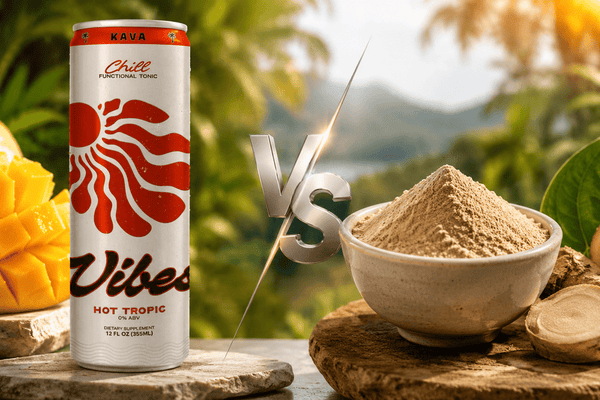
Kava Root vs. Kava Extract: What’s the Difference
In this article

Kava is available in multiple formats, with Kava root powder and Kava extract being two of the most commonly compared options. Beyond traditional preparations, Kava drinks have also become a popular way to explore this botanical ingredient in modern beverage formats. While both come from the same plant, Kava (Piper methysticum), they differ in how they are processed, how concentrated they are, and how much of the plant’s natural compounds they contain.
This comparison mainly comes down to Kavalactones, naturally occurring compounds in Kava that are often used to evaluate concentration and standardization.
In this guide, we’ll explore:
- What makes Kava root powder different from Kava extract
- How Kavalactone concentration compares between the two forms
- Whether Kava extract is stronger than traditional root powder
- Which option may be better based on preparation style, convenience, and product labeling
Neither form is automatically better; the right choice depends on individual preferences and product quality.
Kava Root vs Kratom Extract: At A Glance
| Category | Kava Root Powder | Kava Extract |
| Source | Dried and ground Kava root | Processed Kava root extract |
| Main Compounds | Naturally occurring Kavalactones | Concentrated Kavalactones |
| Processing | Minimal processing | Additional extraction process |
| Kavalactone Level | Naturally variable | Usually higher and standardized |
| Traditional Connection | Closest to traditional preparation | Modern concentrated format |
| Preparation | Requires mixing and straining | Usually requires less preparation |
| Label Information | May include origin and variety | Often includes Kavalactone percentage |
| Common Formats | Powder, traditional beverage mixes | Liquid extracts, capsules, concentrated products |
What Is Kava Root? Understanding the Traditional Form
Kava (Piper methysticum) is a tropical plant native to the Pacific Islands and has traditionally been used to prepare Kava beverages. The root and rhizome are typically used because they contain naturally occurring compounds called Kavalactones.
Key points about Kava root:
- Plant origin: Kava is traditionally cultivated across Pacific Island regions, including Fiji, Vanuatu, and other island communities.
- Traditional use: The root and rhizome have historically been prepared into beverages using traditional methods.
- Natural compounds: Kava root contains Kavalactones, which are commonly used to compare different Kava products.
- Product variation: Kava characteristics can differ depending on the plant variety, growing conditions, and processing methods.
If you’re new to traditional Kava preparations, it can also help to know what Kava tastes like before choosing a root-based format.
What Is Kava Extract?
Kava extract is a concentrated form of Kava that starts with the same Kava root material used in traditional preparations but goes through an additional extraction process. This process removes and concentrates specific naturally occurring compounds, particularly Kavalactones, which are commonly used to measure Kava potency and standardization.
Key points about Kava extract:
- Source material: Kava extract is made from Kava root or rhizome material.
- Extraction process: The root undergoes processing to separate and concentrate certain compounds.
- Higher concentration: Extracts typically contain a greater percentage of Kavalactones compared with traditional Kava root powder.
- Different methods: Manufacturers may use various extraction methods, including water-based extraction or other processing techniques, depending on the product.
Kava extract labels often include a Kavalactone percentage, which helps indicate concentration:
- 10% Kavalactone extract: Contains approximately 10% Kavalactones by weight.
- 30% Kavalactone extract: Contains approximately 30% Kavalactones by weight.
- Higher-concentration extracts: May contain higher levels of Kavalactones, depending on the formulation.
For example, a 30% Kava extract generally means that about 30% of the extract weight consists of Kavalactones, making it more concentrated than standard Kava root powder. However, concentration alone does not determine overall product quality, as sourcing, Kava variety, and processing methods also matter.
Kava Root Powder vs Kava Extract: Detailed Comparison
Kava root powder and Kava extract are often compared because both products come from the same plant, Kava (Piper methysticum). However, they differ in how they are processed, how concentrated they are, and how they deliver naturally occurring compounds such as Kavalactones. Understanding these differences can help you compare preparation methods, concentration levels, convenience, and product labeling.
1. Source and Plant Origin
Both Kava root powder and Kava extract originate from the same plant, but the final products differ based on how the root material is processed.
- Kava root powder: Made from dried and ground Kava root and rhizome material. It represents a more traditional form of Kava preparation.
- Kava extract: Made from Kava root material that undergoes an extraction process to concentrate certain compounds, especially Kavalactones.
While both products start with Kava root, the main difference is that root powder maintains the whole plant material, while extracts focus on concentrating specific components.
2. Processing Method: Whole Root vs Concentrated Extract
The processing method is one of the biggest differences between Kava root powder and Kava extract.
Kava Root Powder:
- Uses dried Kava root that is mechanically ground into powder.
- Goes through minimal processing compared with extracts.
- Retains the natural combination of compounds found in the root.
- Closely follows traditional Kava preparation methods.
Kava Extract:
- Uses Kava root as the starting ingredient.
- Goes through additional extraction steps to separate and concentrate compounds.
- May use different extraction methods depending on the manufacturer.
- Often provides standardized information about Kavalactone concentration.
Processing differences influence the final concentration, texture, preparation style, and product format.
3. Kavalactone Concentration: Root Powder vs Extract
Kavalactones are naturally occurring compounds found in Kava root and are commonly used to compare different Kava products.
The main concentration difference:
- Kava root powder: Contains naturally occurring Kavalactones that can vary depending on the Kava variety, growing region, and processing.
- Kava extract: Contains concentrated levels of Kavalactones because the extraction process reduces other plant material.
Approximate comparison:
| Kava Form | Typical Kavalactone Concentration |
| Kava root powder | Around 3–8% (varies by source and cultivar) |
| Standardized Kava extract | Around 10–30% or higher depending on formulation |
For example:
- A 10% Kava extract generally contains approximately 10% Kavalactones by weight.
- A 30% Kava extract generally contains approximately 30% Kavalactones by weight.
Because extracts are more concentrated, they typically contain more Kavalactones per gram than traditional root powder.
4. Preparation and Convenience
Kava root powder and Kava extract differ significantly in how they are prepared and used.
Kava Root Powder:
- Requires more preparation before use.
- Traditionally mixed with water and strained.
- Provides a more hands-on preparation process.
- Allows users to prepare Kava in a traditional style.
Kava Extract:
- Requires less preparation compared with root powder.
- Available in concentrated forms.
- Often comes with clearer concentration labeling.
- Offers a more convenient format for modern product use.
The choice between the two often depends on whether someone prefers a traditional preparation method or a more simplified format.
If you’re interested in exploring different ways to prepare Kava beverages, these Kava drink recipes offer a few simple ideas to try.
5. Product Labeling and Transparency
The information provided on product labels can differ between Kava root powder and Kava extract.
Kava root powder labels may include:
- Kava variety or cultivar
- Country or growing region
- Root-only designation
- Processing details
Because root powder uses whole plant material, natural variation in Kavalactone content may occur.
Kava extract labels may include:
- Extract ratio
- Kavalactone percentage
- Standardization details
- Ingredient concentration
Extract labeling can make it easier to compare products based on concentration rather than only serving size.
Quick Takeaway:
Kava root powder and Kava extract come from the same plant but differ in processing, concentration, and preparation style. Root powder offers a more traditional whole-root format, while extract provides a concentrated option with higher Kavalactone levels. Comparing factors such as sourcing, labeling, and concentration can help determine which format best matches individual preferences.
Which Kava Form Is Stronger: Root Powder or Extract?
Kava Root Powder Concentration
Kava root powder contains naturally occurring Kavalactones, but the concentration can vary based on the plant source, cultivation practices, and processing methods.
1. Typical concentration range: Kava root powder generally contains around 3–8% Kavalactones, depending on the Kava variety and production methods.
2. Whole-root composition: Since the root is dried and ground without additional concentration, it retains the natural balance of compounds found in the plant.
3. Natural variation: Kavalactone levels may differ based on:
- Kava cultivar
- Growing region
- Plant maturity
- Drying and storage process
4. Noble Kava varieties: Many traditional and commercial products use noble Kava because these cultivars are selected for traditional beverage preparation and consistent sourcing.
Because Kava root powder is made from whole-root material, its Kavalactone content is usually less concentrated and may vary more between products compared with standardized extracts.
Kava Extract Concentration
Kava extract is a concentrated form of Kava made by processing root material to increase the proportion of naturally occurring compounds, especially Kavalactones.
1. Higher concentration: Kava extracts commonly contain higher Kavalactone levels than traditional root powder, often ranging from 10 to 30% or higher, depending on the product.
2. Percentages: Extract labels often specify Kavalactone concentration, making it easier to compare different products.
3. Concentrated format: The extraction process reduces some plant material, allowing a smaller amount of extract to contain a higher proportion of Kavalactones.
Common extract strengths include:
- 10% Kavalactone extract
- 30% Kavalactone extract
- Higher concentration extracts
A 30% Kava extract generally means that approximately 30% of the extract weight consists of Kavalactones. However, a higher concentration does not automatically indicate better quality, as factors such as Kava variety, sourcing, extraction method, and product testing also influence the final product.
How To Choose Between Kava Root Powder and Kava Extract?
Choosing between Kava root powder and Kava extract depends on your preferred format, preparation style, and how much information you want about product concentration. Both forms come from Kava (Piper methysticum), but they offer different approaches to using Kava products.
Choose Kava Root Powder If:
Kava root powder may be a better fit if you prefer a more traditional format.
- You prefer traditional Kava preparation: Root powder follows the traditional approach of preparing Kava beverages from dried and ground root material.
- You want a less processed option: It maintains the natural composition of the whole Kava root rather than concentrating specific compounds.
- You enjoy preparing Kava beverages: The preparation process allows for a more hands-on experience.
Choose Kava Extract If:
Kava extract may be a better choice if you prefer a concentrated and convenient format.
- You prefer a concentrated product: Extracts typically contain higher levels of kavalactones than standard root powder.
- You want clearer Kavalactone labeling: Many extracts provide specific concentration percentages, making product comparisons easier.
- You prefer convenience: Extract formats generally require less preparation and are available in compact forms.
If you’re comparing Kava formats for regular use, you may also want to learn more about drinking Kava every day and the factors to consider.
Conclusion
Kava root powder and Kava extract both come from Kava (Piper methysticum), but they offer different experiences based on how they are processed and concentrated. Kava root powder is the more traditional form, using dried and ground root material while maintaining the plant's natural composition. Kava extract, on the other hand, is processed to concentrate compounds such as Kavalactones and often provides clearer concentration information.
When comparing the two, there is no single “best” option. The right choice depends on individual preferences and priorities:
- Choose Kava root powder if you prefer traditional preparation methods, whole-root formats, and a less processed product.
- Choose Kava extract if you prefer a concentrated format, easier preparation, and products with clearer Kavalactone labeling.
Ultimately, understanding differences in processing, Kavalactone concentration, sourcing, and product information can help you choose a Kava format that best fits your preferences.
If you’re also comparing Kava with other botanical products, you can explore this guide to Kava vs Kratom for a broader comparison.
FAQs
1. Is Kava extract stronger than Kava root powder?
Generally, Kava extract is more concentrated than Kava root powder because the extraction process increases the proportion of compounds such as Kavalactones. However, overall product strength can vary depending on the Kava variety, extraction method, and Kavalactone percentage.
2. Which works faster, Kava root powder or extract?
How quickly you experience Kava products depends on factors such as product formulation, preparation method, and individual differences. Extracts may provide a more concentrated format, while root powder follows a traditional preparation method.
If you’re unfamiliar with Kava, you can also learn more about what Kava feels like and how it differs from alcohol.
3. Is one Kava form safer than the other?
Neither Kava extract nor Kava root powder is automatically safer. Product quality, sourcing, proper labeling, and choosing products made from appropriate Kava varieties are important factors when comparing different forms.
For more information about Kava and the body, see this guide on how long Kava stays in your system.
4. Which Kava form is better for beginners?
Kava root powder may be preferred by beginners who want to start with a traditional format and understand how Kava products are prepared. Kava extract may appeal to those who prefer convenience and products with clearly labeled Kavalactone concentrations. The choice depends on personal preference and product information.
Disclaimer: This article is for informational purposes only and is not intended as medical or professional advice. Kava products can vary in quality, composition, and concentration, so always review product labels and follow the manufacturer’s guidance.