


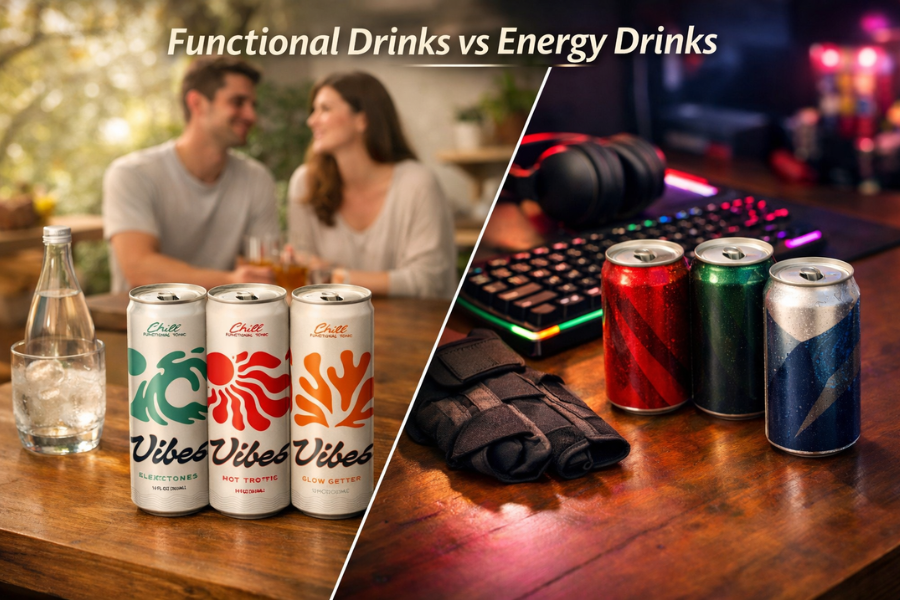
There was a time when grabbing an energy drink meant choosing between Red Bull, Monster, or Rockstar. Today, the beverage aisle looks completely different—lined with brightly colored cans promising focus, hydration, balance, and sustained energy. Drinks are no longer just refreshments; they have become part of modern lifestyle and wellness routines.
At the center of this shift is the growing conversation around functional drinks vs energy drinks. While the two are often grouped together on store shelves, they are designed with very different goals in mind. Traditional energy drinks are typically associated with fast-acting stimulation, while functional beverages are formulated to support broader wellness needs, including hydration, cognition, mood, and recovery.
As consumers become more mindful about what goes into their bodies, understanding the difference between the two has become more important than ever.
What Are Functional Beverages?
Functional beverages are drinks that do a little more than give you something cold to drink. Sure, hydration and energy are still part of the conversation, but this category has moved way beyond the standard caffeine rush. These drinks are now showing up in all kinds of moments, be it busy workdays, workout sessions, casual nights out, low-key evenings, and pretty much everywhere in between.
Consumers are no longer just asking, “How much caffeine does this have?” They are asking:
- What ingredients are inside it?
- How will it fit into my routine?
- Does it match the kind of experience I want?
That shift has completely changed the beverage space.
So, What’s Actually Inside Them?
Today, functional beverages may include ingredients like:
Each brings a different angle to the experience.
You’ll Find A Functional Drink For Pretty Much Every Vibe
- Hops beverages are sliding into social plans, house parties, and nights where people want the vibe without going overboard
- Kava drinks feel right at home during slow evenings, movie nights, and those “I’m done for the day” moments
- Ketone beverages are showing up in gym bags, busy morning routines, and packed schedules that do not leave much room to slow down
- Adaptogen drinks are becoming the pick for people trying to keep up with nonstop routines without feeling completely fried by 4 PM
- Botanical blends are finding fans among consumers who want their drinks to feel a little cleaner, lighter, and less artificial
- Nootropic beverages are turning into desk-side staples for workdays packed with meetings, deadlines, and way too many tabs open at once
|
Functional Drinks Are Everywhere Right Now! What started as a niche wellness category has now become one of the fastest-moving spaces in the beverage industry. In fact, the global functional drinks market was valued at nearly $164.68 billion in 2025 and is projected to cross $315.89 billion by 2033. And honestly, you can already see that shift happening in real life. Functional drinks are no longer tucked away in specialty wellness stores — they are showing up in grocery aisles, fitness studios, cafés, music festivals, and even nightlife scenes. |
What Are Energy Drinks?
Energy drinks were basically the original “I need to survive today” beverage.
Long before functional beverages started taking over wellness aisles and social feeds, energy drinks had already established an empire around one thing: fast, noticeable energy. Whether it was all-nighters, early gym sessions, road trips, gaming marathons, or brutally long workdays, these drinks became the go-to for people trying to push through exhaustion and keep moving. And, honestly, they still are.
Inside The Typical Energy Drink Formula
Most traditional energy drinks revolve around ingredients like:
- Caffeine
- Taurine
- Guarana
- B vitamins
- Sugar or artificial sweeteners
The formula is pretty simple — hit fast, wake you up quickly, and keep the momentum going for a few hours.
|
The Crash That Often Follows The same ingredients behind the “boost” can also bring jitters, crashes, disrupted sleep, and that overstimulated feeling when you overdo it — like your brain is moving three steps ahead of the rest of your body. And that is exactly why more consumers are starting to question the whole “more caffeine = more energy” mindset and explore beverages that feel a little more balanced. In response, the market has also expanded to include healthy energy drinks, with sugar-free and low-calorie options now positioned as lighter alternatives that still aim to deliver a quick boost. |
Functional Drinks vs Energy Drinks: Key Differences
At first glance, functional beverages and energy drinks can look pretty similar. They come in sleek cans, promise some kind of “boost,” and often sit right next to each other on store shelves.
But the mindset behind them? Completely different.
Energy drinks are usually about intensity—more energy, more stimulation, more hours squeezed into the day. Functional beverages are entering the conversation from a different angle altogether, leaning more into mood, lifestyle, routine, and overall experience.
Purpose
Energy drinks are often tied to urgency: “I need to wake up. Right now.”
Functional beverages feel more lifestyle-driven: “I want something that matches the way I want to feel.”
One is usually about pushing through exhaustion. The other is more about finding a drink that fits the moment — whether that is a social night out, a productive workday, or a slower evening at home.
Ingredients
Traditional energy drinks usually stick to a familiar formula: high caffeine, taurine, guarana, sugar, or artificial sweeteners.
Functional beverages draw from a much wider mix: Hops, Kava, Kectons, adaptogens, Botanicals, and nootropics.
And honestly, the ingredient lists tell you a lot about the personality of each category. Energy drinks are usually trying to hit fast and feel intense. Functional beverages are experimenting with experiences and are often explored as caffeine alternatives for people who want something beyond the usual high-stimulation formulas.
Sugar Content
Many classic energy drinks became famous for pairing massive caffeine levels with equally massive amounts of sugar.
Functional beverages are moving in a different direction. Consumers are reading labels more carefully now, so brands are leaning harder into cleaner ingredients, lighter formulations, and transparency around what is actually inside the can.
Why Are People Shifting From Energy Drinks To Functional Beverages?
The old “sleep later, hustle harder” mindset is starting to lose its appeal, and beverage choices are reflecting that shift.
Consumers still want energy, focus, and something to help them get through the day — they are just becoming pickier about the experience that comes with it. Drinks that leave people shaky, overstimulated, or crashing halfway through the afternoon are not hitting the same way anymore, and that is exactly why more lifestyle-friendly alternatives are getting so much attention right now.
And honestly, that says a lot about where modern wellness culture is headed: less intensity, more feeling good while doing it.
Are Functional Beverages Healthier Than Energy Drinks?
There is no simple winner to questions like “Are functional drinks better than energy drinks?” or “Are functional drinks safer than energy drinks?”
Not every functional beverage is automatically better, and not every best energy drink deserves the negative label it often gets.
What actually matters is what is inside the can — caffeine levels, sugar content, ingredient quality, and how it sits with your own routine and tolerance. Some drinks feel fine in moderation, others don’t. And that difference is often more important than the category name on the label.
At the end of the day, it is less about choosing sides and more about choosing what works without throwing your system off balance.
Functional Drinks vs Energy Drinks: What To Choose?
Different lifestyles call for different drinks. Some moments need quick energy, while others suit smoother, more experience-led beverages.
Here’s how different groups typically lean today:
|
Customer Segment |
What They Choose |
|
Urban Millennials & Gen Z |
Functional (Hops Glow Getter) for social settings, Energy drinks for occasional boosts |
|
Fitness Enthusiasts |
Functional (Ketones Electric Shores) as a primary choice, sugar-free energy drinks, pre-workout occasionally |
|
Working Professionals |
Functional for daily routines, Energy drinks during high-pressure deadlines |
|
Health-Conscious Consumers |
Functional (clean-label options preferred) |
|
Young Adults |
Energy drinks for quick energy, Functional (Hops Glow Getter / Kava Hot Tropic) for lifestyle moments |
|
Athletes |
Energy drinks pre-training, Functional (Ketones Electric Shores) for routine support |
FAQs
What is the difference between energy drinks and functional beverages?
Energy drinks focus on quick, caffeine-driven stimulation, while functional drinks lean more toward specific moments and experiences, such as social settings, focus, or relaxation. One is about quick energy; the other is about fitting into different parts of the day.
Are functional drinks healthy?
Not automatically. It depends on the ingredients, sugar levels, and caffeine content. Many functional drinks tend to be lighter or more transparent, but balance and moderation still matter.
Is a functional drink an energy drink?
Not exactly. Functional drinks are often seen as the best alternative to energy drinks because they go beyond just caffeine and focus more on different lifestyle moments and experiences.
Do functional drinks give you energy?
Some do, but usually in a smoother, more balanced way compared to traditional energy drinks. Others focus more on mood or experience rather than stimulation.
Do functional drinks contain caffeine?
It varies. Some include caffeine from natural sources, while others are completely caffeine-free, depending on the intended function.
Can functional drinks replace coffee?
For some people, yes. They can act as a lighter alternative depending on the formulation, but coffee still tends to win when a strong caffeine hit is the goal.
Are energy drinks bad for you?
Not necessarily. It depends on ingredients, caffeine levels, and how often they’re consumed. That said, many energy drinks can lead to a noticeable crash afterward, leaving you feeling drained once the initial boost wears off. For some people, that spike-and-drop effect is what makes them feel too intense for regular use.
